Skip to content
You can now search across every topic, entity and event.What's new
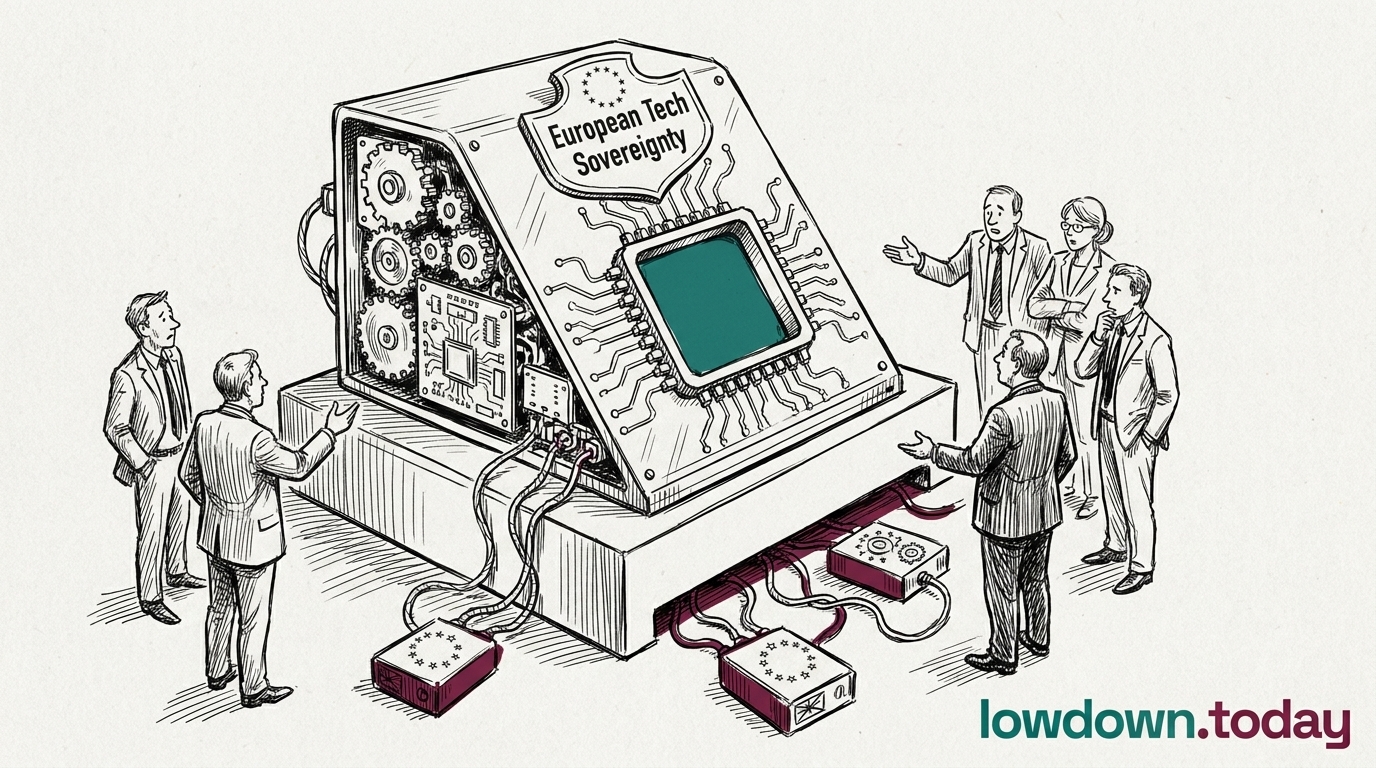
European Tech Sovereignty
23APR

Euro and yen fall as energy costs rise

4 min read
09:21UTC

The euro and yen fell against the dollar — currency markets pricing a structural truth: the war's economic damage concentrates on countries that buy Gulf energy, not on the country prosecuting the campaign.

TechnologyDeveloping
Key takeaway

The petrodollar pricing system structurally ensures that every energy crisis transfers economic advantage to the US, but the US's shift to net energy exporter status has made this asymmetry sharper than at any previous point in the post-war era.

The euro and yen both fell against the US dollar as foreign exchange markets priced the energy exposure gap between import-dependent economies and a United States that produces the majority of its own oil. The move reflects a structural asymmetry built into this conflict's economics: the countries absorbing the heaviest energy costs are not the countries making the military decisions.

Japan imports approximately 90% of its primary energy, with a significant share of its LNG supply either originating in or transiting through The Gulf. The yen, already under pressure from the Bank of Japan's interest rate gap with the Federal Reserve, faces a widening trade deficit as the energy import bill rises. Europe's exposure is more direct. The EU spent four years replacing Russian pipeline gas with LNG — Qatar became one of its largest suppliers. TTF nearly doubling to over €60/MWh feeds straight into consumer prices and industrial costs. Euronews reported UK economists warning of higher inflation, depressed growth, and increased public debt if prices hold. The European Central Bank, which had been easing rates since mid-2024, may face the same stagflationary bind that paralysed monetary policy in 2022: energy-driven inflation in a contracting economy, where rate rises and rate cuts are both wrong.

The dollar's strength creates a feedback loop. Oil and LNG are priced in dollars. A stronger dollar means Japan and the eurozone pay more in local currency for every barrel and every cargo, amplifying the inflationary impact beyond the commodity price increase itself. Brent crude at $85–90 per barrel costs European refiners materially more in euro terms than the headline figure suggests. The pattern echoes the 1973–74 oil crisis, when dollar-denominated energy prices accelerated economic divergence between the US and its import-dependent allies — though the US was then far more reliant on foreign oil than it is today.

The political dimension is harder to price. European and Japanese households are absorbing the economic consequences of a conflict their governments did not initiate and, in Europe's case, have conspicuously declined to endorse — the E3 statement condemned Iran's attacks on Gulf States but said nothing about US–Israeli strikes on Iran . That diplomatic positioning — alignment with Washington's framing without full endorsement of its campaign — becomes harder to sustain as petrol prices rise and currencies weaken. The market is registering an economic fact. Whether it becomes a political one depends on duration.

Deep Analysis

In plain English

Oil and gas are priced globally in US dollars. When energy prices spike, countries that import most of their energy — like Japan and most of Europe — must buy more dollars to pay their energy bills. This extra demand for dollars pushes the dollar up and other currencies down. A weaker euro or yen then makes energy imports even more expensive in local currency terms — a compounding effect on top of the already-doubled gas prices. Meanwhile the US benefits on both sides: its energy companies receive higher prices and a stronger dollar makes its imports cheaper, creating a structurally asymmetric outcome.

Deep Analysis
Synthesis

Euro and yen depreciation compound the energy cost shock in local currency terms above the TTF headline figure: a 5–10% currency depreciation on doubled gas prices means European and Japanese importers face a 2.1–2.2x effective cost increase in domestic currency — materially worse than the TTF figure alone suggests. This creates a self-reinforcing loop: higher import costs widen trade deficits, weaken currencies further, and raise import costs again — a dynamic that central banks cannot resolve without inducing recession on the rate-rise path or deepening inflation on the inaction path.

Root Causes

Three simultaneous mechanisms drive the structural dollar advantage: first, the petrodollar system requires dollar purchases for energy payments, creating mechanical demand independent of sentiment; second, US Treasuries function as the global safe-haven asset, drawing capital inflows in crises regardless of US exposure to the specific conflict; third, the Bank of Japan's near-zero interest rate policy leaves no rate-defence instrument available without contradicting years of monetary policy commitment, making yen weakness particularly pronounced and self-reinforcing.

What could happen next?
1 meaning3 risk1 consequence
  • Meaning

    Currency markets are confirming the conflict as a structurally asymmetric shock: the US simultaneously benefits from energy export revenues and safe-haven capital inflows while import-dependent economies absorb compounding losses on both the energy and currency dimensions.

    Immediate · Assessed
  • Risk

    Euro and yen depreciation raise the effective local-currency cost of LNG imports above TTF spot levels, worsening imported inflation beyond what energy price headlines alone indicate.

    Short term · Assessed
  • Risk

    The ECB and Bank of Japan face contradictory monetary policy pressures — raising rates to defend currency risks recession; inaction deepens inflation — with no clean resolution path available.

    Short term · Assessed
  • Risk

    Yen carry trade unwinding at scale could spread exchange rate instability to emerging market currencies, broadening financial contagion to sovereign borrowers with no direct Gulf exposure.

    Short term · Suggested
  • Consequence

    Sustained dollar strength driven by US energy revenues and safe-haven flows could alter transatlantic trade balances and complicate US–EU economic negotiations in the medium term.

    Medium term · Suggested
First Reported In

Update #16 · 165 girls buried; European gas doubles

Euronews· 3 Mar 2026
Read original
Causes and effects
This Event
Euro and yen fall as energy costs rise
Currency movements expose the conflict's asymmetric economic architecture. The United States, which produces most of its own oil, bears military costs but is partially insulated from energy price spikes. Import-dependent economies absorb the full impact of supply disruption without controlling the military decisions driving it. The stronger dollar amplifies their costs through commodity pricing, creating a feedback loop that widens economic divergence.
Different Perspectives
United States (Google/Alphabet)
Alphabet lost its final Android appeal on 2 July with no further court to hear it, a result its Computer and Communications Industry Association allies frame as precedent, not deterrence, since the €4.1bn fine changed nothing about Google's Play Store terms across eight years of litigation.
UK Department for Science, Innovation and Technology
DSIT opened its £96m second Sovereign AI wave on 3 July, switching from April's equity stakes to fixed-price contracts because Britain has no domestic hyperscaler or Bpifrance-style lender to fund capacity another way. It is betting on buying outcomes it controls alone rather than joining an EU-wide framework.
German federal government
Berlin backed both German deliverables this week, Infineon's fab and Aleph Alpha's merger, but is finding one far harder to close than the other. It wants enforceable protective rights inside Cohere's cap table before the merger closes, a legal instrument the Bundeskartellamt has no filing to review yet.
European Commission
European Commission
The Commission banked a clean CJEU win on the eight-year Android case on 2 July, removing Google's last comparator argument before President von der Leyen rules on the far larger DMA self-preferencing fine due 27 July. Brussels treats Infineon's early Dresden delivery as proof the Chips Act mechanism works, at the node Europe already led.
Bruegel (EU industry sceptics)
Bruegel economist Mario Mariniello argued the EU sovereignty package mimics US and Chinese strategy while EU cloud providers hold roughly 15% of their home market; using nationality as a proxy for security without fixing the underlying capital and energy gaps that drive the dependency creates €86bn of migration cost without the security benefit it is sold as delivering.
France
France
France published a joint sovereignty definition with Germany at VivaTech and mobilised €13bn under Tibi Phase 3, placing SAP's partnership with Mistral as the working proof that a German enterprise-software giant running a French sovereign model inside public administration is what digital sovereignty looks like in practice.
