Skip to content
You can now search across every topic, entity and event.What's new
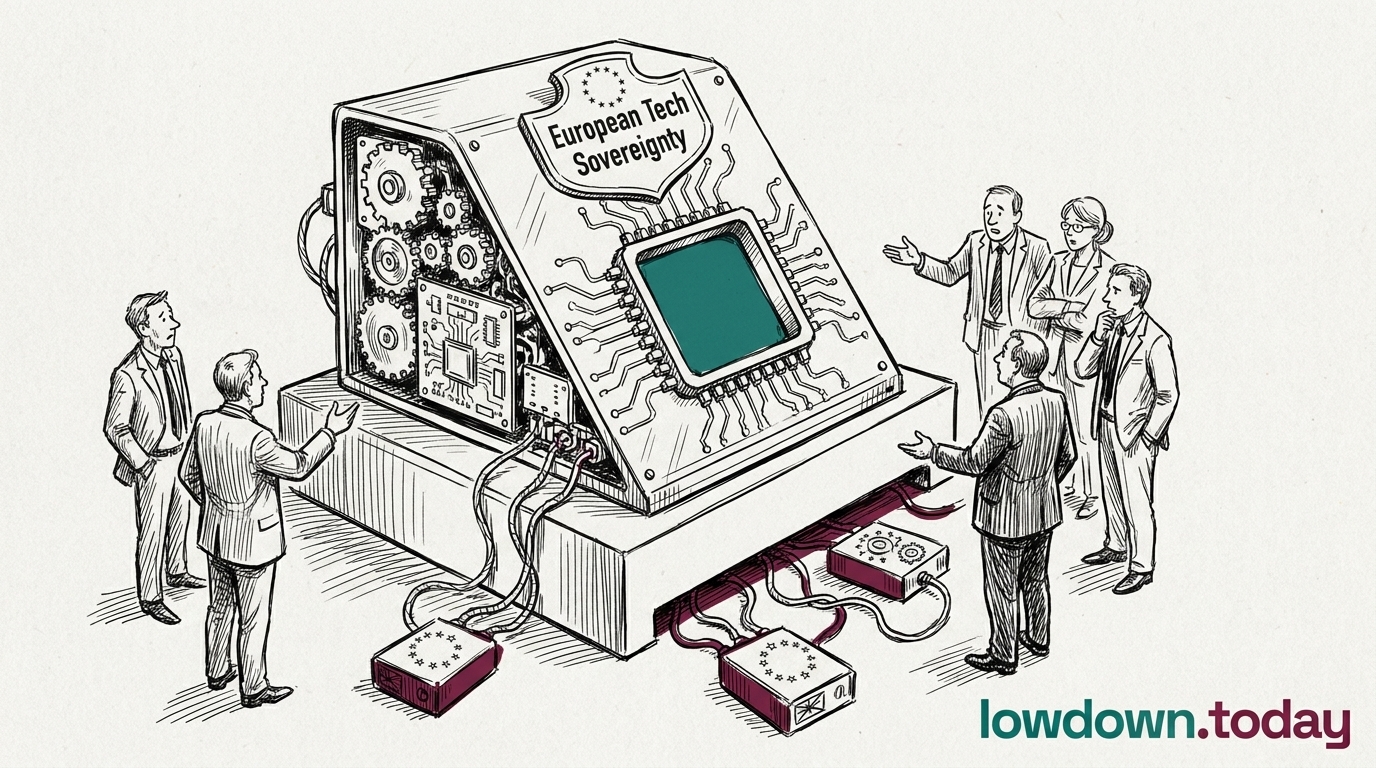
European Tech Sovereignty
23APR

Ten Hezbollah sites hit after clash

2 min read
09:21UTC

Israeli jets hit around ten Hezbollah sites across four south Lebanon villages on 2 July, hours after a Hezbollah gunman severely wounded an Israeli reservist at Bint Jbeil.

TechnologyDeveloping
Key takeaway

Iran cannot reach nuclear talks without calming a border whose trigger sits with Hezbollah, not Tehran.

The Israel Defense Forces (IDF) struck around ten Hezbollah sites across Bint Jbeil, Beit Yahoun, Kounine and Baraashit on 2 July, hours after a Hezbollah gunman severely wounded a reservist from the 679th Yiftah Armoured Brigade at Bint Jbeil 1. Hezbollah, the Lebanese Shia armed movement, has fought Israel along the southern border since the war began in February. Israeli tank fire hit the building the gunman had fired from first, and the air strikes followed.

Iran named this border its precondition for nuclear talks, yet Tehran staged a week of national unity in the capital while the front it says must quieten stayed hot. Hezbollah has answered every framework put to it, rejecting the US-Israel-Lebanon disarmament text within hours on 27 June , and it has not stopped firing. The mourning in Tehran and the shooting in Bint Jbeil ran on the same days.

Iran ties any resumption of nuclear talks to calm on this border, yet the trigger sits with Hezbollah's own command, not with Tehran's negotiators. A single reservist wounded at Bint Jbeil drew ten sites of Israeli fire the same day, and neither Doha nor Tehran ordered the shot that started it. Each clash here resets the precondition Iran set for itself.

Deep Analysis

In plain English

Hezbollah is an armed and political group in Lebanon, backed by Iran, that has been fighting a border war with Israel. The Israel Defence Forces, or IDF, is Israel's military. On 2 July, a Hezbollah gunman badly wounded an Israeli army reservist in the town of Bint Jbeil in south Lebanon. Israel responded within hours by hitting around ten Hezbollah locations across four nearby villages with jets and tank fire. This matters because it shows the ceasefire lines from earlier this year have not stopped the fighting. One wounded soldier was enough to trigger strikes across multiple towns, the kind of quick, outsized response that keeps the war simmering even while diplomats discuss peace elsewhere.

Deep Analysis
Root Causes

The clash at Bint Jbeil happened inside a zone the IDF still physically occupies. The US, Israel and Lebanon signed a trilateral framework on 27 June tying withdrawal to Hezbollah's disarmament rather than a fixed Litani River line , but Hezbollah's secretary-general Naim Qassem rejected it within hours as a 'surrender of sovereignty'.

With no agreed line and no Hezbollah commitment, troops and fighters keep operating in overlapping territory, so any tactical contact carries a built-in risk of triggering a strike wave.

The 2 July toll also fits an established pattern. Israel struck roughly 80 Hezbollah sites on 19 June, the deadliest single day on the Lebanon front since the Islamabad MOU . A single Israeli casualty has repeatedly produced a double-digit strike count, suggesting the ratio itself has become the operating rule of engagement, whatever the trigger.

First Reported In

Update #145 · Iran's heir skips the funeral built for him

Times of Israel· 4 Jul 2026
Read original
Causes and effects
Different Perspectives
United States (Google/Alphabet)
Alphabet lost its final Android appeal on 2 July with no further court to hear it, a result its Computer and Communications Industry Association allies frame as precedent, not deterrence, since the €4.1bn fine changed nothing about Google's Play Store terms across eight years of litigation.
UK Department for Science, Innovation and Technology
DSIT opened its £96m second Sovereign AI wave on 3 July, switching from April's equity stakes to fixed-price contracts because Britain has no domestic hyperscaler or Bpifrance-style lender to fund capacity another way. It is betting on buying outcomes it controls alone rather than joining an EU-wide framework.
German federal government
Berlin backed both German deliverables this week, Infineon's fab and Aleph Alpha's merger, but is finding one far harder to close than the other. It wants enforceable protective rights inside Cohere's cap table before the merger closes, a legal instrument the Bundeskartellamt has no filing to review yet.
European Commission
European Commission
The Commission banked a clean CJEU win on the eight-year Android case on 2 July, removing Google's last comparator argument before President von der Leyen rules on the far larger DMA self-preferencing fine due 27 July. Brussels treats Infineon's early Dresden delivery as proof the Chips Act mechanism works, at the node Europe already led.
Bruegel (EU industry sceptics)
Bruegel economist Mario Mariniello argued the EU sovereignty package mimics US and Chinese strategy while EU cloud providers hold roughly 15% of their home market; using nationality as a proxy for security without fixing the underlying capital and energy gaps that drive the dependency creates €86bn of migration cost without the security benefit it is sold as delivering.
France
France
France published a joint sovereignty definition with Germany at VivaTech and mobilised €13bn under Tibi Phase 3, placing SAP's partnership with Mistral as the working proof that a German enterprise-software giant running a French sovereign model inside public administration is what digital sovereignty looks like in practice.
