Skip to content
You can now search across every topic, entity and event.What's new
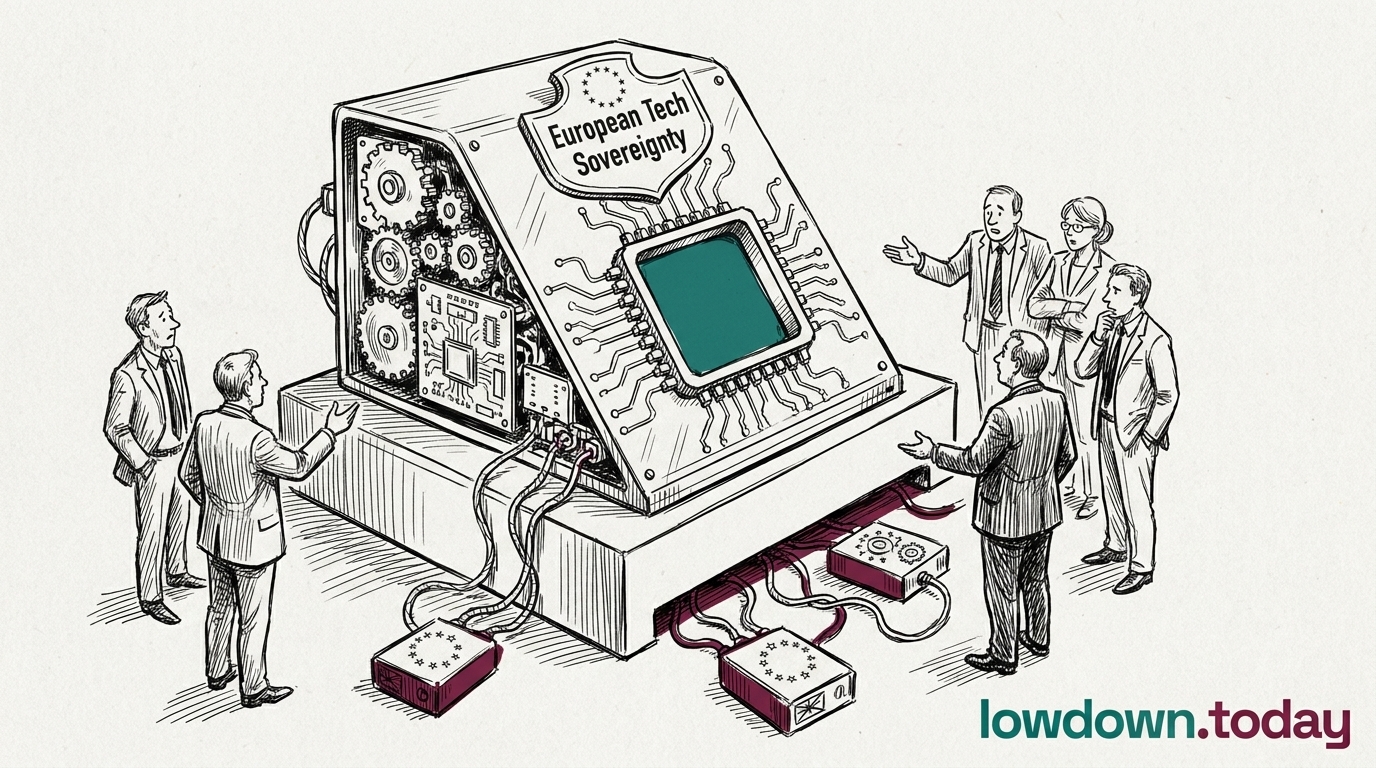
European Tech Sovereignty
23APR

Pentagon weighs Sledgehammer rename to reset WPR clock

3 min read
09:21UTC

Two US officials told NBC News on Tuesday that any resumed Iran operation may be renamed Operation Sledgehammer to argue that the 60-day War Powers Resolution clock restarts from zero.

TechnologyDeveloping
Key takeaway

Operation Sledgehammer is the Pentagon's procedural escape hatch from the War Powers Resolution exposure left by Operation Epic Fury.

The Pentagon is considering renaming any resumed Iran campaign Operation Sledgehammer, two US officials told NBC News on Tuesday 12 May. The stated rationale is procedural: a new named operation creates an untested argument that the War Powers Resolution's 60-day congressional-authorisation clock restarts from zero, displacing the exposure left by Operation Epic Fury, the original US Iran operation whose clock ran from 28 February and lapsed on 29 April without authorisation . The War Powers Resolution is the 1973 statute that requires a presidential withdrawal from hostilities within 60 days unless Congress votes authorisation.

The rename sits on top of Defence Secretary Pete Hegseth's sworn Senate Armed Services Committee testimony on 12 May that Article 2 of the US Constitution covers the strikes and no Authorisation for the Use of Military Force is required . Hegseth's Article 2 claim is the primary cover; Sledgehammer is the fallback if a federal court or a House majority forces accountability. Senator Lisa Murkowski's Iran AUMF has stayed unfiled since Hegseth destroyed its rationale , removing the only Republican-led legislative vehicle that would have constrained The Administration.

The White House presidential-actions index recorded zero signed Iran instruments on 12-13 May , the deliberate documentary silence that lets executive lawyers argue any future operation is a new matter. The House came within one vote of breaking that silence: the seventh war-powers resolution tied 212-212 on 14 May . Sledgehammer's purpose is to make that vote moot before it happens again. Declare Epic Fury ended, name the next campaign, argue the clock starts again.

Deep Analysis

In plain English

The US Congress passed a law in 1973 called the War Powers Resolution. It says the President can send troops into combat, but if Congress does not formally approve the war within 60 days, the President must stop. The Iran war started on 28 February 2026. The 60-day deadline passed on 29 April without Congress voting. The Pentagon is now considering giving any resumed military operation a new name, 'Operation Sledgehammer', arguing that a new name means the 60-day clock starts again from zero. Most legal experts say that does not work because the law attaches to the fighting, not the name on the operation, but the argument has never been tested in court.

Deep Analysis
Root Causes

The administration's fundamental constraint is the White House's own doctrine, stated publicly by Hegseth under oath on 12 May: Article 2 of the Constitution provides sufficient authority, and an AUMF is not required.

That testimony closes the path to retroactive congressional authorisation, because requesting an AUMF would implicitly concede the Article 2 claim is insufficient. The rename strategy exists precisely because the administration cannot seek the authorisation it publicly declared unnecessary.

Murkowski's Iran AUMF was the only legislative vehicle that could have resolved the clock problem with Republican cover. After Hegseth's testimony, filing the AUMF would require Republicans to contradict a sitting Defence Secretary's sworn testimony on their own party's war. The Sledgehammer rename is the administration's workaround for a political trap it built for itself.

Escalation

The rename strategy signals the administration intends to continue or resume kinetic operations beyond the current legal exposure window, without seeking congressional authorisation. This forecloses the most institutionally durable route to de-escalation, a floor vote that would require the administration to define its objectives publicly.

What could happen next?
  • Precedent

    If the Sledgehammer rename is accepted without legal challenge, it establishes that any President can extend undeclared wars indefinitely by cycling through new operation names, nullifying the War Powers Resolution in practice.

    Long term · Medium
  • Risk

    The House 212-212 tie on 14 May (ID:3311) shows a single member shift could force a war powers vote; the rename strategy is designed to render that vote moot before the membership arithmetic shifts again.

    Short term · High
  • Consequence

    Hegseth's Article 2 testimony makes it politically impossible for Republican senators to file an AUMF, removing the only legislative vehicle that would constrain the administration while also authorising the war.

    Immediate · High
First Reported In

Update #100 · Tehran prints the toll book; Delhi joins the queue

NBC News· 17 May 2026
Read original
Different Perspectives
United States (Google/Alphabet)
Alphabet lost its final Android appeal on 2 July with no further court to hear it, a result its Computer and Communications Industry Association allies frame as precedent, not deterrence, since the €4.1bn fine changed nothing about Google's Play Store terms across eight years of litigation.
UK Department for Science, Innovation and Technology
DSIT opened its £96m second Sovereign AI wave on 3 July, switching from April's equity stakes to fixed-price contracts because Britain has no domestic hyperscaler or Bpifrance-style lender to fund capacity another way. It is betting on buying outcomes it controls alone rather than joining an EU-wide framework.
German federal government
Berlin backed both German deliverables this week, Infineon's fab and Aleph Alpha's merger, but is finding one far harder to close than the other. It wants enforceable protective rights inside Cohere's cap table before the merger closes, a legal instrument the Bundeskartellamt has no filing to review yet.
European Commission
European Commission
The Commission banked a clean CJEU win on the eight-year Android case on 2 July, removing Google's last comparator argument before President von der Leyen rules on the far larger DMA self-preferencing fine due 27 July. Brussels treats Infineon's early Dresden delivery as proof the Chips Act mechanism works, at the node Europe already led.
Bruegel (EU industry sceptics)
Bruegel economist Mario Mariniello argued the EU sovereignty package mimics US and Chinese strategy while EU cloud providers hold roughly 15% of their home market; using nationality as a proxy for security without fixing the underlying capital and energy gaps that drive the dependency creates €86bn of migration cost without the security benefit it is sold as delivering.
France
France
France published a joint sovereignty definition with Germany at VivaTech and mobilised €13bn under Tibi Phase 3, placing SAP's partnership with Mistral as the working proof that a German enterprise-software giant running a French sovereign model inside public administration is what digital sovereignty looks like in practice.
