Skip to content
You can now search across every topic, entity and event.What's new
European Tech Sovereignty
8SEP

The carriers that did not leave

2 min read
15:06UTC

The USS Abraham Lincoln and USS George H.W. Bush held station in the Gulf on 18 June with no drawdown order, as the blockade they backed came down.

TechnologyDeveloping
Key takeaway

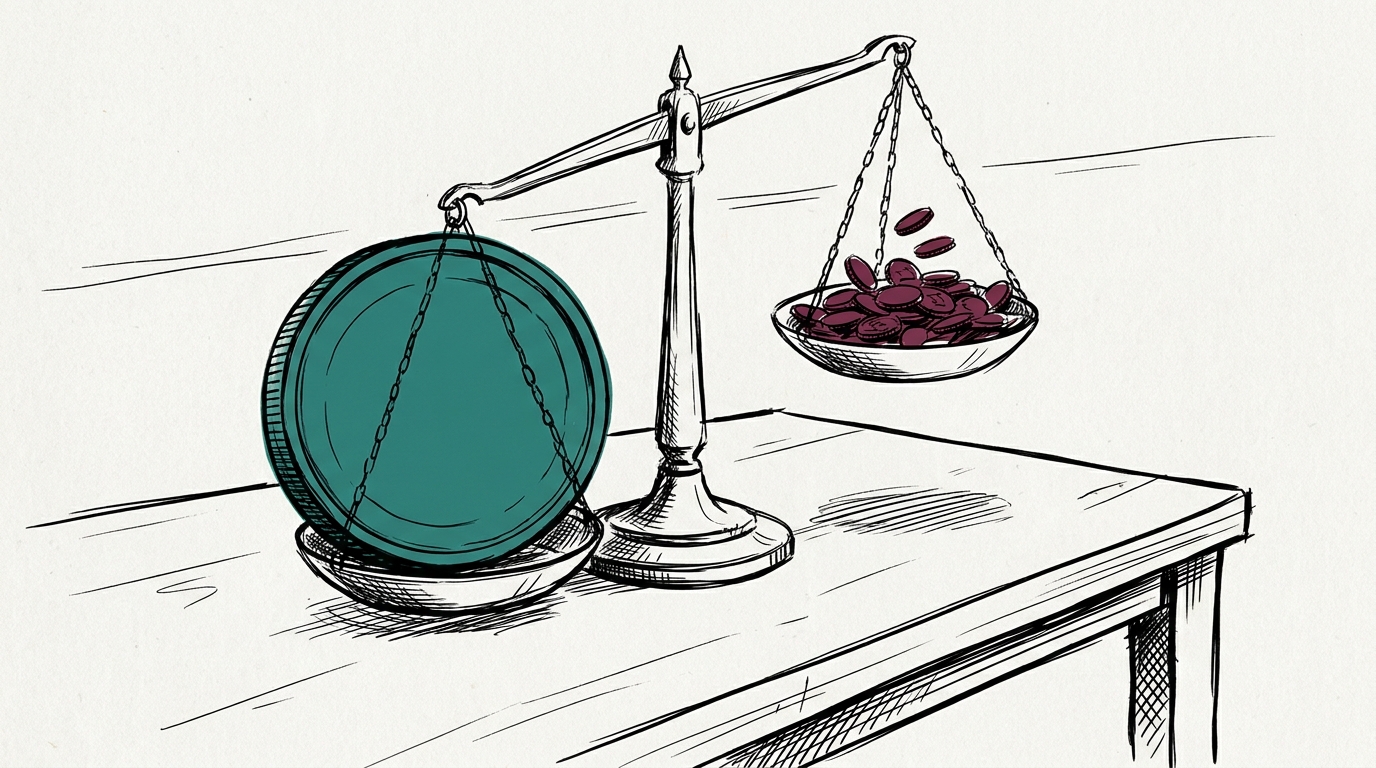
Trump opened the one lock that was free and kept the carriers that cost Iran.

The USS Abraham Lincoln and USS George H.W. Bush held station in The Gulf on 18 June, with no CENTCOM drawdown order to accompany the blockade wind-down . The two carrier strike groups are the heaviest US naval presence in the region and the standing threat behind every clause of the deal.

The week's single instrument-level move was the blockade lift, and it was the cheapest one on the board: reversible, costless to the United States, and insufficient on its own to reopen a strait that insurers and minesweepers keep shut. Everything else the Memorandum of Understanding obligates, sanctions relief, weapons verification, reconstruction money and the strait's physical reopening, sits in a final agreement nobody has drafted.

Keeping the carriers on station makes the asymmetry literal. Trump gave up the lever that constrained Iran at no cost to America and retained the one that constrains Iran at a cost to Iran. Across every stage of this deal the pattern has held: the civilian side signs, the powers that matter, the Revolutionary Guard Corps, the carriers, the London underwriters, commit to nothing. The week the deal happened, the only lock that opened was the one Washington held the key to.


Deep Analysis

In plain English

The United States has two of its largest warships, aircraft carriers called the Abraham Lincoln and the George H.W. Bush, sitting in the Persian Gulf. On 18 June, the US said it was stopping its naval blockade of Iranian ports. But it did not order those two ships to leave. Think of it this way: the security guard stopped checking bags at the door, but stayed standing there. The threat of reimposing the blockade remains because the military machinery to do it is still in place. For Iran's government, two US carriers on its doorstep after a supposed peace deal is a constant reminder that the US can reimpose pressure immediately if negotiations go badly.

Deep Analysis
Root Causes

The carrier holdover reflects a structural feature of US power projection: carrier strike groups are the most expensive and visible form of American military presence, and withdrawing them signals strategic disengagement more clearly than almost any other action. Trump's administration made a deliberate decision that ending enforcement (cheap) and withdrawing carriers (expensive in signalling terms) were separate decisions, each with its own calculus.

CENTCOM issued no drawdown order by design. Two carriers on station can resume enforcement within hours if Iran defaults on Phase 2 commitments. That re-imposition option is the structural underpinning of US coercive leverage during the 60-day window.

Escalation

The carrier holdover is the single most important structural signal of US intent in the Phase 2 window. Its continued presence without drawdown order means the 60-day negotiating period runs under implicit threat of re-escalation, which is Washington's design but carries the risk that Tehran uses it as justification for its own maximum-resistance positions.

What could happen next?
  • Consequence

    The two carriers on station without a drawdown order maintain US re-imposition capability through the entire 60-day Phase 2 window, providing coercive leverage on nuclear and sanctions negotiations.

    Short term · Assessed
  • Risk

    Iran may read the carrier holdover as evidence that the US views the MOU as a tactical pause rather than a genuine settlement, potentially hardening its nuclear positions in Phase 2 on the grounds that the war has not actually ended.

    Short term · Assessed
  • Opportunity

    A partial carrier drawdown from two to one strike group would cost the US minimal operational capability while providing Iran a concrete de-escalation signal that could ease the Phase 2 nuclear access negotiations.

    Short term · Reported
First Reported In

Update #132 · Trump lifted the blockade, not the strait

Wikipedia (aggregated CENTCOM statement)· 19 Jun 2026
Read original
Different Perspectives
Poland
Poland
Poland leads a self-announced AI Gigafactory consortium with a EUR 100 million phase-one commitment, matched by Czechia and joined by Hungary at EUR 25 million. EuroHPC has confirmed no consortium for the call closing 12 November, so the bloc exists only in national announcements so far.
UK Government (DCMS)
Secretary of State Lisa Nandy told the Commons on 3 September she has inherited the sovereign AI brief from Liz Kendall, but gave no assessment, figure or date on frontier-model access. It is the first public claim of ownership since DSIT's abolition, without the substance the committee asked for.
ASML
ASML
ASML CEO Christophe Fouquet credited Intel Foundry, not a European fab, with shipping the first high-volume logic product made on High-NA EUV, the tool only ASML builds. Europe holds the chokepoint tool; the company that spent it into volume production first is American.
Luxembourg
Luxembourg
Luxembourg joined Mistral's Series D as a new investor on 8 September, the same government that co-funds EuroHPC's MeluXina-AI supercomputer. One small member state now funds the sovereign compute Mistral may need and holds equity in the company using it.
Samsung Electronics
Samsung Electronics
Samsung led Mistral's Series D on 8 September and the same day expanded its ASML collaboration on next-generation lithography. One Korean company now sits atop Europe's largest AI funding round and inside its most sensitive chip-tooling relationship.
Mistral AI
Mistral AI
Mistral closed a EUR 3 billion Series D above a EUR 21 billion valuation on 8 September, with Samsung leading and Luxembourg joining as a new state investor. The company markets itself as Europe's non-American AI option even as the round's lead capital comes from South Korea and two US private-equity firms.