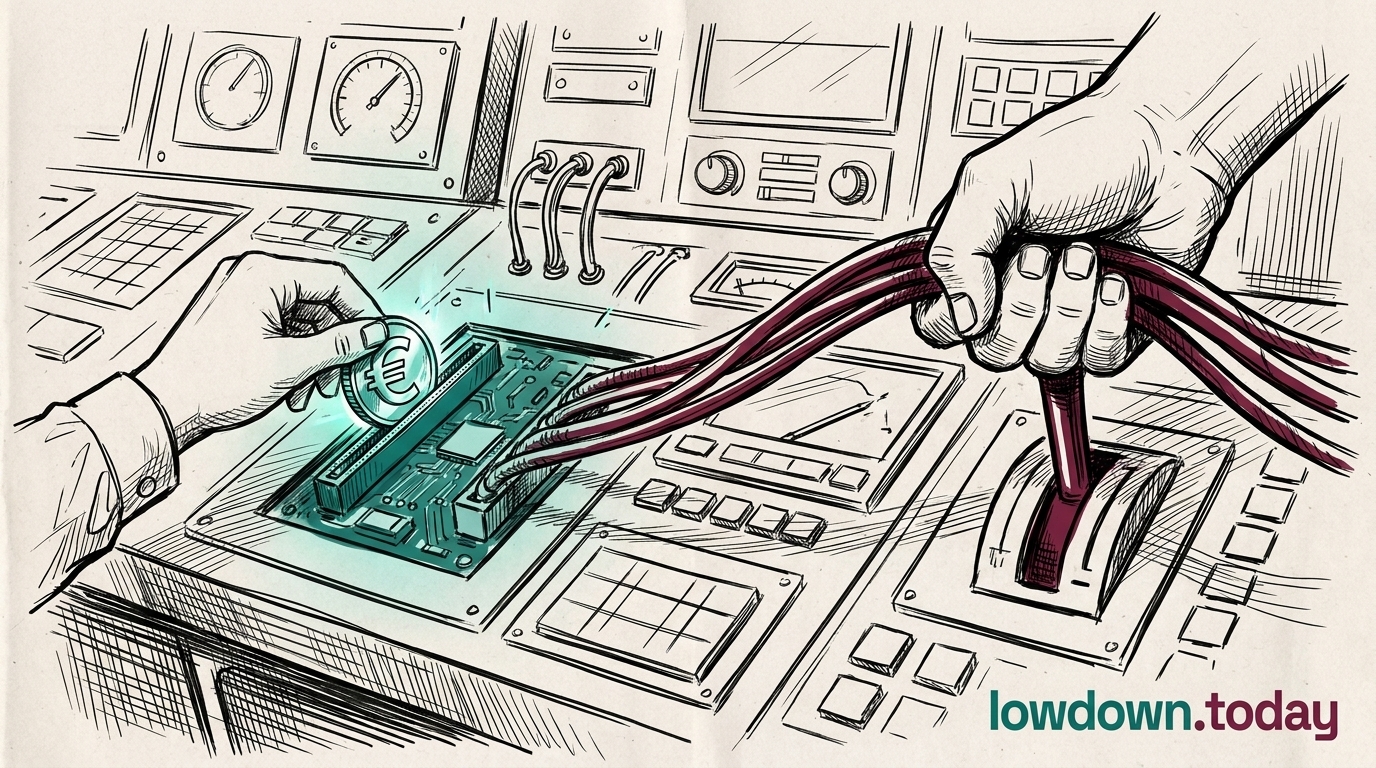
Ten more countries joined Pax Silica in June, the chip-coordination alliance run from the US State Department that the EU signed up to with a $40bn American-chip commitment. The new members include the Netherlands and Germany, home respectively to ASML and the TSMC-led Dresden fab, alongside Greece, several Latin American states and Estonia as an observer.
Pax Silica exists to harmonise export-control policy across allied chip producers around a US-set agenda. The June intake brings into one Washington-run framework the two European states that matter most to advanced chipmaking: the Netherlands, which hosts the only maker of leading-edge lithography tools, and Germany, where Europe's flagship new fab is rising. Their semiconductor policy now sits inside an American coordination structure at the very moment Brussels is trying to pin down what European sovereignty means.
The arrangement reads oddly beside the US bill targeting ASML: a country can be a Pax Silica partner and a target of American chip legislation in the same week. Members are already uneasy about how much discretion they have handed Washington, a worry that sharpens once the same alliance reaches into the EU's own compute funding.





