Skip to content
You can now search across every topic, entity and event.What's new
European Tech Sovereignty
30JUN

Brussels fines Apple, Meta, and X €820m

3 min read
17:31UTC

The European Commission imposed its largest batch of platform fines under the DMA and DSA, totalling €820m across three US tech companies.

TechnologyDeveloping
Key takeaway

The EU's first major DMA and DSA fines total €820m and confirm Brussels will use financial enforcement.

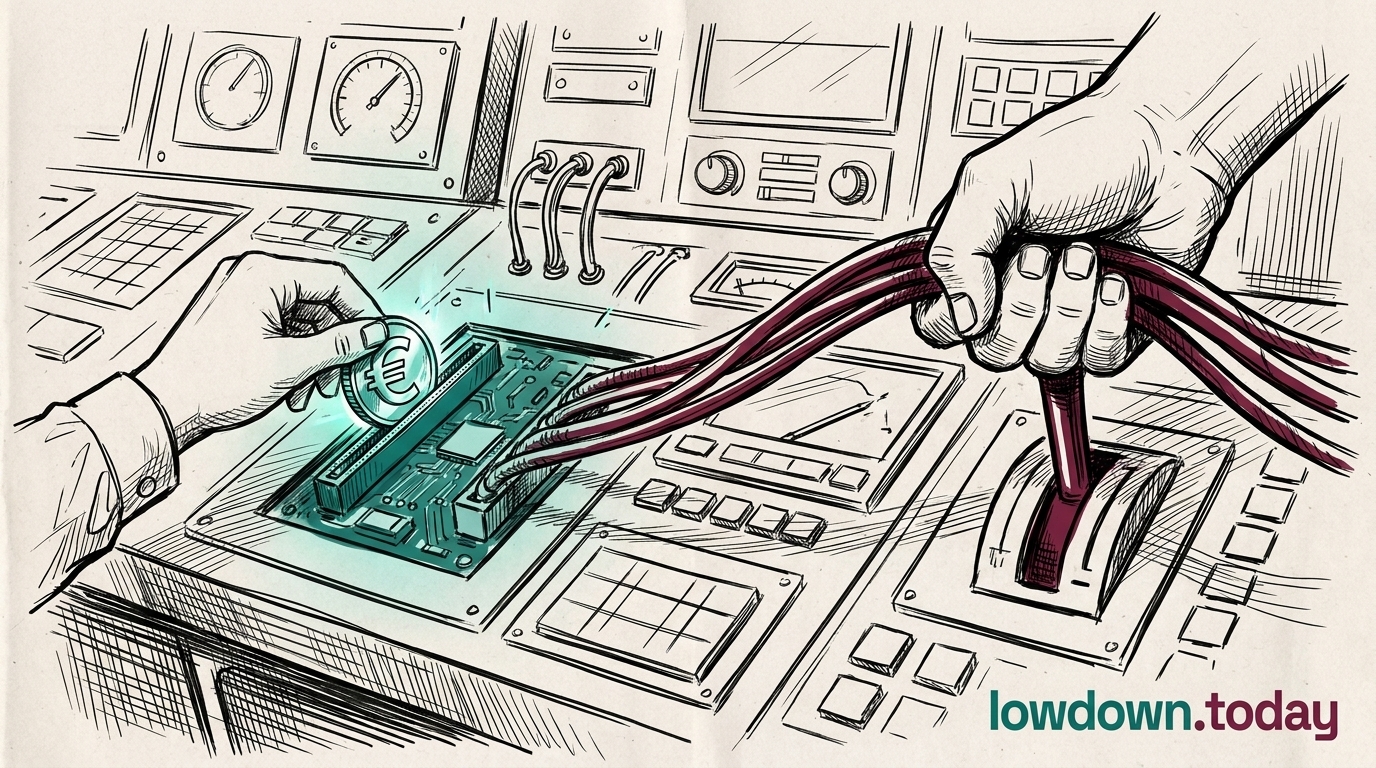
The European Commission fined Apple €500m for preventing developers from communicating freely with consumers, and Meta €200m for its pay-or-consent advertising model, under the Digital Markets Act 1. Separately, X (formerly Twitter) received a €120m fine under the Digital Services Act for deceptive verification practices, opaque advertising, and blocking researcher data access 2. The cumulative total: €820m.

The Apple fine targeted the company's App Store anti-steering rules, which prevented app developers from telling users about cheaper purchasing options outside the App Store. Meta's fine addressed a consent mechanism that forced European users to either pay for an ad-free experience or accept personalised tracking. Both cases concerned practices the companies had argued were compliant with the DMA's requirements.

The fines are large but survivable for companies of this scale. Apple's annual revenue exceeds $380bn. The enforcement significance is procedural: these are the first substantial DMA penalties, and they confirm that The Commission will use financial sanctions rather than relying on compliance deadlines and dialogue. The potential fine exposure across all designated gatekeepers exceeds €100bn if The Commission calculates penalties at the maximum 10% of global turnover. That ceiling gives Brussels considerable leverage in ongoing and future investigations.

Deep Analysis

In plain English

The European Union has two major laws that regulate large technology companies: the Digital Markets Act (DMA) targets the biggest digital platforms; the tech 'gatekeepers'; and requires them to give users and businesses more choice and fairness. The Digital Services Act (DSA) targets harmful or deceptive content and practices on platforms. In early 2026, the European Commission fined Apple €500 million under the DMA for preventing app developers from telling their customers about better deals available outside Apple's own App Store. Apple controls the iPhone's entire app distribution system, and the EC found that Apple was using that control to charge developers up to 30% commission while blocking them from directing customers elsewhere. Meta received a €200 million fine for its 'pay or consent' advertising model; which forced users to either pay a subscription fee or agree to targeted advertising. X (formerly Twitter) was fined €120 million for its blue checkmark verification system, which critics said misled users about who was trustworthy, and for blocking researchers from accessing public data.

Deep Analysis
Root Causes

The DMA's gatekeeper designation framework creates a structural asymmetry: the six designated gatekeepers (Alphabet, Amazon, Apple, ByteDance, Meta, Microsoft) are all US or Chinese companies. No European company meets the thresholds ($75bn market capitalisation, 10,000 active business users, 45m active end users in the EU).

This is not a design flaw; it reflects the actual distribution of digital market power; but it means DMA enforcement will exclusively target non-European entities indefinitely, creating the trade friction the US Section 301 investigation is designed to address.

X's €120m DSA fine is structurally different: it targets deceptive practices (the blue checkmark verification system that previously distinguished public figures from ordinary accounts) and researcher data access. The DSA applies a broader set of platforms, including Twitter/X, YouTube, and other large online platforms with more than 45m EU users. The €120m figure reflects DSA's lower fine ceiling relative to DMA.

What could happen next?
  • Consequence

    The Apple fine scale signals DMA enforcement has crossed the threshold where gatekeeper compliance is more economically rational than continued litigation, likely accelerating Apple's implementation of DMA interoperability requirements.

    Short term · 0.75
  • Risk

    The US Section 301 investigation framing DMA enforcement as 'economic warfare' raises the risk of tariff or trade retaliation that pressures the Commission to moderate enforcement intensity.

    Medium term · 0.6
  • Opportunity

    DMA cloud interoperability mandates, if upheld after gatekeeper legal challenges, create structural switching cost reductions that benefit European cloud providers disproportionately.

    Long term · 0.65
First Reported In

Update #1 · Europe's chip ambitions meet reality

CNBC· 13 Apr 2026
Read original
Different Perspectives
United States (Google/Alphabet)
Alphabet lost its final Android appeal on 2 July with no further court to hear it, a result its Computer and Communications Industry Association allies frame as precedent, not deterrence, since the €4.1bn fine changed nothing about Google's Play Store terms across eight years of litigation.
UK Department for Science, Innovation and Technology
DSIT opened its £96m second Sovereign AI wave on 3 July, switching from April's equity stakes to fixed-price contracts because Britain has no domestic hyperscaler or Bpifrance-style lender to fund capacity another way. It is betting on buying outcomes it controls alone rather than joining an EU-wide framework.
German federal government
Berlin backed both German deliverables this week, Infineon's fab and Aleph Alpha's merger, but is finding one far harder to close than the other. It wants enforceable protective rights inside Cohere's cap table before the merger closes, a legal instrument the Bundeskartellamt has no filing to review yet.
European Commission
European Commission
The Commission banked a clean CJEU win on the eight-year Android case on 2 July, removing Google's last comparator argument before President von der Leyen rules on the far larger DMA self-preferencing fine due 27 July. Brussels treats Infineon's early Dresden delivery as proof the Chips Act mechanism works, at the node Europe already led.
Bruegel (EU industry sceptics)
Bruegel economist Mario Mariniello argued the EU sovereignty package mimics US and Chinese strategy while EU cloud providers hold roughly 15% of their home market; using nationality as a proxy for security without fixing the underlying capital and energy gaps that drive the dependency creates €86bn of migration cost without the security benefit it is sold as delivering.
France
France
France published a joint sovereignty definition with Germany at VivaTech and mobilised €13bn under Tibi Phase 3, placing SAP's partnership with Mistral as the working proof that a German enterprise-software giant running a French sovereign model inside public administration is what digital sovereignty looks like in practice.
