Skip to content
You can now search across every topic, entity and event.What's new
European Oil Markets
18JUN

Brent closes at $105.73, dark activity rises

2 min read
12:45UTC

Brent crude broke back above $100 on Friday and closed at a new post-extension high. Windward logged nine Hormuz transits against a pre-war baseline above 100.

EconomicDeveloping
Key takeaway

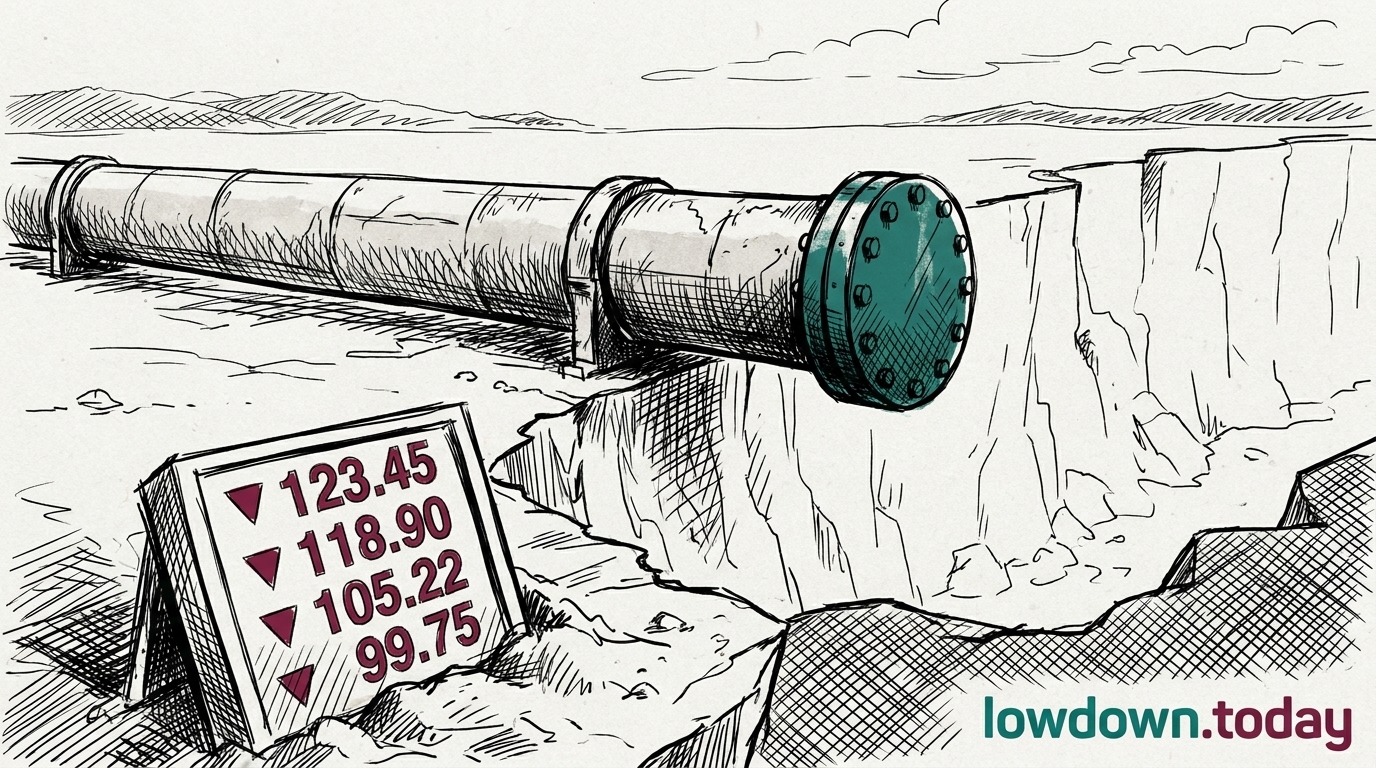
Brent retakes $100 as dark activity grows on collapsed transit volumes.

Brent Crude traded above $106 on Friday 24 April morning and closed at $105.73, a new post-extension high. The price sits 57% above the $67.41 pre-war baseline and marks the first trading day back above the $100 threshold since the ceasefire relief of 21 April priced out. Brent last cleared $100 at contract expiry on 18 April , when it settled at $97.91 after a three-day slide; the current level reverses that compression.

Windward, the maritime-intelligence provider, logged 9 Hormuz transits on 22 April (six inbound, three outbound) against a pre-war baseline above 100 per day 1. Gulf-wide vessel presence climbed to 868 vessels (+108), reversing the 20 April easing, as dark-activity events, defined by Windward as AIS switch-offs or spoofing, rose 13% to 132 events. Three named Windward-tracked vessels tied to the 22 April IRGC seizures appear in the 22 April transit data prior to the interdictions, confirming live tracking.

Dark activity rose 13% on 22 April even as transit count collapsed 91% against the pre-war baseline. Fewer vessels would normally suppress deceptive-shipping signals because fewer hulls are available to hide; instead Windward logged the opposite pattern on the same day IRGC seizures and mine-laying threats escalated. Charterers are still attempting the route but now layering identity obfuscation on every passage, which raises the probability of a misidentified vessel drawing CENTCOM engagement under the verbal shoot-kill order.

For UK motorists the wholesale shift translates to roughly 25-30p per litre above pre-war pump prices if the retail sector passes it through by early May. European haulage desks are pricing the new high into May contracts; Mediterranean LNG buyers are seeing the knock-on in spot markets. With no new Iran instrument signed in Washington, the Brent level is responding to kinetic risk in the strait rather than to paper.


Deep Analysis

In plain English

Oil hit $105.73 a barrel on 24 April, the highest point since the ceasefire relief of 21 April priced out of the market. That is 57% above what oil cost the day before this war started. For UK motorists, it translates to roughly 25-30p per litre above pre-war pump prices. A shipping intelligence firm called Windward tracked only 9 vessels transiting the Strait of Hormuz on 22 April, against more than 100 per day before the war. But it also tracked 132 vessels behaving suspiciously, trying to hide their movements. The strait has not emptied; it has filled with risk instead of cargo.

What could happen next?
  • Consequence

    Dark-activity events rising 13% on the same day IRGC seizure and mine-laying threats escalate means deceptive shipping is growing precisely when the legal and kinetic risk of detection in Hormuz is highest, compressing risk into the same narrow corridor.

First Reported In

Update #78 · Allies flagged, adversaries listed, nothing signed

US Treasury OFAC· 24 Apr 2026
Read original
Different Perspectives
Gulf oil producer
Gulf oil producer
Secured OPEC's confirmed 188,000 b/d September increment with the next meeting set for 6 September, but the Secretariat's own 2 August release says nothing about the fourth quarter. Output guidance beyond September remains undisclosed even as delegate sourcing keeps filling that gap.
Money manager positioned in WTI
Added 21,402 lots to a 108,307 net long in NYMEX WTI in the week to 28 July, against just 1,485 added to Brent's 15,740, a roughly fourteen-to-one split. Conviction sits in the American benchmark even as the European diesel story sets the record.
Indian refiner buying Urals
Bought Russian crude at a discount that narrowed to $1-2 a barrel in the week to 29 July from over $10, as Hormuz risk pushed it toward Urals. If that risk eases with the strike now called off, the discount it is currently enjoying could re-widen just as fast.
Russian diesel exporter
Novak tied any lifting of the diesel export ban, due to lapse 31 July, to an unspecified market recovery with no date, and pushed the gasoline ban to end-2026. An open-ended constraint suits an exporter benefiting from the record European crack it feeds.
War-risk underwriter
Withdrew war-risk cover for Saudi-linked hulls on 24 July and has not reinstated it, holding Bab el-Mandeb tanker transits near 7.5 a day. A cancelled strike does not by itself trigger the committee review needed to re-accept the class.
Northwest European refiner
Sources only 17% of diesel imports from Saudi Red Sea ports against the Mediterranean's 24%, so the ARA crack at $85.86 trails the Med print by $5.81. Lower Red Sea exposure is cushioning it against the rerouting cost, not eliminating it.



