Skip to content
You can now search across every topic, entity and event.What's new
European Oil Markets
15JUN

Fico holds Ukraine EU bid over Druzhba

4 min read
11:33UTC

Slovakia's prime minister declared an energy emergency and threatened to torpedo Ukraine's EU membership over a pipeline dispute — cutting power supplies and restricting diesel in the sharpest intra-EU rift of the war.

EconomicDeveloping
Key takeaway

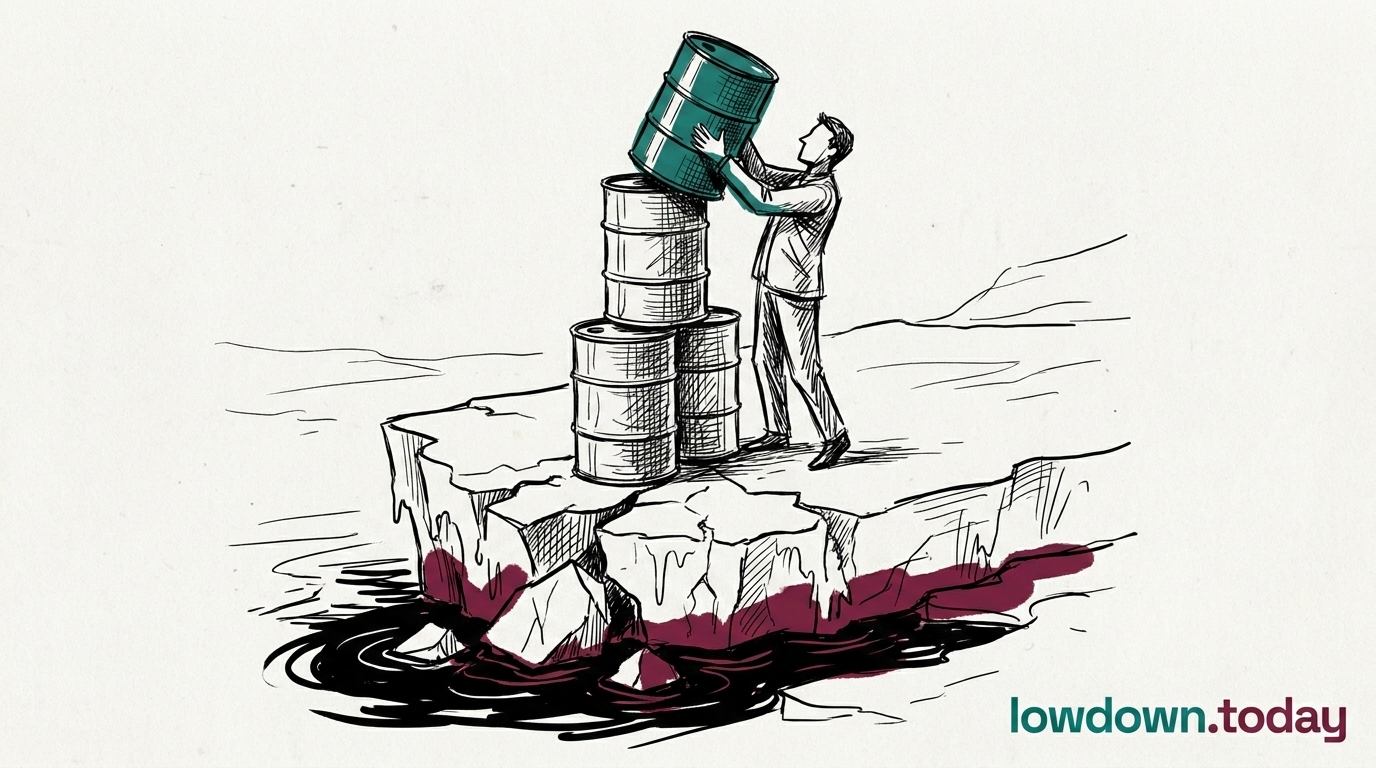
Fico converts Slovakia's refinery lock-in to Ural crude into a veto threat over Ukraine's EU accession.

Slovak Prime Minister Robert Fico declared a state of emergency in the oil supply sector over the Druzhba pipeline shutdown, then escalated with three punitive measures: a threat to withdraw Slovakia's support for Ukraine's EU accession, a halt to emergency electricity supplies to Ukraine, and 30-day restrictions on diesel exports.

The factual dispute at the centre of the crisis remains unresolved. Fico claimed there are "no signs of damage to the Druzhba pipeline" 1 — directly contradicting Ukraine's account that a Russian drone strike damaged infrastructure at the Brody pumping station in late January 2. EU officials have indicated they accept Kyiv's version. The detail Fico's framing omits is that the damage was caused by Russian attack, not Ukrainian sabotage or neglect.

This is the second time in a month that a Central European government has leveraged Druzhba against Ukraine within EU institutions. Hungary's Foreign Minister Péter Szijjártó conditioned consent on the €90 billion EU loan package on pipeline repairs, blocking the disbursement for weeks until Zelenskyy agreed to a repair commitment and EU-funded inspections . Fico's intervention follows the same template but raises the stakes: EU accession is a multi-decade strategic question, not a single financial disbursement. Slovakia's Slovnaft refinery in Bratislava is configured almost entirely for Russian crude delivered through Druzhba's southern branch, giving Bratislava genuine supply vulnerability — but Fico's response extends well beyond supply management into punitive Foreign Policy.

The electricity cutoff carries immediate weight. Ukraine's power grid has been under sustained Russian bombardment throughout the war, and Slovakia was one of the emergency suppliers helping stabilise it through winter. Withdrawing that supply while Russia continues to strike Ukrainian Energy infrastructure places Bratislava's action in functional parallel with Moscow's own campaign — a point Kyiv's allies have made privately. The diesel export restrictions, meanwhile, constrain fuel availability for neighbouring EU states at least as much as for Ukraine, suggesting the measures are bundled for political leverage rather than operational supply management. With the EU's phased ban on Russian gas beginning 25 April for short-term LNG contracts and reaching full pipeline prohibition by September 2027 , both Fico and Orbán face a narrowing window: the regulatory framework that gives their energy dependence political force is being dismantled on a fixed schedule.


Deep Analysis

In plain English

EU membership requires unanimous agreement from all 27 existing members. Slovakia holds a veto over Ukraine's eventual accession, and Fico is threatening to use it unless oil flows through the Druzhba pipeline resume. Ukraine says Russian drones damaged a pumping station; Fico denies any damage occurred, aligning with Moscow's account. Beyond the accession threat, Fico also halted emergency electricity supplies to Ukraine during active warfare and restricted diesel exports to neighbouring markets. Slovakia's main refinery was engineered specifically for Russian crude chemistry and cannot easily switch to alternatives — a genuine technical constraint Fico is now weaponising as political leverage.

Deep Analysis
Synthesis

The dispute reveals a gap in EU energy transition strategy: member states whose refining infrastructure is physically incompatible with non-Russian crude were not offered conversion financing comparable to what Baltic states received for supply diversification. Until that conversion is funded, Fico retains structural leverage independent of his political alignment with Moscow — and successive crises will recur on the same fault line.

Root Causes

Slovakia's Slovnaft refinery was engineered around the specific sulphur chemistry of Ural crude and cannot run on lighter Brent-grade alternatives without costly hardware conversion. This physical lock-in — not merely political alignment with Moscow — gives Fico a genuine domestic economic constraint. Unlike Baltic states, which received EU co-financing for LNG terminals and interconnectors, Slovakia was not offered equivalent infrastructure conversion funding. That investment gap created the structural vulnerability Fico now exploits.

Escalation

Halting electricity exports to Ukraine during active combat operations marks a qualitative escalation beyond a bilateral energy pricing dispute. Grid stability has direct military-logistical implications — affecting communications infrastructure, hospitals, and defence-related manufacturing. The body frames this as a diplomatic measure; its wartime operational consequences are not addressed.

What could happen next?
  • Risk

    Fico's electricity cutoff to Ukraine during wartime may prompt European Commission legal scrutiny under EU energy solidarity regulations, risking infringement proceedings against Slovakia.

    Short term · Suggested
  • Consequence

    Slovakia's 30-day diesel export restriction tightens central European fuel markets; Czech and Austrian spot prices could rise as Slovnaft output is redirected domestically.

    Immediate · Suggested
  • Risk

    If Fico's accession veto threat is not resolved, it establishes a template for other member states to extract bilateral concessions from Kyiv using the unanimity requirement.

    Medium term · Suggested
  • Precedent

    A member state openly contradicting EU officials' factual assessment of a Russian-linked infrastructure incident tests the bloc's capacity to maintain epistemological coherence on Russia-related disputes.

    Medium term · Assessed
First Reported In

Update #6 · Ukraine sends negotiators as front reverses

Global Times· 20 Mar 2026
Read original
Causes and effects
This Event
Fico holds Ukraine EU bid over Druzhba
Slovakia is the second Central European government in a month to weaponise Russian energy dependence against Ukraine inside the EU. The EU accession threat elevates the dispute from a supply management question to a challenge to Ukraine's long-term Euro-Atlantic trajectory, while the electricity cutoff aligns Bratislava's actions with Moscow's own energy-targeting campaign.
Different Perspectives
Sanctions compliance officer reviewing a Lukoil International GmbH bid
OFAC's amended FAQ 1224 gives a compliance desk its first published standard: full severance from Lukoil and a US-jurisdiction blocked account for sale proceeds. The conditions name neither ISAB nor Italy, so a Priolo Gargallo-linked bid answers a different question than a Neftochim Burgas or Petrotel Ploiesti one.
Managed-money funds on Brent Last Day
CFTC data for the week to 21 July showed managed money flipping 74,400 contracts to a net long of 15,665 against 1,410 short on the Brent Last Day contract, code 06765T. A fund that held that short through July has now covered it, and the spent short base raises the bar for the next leg higher.
Saudi crude exporters
Saudi-linked tanker transits through Bab el-Mandeb fell to about 7.5 a day after the 24 July underwriting withdrawal, pushing more barrels onto the longer route round the Cape or through the Yanbu terminal. Every diverted barrel ties up a ship for longer, and a fleet that turns slower charges more.
Tanker owners on the Bab el-Mandeb route
Lloyd's-market syndicates withdrew war-risk cover from Saudi-linked hulls on 24 July, leaving owners of that class of vessel to sail Bab el-Mandeb uninsured or not at all. Tanker transits on the route fell to roughly 7.5 a day, and cover, once withdrawn, does not return on a shipowner's timetable.
Eni
Eni
Eni's board approved second-quarter results on 29 July, swinging refining EBIT to a EUR0.08bn profit from a year-earlier loss even as group profit doubled, and named Red Sea freight cost as a cap on that improvement. A refiner absorbing higher shipping costs on Saudi-linked crude while its numbers improve treats the freight line as a drag, not a crisis.
Asian buyers (India, Japan, China, South Korea)
Asian refiners are absorbing 62% of Yanbu's 3.75m b/d flow, the bulk of Saudi Arabia's rerouted crude now clearing east rather than into the Atlantic basin. That destination split leaves Asian buyers more exposed to any single Yanbu-specific disruption than under the kingdom's normal multi-terminal export pattern.



