Skip to content
You can now search across every topic, entity and event.What's new
European Oil Markets
15JUN

Israel Strikes Iran's Largest Domestic Fuel Facility

2 min read
11:33UTC

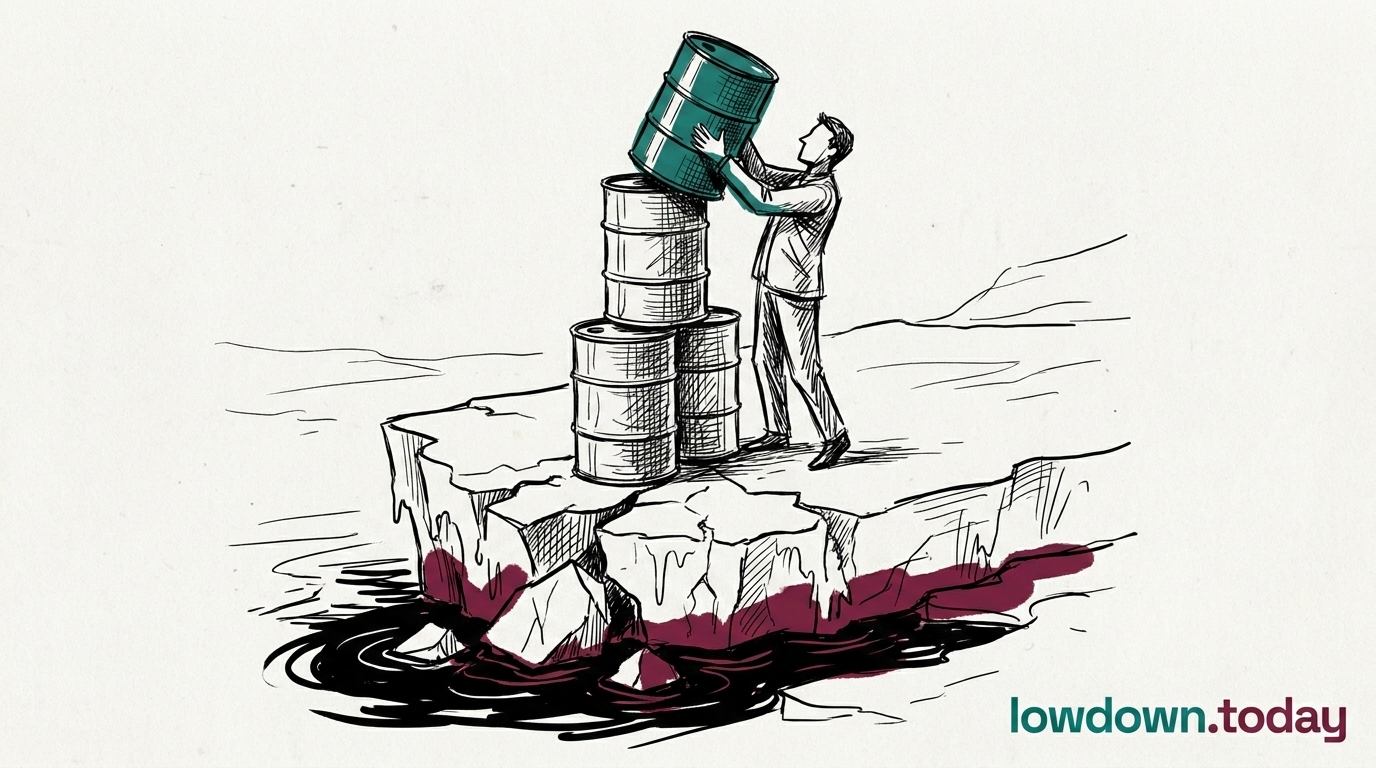
The Mahshahr strike marks a shift from targeting export infrastructure to civilian fuel supply, destroying an estimated 70% of Iran's gasoline production capacity.

EconomicDeveloping
Key takeaway

Israel's targeting shifted from export to civilian fuel supply.

The Israel Defence Forces struck the Mahshahr Petrochemical Complex on 5 April, Iran's largest, responsible for an estimated 70% of domestic gasoline production. The same day, IDF strikes hit air defence systems and ballistic missile arrays in Tehran and the al-Shalamcheh border crossing between Iraq and Iran.

The Mahshahr strike marks a shift in targeting logic. Previous Israeli operations focused on export infrastructure: refineries, terminals, pipeline nodes. Mahshahr supplies the domestic market. Destroying 70% of a country's gasoline production capacity is a material reduction in the civilian population's access to fuel and transportation. The distinction between strategic and civilian-impact targeting has narrowed considerably.

The 100-plus US legal experts who raised IHL concerns about university strikes will find sharper grounds here. Export infrastructure has a clearer dual-use military rationale. A petrochemical complex that supplies civilian petrol does not. The humanitarian consequences will be measured in fuel shortages affecting transportation, agriculture, and heating within days.

Reconstruction of a facility of this scale requires years under normal conditions and is effectively impossible under the current sanctions framework, which restricts the import of industrial equipment. Iran's domestic fuel crisis, already strained by wartime disruption, enters a new phase.


Deep Analysis

In plain English

Israel bombed the facility that makes most of Iran's petrol. This will cause fuel shortages for ordinary Iranians, not just reduce export revenue. It is a different kind of target from oil terminals and military sites, because it directly affects civilians' ability to drive, heat their homes, and transport food.

Deep Analysis
Root Causes

The escalation in targeting follows from the attritional logic of the air campaign. With export infrastructure already degraded over six weeks, the target set necessarily expands to domestic facilities. The distinction between strategic and civilian infrastructure erodes as the campaign matures.

Escalation

Escalatory. The shift from export to domestic fuel infrastructure represents a qualitative change in the campaign's humanitarian impact. It increases internal pressure on the Iranian government but also increases the IRGC's ability to rally domestic support against external aggression.

What could happen next?
  • Fuel shortages affecting civilian transportation and agriculture within days

    days · Assessed
  • International humanitarian law scrutiny intensifies over civilian infrastructure targeting

    weeks · Assessed
  • Internal pressure on Iranian government increases but may rally domestic support for IRGC

    weeks · Suggested
First Reported In

Update #60 · Pakistan's Ceasefire Plan Fills the Vacuum

Alma Center· 6 Apr 2026
Read original
Causes and effects
This Event
Israel Strikes Iran's Largest Domestic Fuel Facility
Previous Israeli operations focused on export infrastructure: refineries, terminals, pipeline nodes. Mahshahr supplies the domestic market. Destroying 70% of a country's gasoline production capacity is a material reduction in the civilian population's access to fuel and transportation. The distinction between strategic and civilian-impact targeting has narrowed to the point of disappearing.
Different Perspectives
Sanctions compliance officer reviewing a Lukoil International GmbH bid
OFAC's amended FAQ 1224 gives a compliance desk its first published standard: full severance from Lukoil and a US-jurisdiction blocked account for sale proceeds. The conditions name neither ISAB nor Italy, so a Priolo Gargallo-linked bid answers a different question than a Neftochim Burgas or Petrotel Ploiesti one.
Managed-money funds on Brent Last Day
CFTC data for the week to 21 July showed managed money flipping 74,400 contracts to a net long of 15,665 against 1,410 short on the Brent Last Day contract, code 06765T. A fund that held that short through July has now covered it, and the spent short base raises the bar for the next leg higher.
Saudi crude exporters
Saudi-linked tanker transits through Bab el-Mandeb fell to about 7.5 a day after the 24 July underwriting withdrawal, pushing more barrels onto the longer route round the Cape or through the Yanbu terminal. Every diverted barrel ties up a ship for longer, and a fleet that turns slower charges more.
Tanker owners on the Bab el-Mandeb route
Lloyd's-market syndicates withdrew war-risk cover from Saudi-linked hulls on 24 July, leaving owners of that class of vessel to sail Bab el-Mandeb uninsured or not at all. Tanker transits on the route fell to roughly 7.5 a day, and cover, once withdrawn, does not return on a shipowner's timetable.
Eni
Eni
Eni's board approved second-quarter results on 29 July, swinging refining EBIT to a EUR0.08bn profit from a year-earlier loss even as group profit doubled, and named Red Sea freight cost as a cap on that improvement. A refiner absorbing higher shipping costs on Saudi-linked crude while its numbers improve treats the freight line as a drag, not a crisis.
Asian buyers (India, Japan, China, South Korea)
Asian refiners are absorbing 62% of Yanbu's 3.75m b/d flow, the bulk of Saudi Arabia's rerouted crude now clearing east rather than into the Atlantic basin. That destination split leaves Asian buyers more exposed to any single Yanbu-specific disruption than under the kingdom's normal multi-terminal export pattern.



