Skip to content
You can now search across every topic, entity and event.What's new
European Oil Markets
15JUN

Iran War Burns Through Pacific Missile Reserves

3 min read
11:33UTC

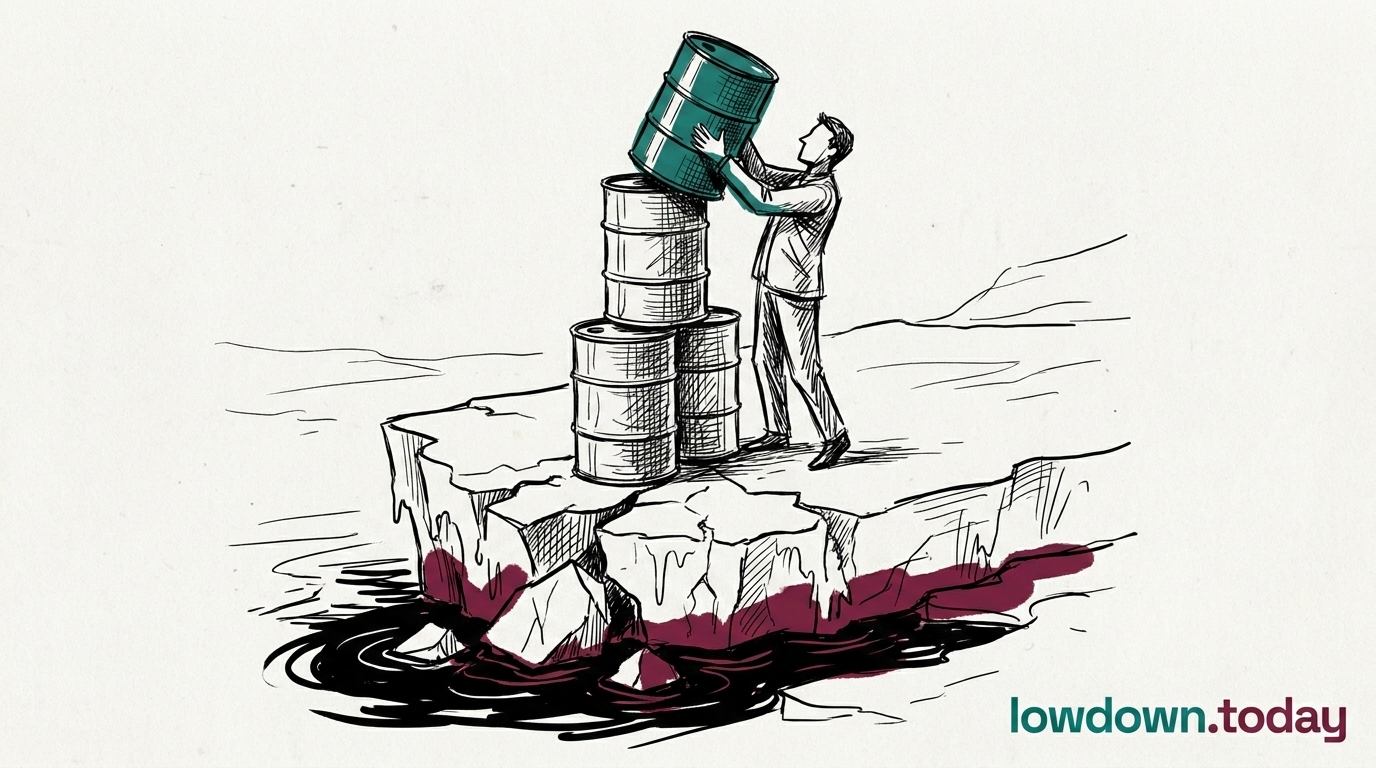
The US has fired more cruise missiles into Iran in four weeks than it can build in two and a half years. The replacements were earmarked for a China contingency.

EconomicDeveloping
Key takeaway

Pacific deterrence is being spent in Iran faster than production can replace it.

Bloomberg reported on 4 April that the US has fired more than 1,000 JASSM-ER cruise missiles in the first four weeks of Operation Epic Fury. The missiles were drawn from stockpiles previously allocated to Pacific Command for a potential Taiwan contingency. 1

Annual JASSM-ER output stands at 396, expandable to 860 under surge capacity. At 1,000 consumed in 28 days, the Iran war is burning through 2.5 years of planned production each month. Total funded inventory since 2009: just over 6,200. The restock gap runs 18 to 30 months under even the most optimistic surge scenario.

Combined with Arrow-3 interceptors at 81% depletion and THAAD stocks within one month of exhaustion, the US is simultaneously drawing down its primary standoff strike capability and its missile defence inventory. No emergency resupply announcement has been made for any of these systems. The RUSI report that documented 11,294 munitions expended in the campaign's first 16 days at $26 billion now has a sequel: the specific weapon designed for a Taiwan Strait scenario is being consumed at a rate that leaves the Pacific defenceless through at least mid-2028.

Pentagon officials declined to comment. China does not need classified intelligence to calculate what this means. Bloomberg published the numbers.


Deep Analysis

In plain English

The US had a stockpile of advanced cruise missiles that it was keeping in reserve to deter China from invading Taiwan. It has now used more than 1,000 of those missiles in the Iran war in just four weeks. America makes only about 400 of these missiles per year, even at maximum factory effort. Replacing what was used will take at least two years. During those two years, the missiles that were supposed to stop a China attack on Taiwan are not available. China's military planners can read the same news report that Bloomberg published.

Deep Analysis
Root Causes

JASSM-ER is built at a single Lockheed Martin facility in Troy, Alabama. The production bottleneck is tooling and component supply, not labour or willingness. The US decision to deprioritise precision munitions production following the Cold War and to rely on just-in-time inventory assumptions left the industrial base unable to surge beyond 860 units annually on any notice period shorter than 18 months.

The Pacific Command allocation problem is structural: JASSM-ER is the primary weapon for the US Air Force's anti-access/area denial penetration concept in a Taiwan scenario, designed to defeat Chinese S-400 equivalents from beyond their engagement range. No alternative weapon with equivalent standoff range and payload exists in current US inventory, meaning the depletion has no near-term tactical substitute.

What could happen next?
  • Risk

    Pacific deterrence is materially degraded for 18-30 months regardless of how the Iran conflict ends, creating a window Chinese strategic planners can observe and potentially exploit.

  • Consequence

    The $200 billion war supplemental debate in Congress will now include a Pacific industrial base dimension, potentially increasing the final figure and the political complexity.

First Reported In

Update #59 · Day 37: A Ground War Inside Iran That Nobody Will Name

Jerusalem Post / Bloomberg· 5 Apr 2026
Read original
Different Perspectives
Sanctions compliance officer reviewing a Lukoil International GmbH bid
OFAC's amended FAQ 1224 gives a compliance desk its first published standard: full severance from Lukoil and a US-jurisdiction blocked account for sale proceeds. The conditions name neither ISAB nor Italy, so a Priolo Gargallo-linked bid answers a different question than a Neftochim Burgas or Petrotel Ploiesti one.
Managed-money funds on Brent Last Day
CFTC data for the week to 21 July showed managed money flipping 74,400 contracts to a net long of 15,665 against 1,410 short on the Brent Last Day contract, code 06765T. A fund that held that short through July has now covered it, and the spent short base raises the bar for the next leg higher.
Saudi crude exporters
Saudi-linked tanker transits through Bab el-Mandeb fell to about 7.5 a day after the 24 July underwriting withdrawal, pushing more barrels onto the longer route round the Cape or through the Yanbu terminal. Every diverted barrel ties up a ship for longer, and a fleet that turns slower charges more.
Tanker owners on the Bab el-Mandeb route
Lloyd's-market syndicates withdrew war-risk cover from Saudi-linked hulls on 24 July, leaving owners of that class of vessel to sail Bab el-Mandeb uninsured or not at all. Tanker transits on the route fell to roughly 7.5 a day, and cover, once withdrawn, does not return on a shipowner's timetable.
Eni
Eni
Eni's board approved second-quarter results on 29 July, swinging refining EBIT to a EUR0.08bn profit from a year-earlier loss even as group profit doubled, and named Red Sea freight cost as a cap on that improvement. A refiner absorbing higher shipping costs on Saudi-linked crude while its numbers improve treats the freight line as a drag, not a crisis.
Asian buyers (India, Japan, China, South Korea)
Asian refiners are absorbing 62% of Yanbu's 3.75m b/d flow, the bulk of Saudi Arabia's rerouted crude now clearing east rather than into the Atlantic basin. That destination split leaves Asian buyers more exposed to any single Yanbu-specific disruption than under the kingdom's normal multi-terminal export pattern.



