Skip to content
You can now search across every topic, entity and event.What's new
European Oil Markets
8JUN

Ukraine offers Druzhba fix; EU to pay

3 min read
10:46UTC

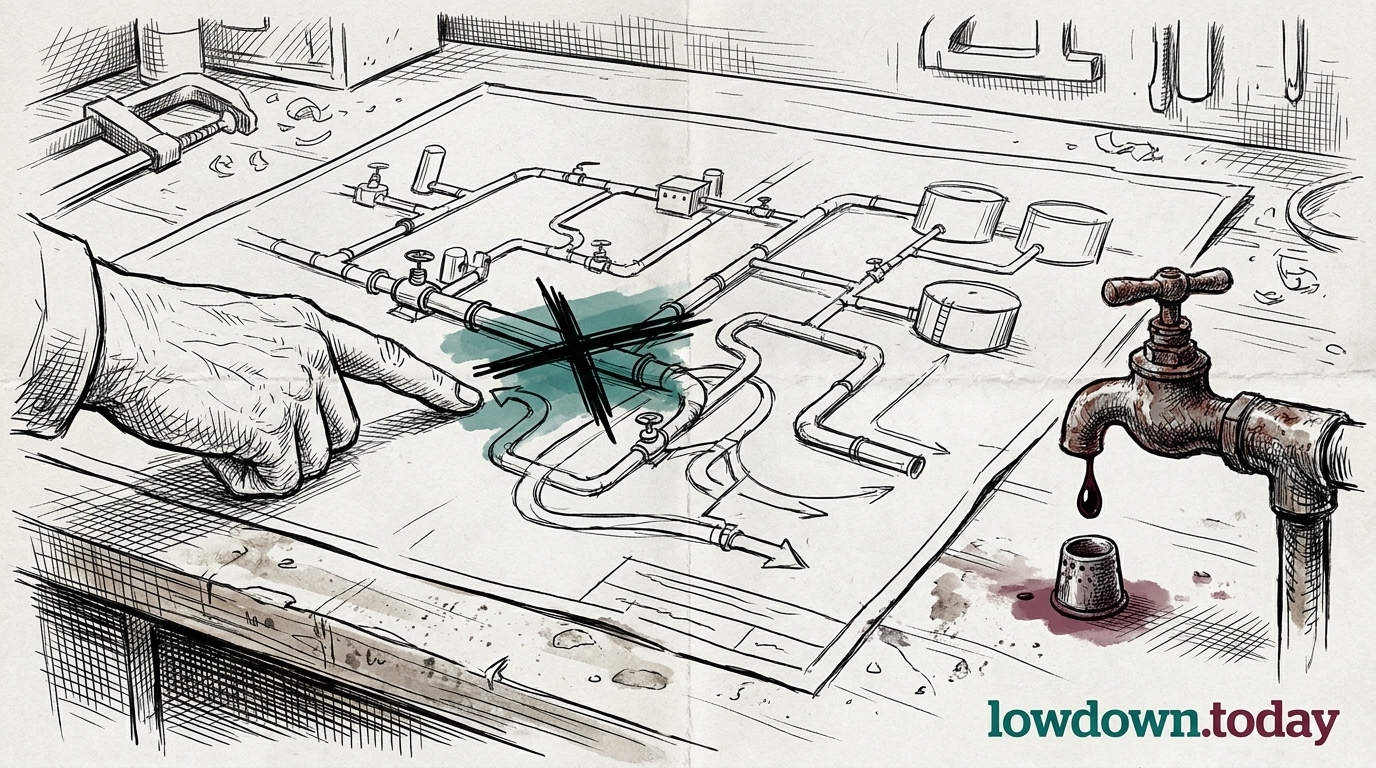
Naftogaz presented a Druzhba repair plan to the EU on 19 March with a six-week timeline and European funding — an attempt to defuse Slovakia's standoff before the approaching gas ban removes the leverage entirely.

EconomicDeveloping
Key takeaway

EU direct funding of a Ukrainian pipeline repair marks a structural shift from energy policy observer to infrastructure co-investor.

Naftogaz CEO Serhii Koretskyi presented a Druzhba pipeline repair plan to EU Deputy Ambassador Gediminas Navickas on 19 March 1. President Zelenskyy pledged a 1.5-month timeline for completion. The EU will fund the work.

The repair plan follows the template Zelenskyy used to unblock Hungary's veto on the €90 billion EU loan : accept the obligation to fix the pipeline, secure European money to do it, and attach an inspection mechanism that validates Ukraine's account of the damage. By presenting the plan to an EU interlocutor rather than negotiating bilaterally with Bratislava, Kyiv keeps Brussels as the arbiter — and prevents Fico from claiming a bilateral concession.

The 1.5-month completion target places repairs around early May — just after the EU's 25 April deadline banning new short-term Russian LNG contracts . For Slovakia, which depends almost entirely on Druzhba crude for its primary refinery, the repair schedule is the difference between a managed energy transition and a supply crisis heading into summer. For Kyiv, every week the pipeline remains shut reduces Russian transit revenue, but also sustains the political Coalition between Fico and Orbán that has proven willing to hold EU decisions hostage over energy.

EU funding for the repairs carries an implicit diplomatic verdict. Brussels is paying to fix infrastructure it accepts was damaged by a Russian drone strike — a position that contradicts Fico's insistence that no damage exists 2. The financial commitment aligns EU institutions with Kyiv's account and narrows Bratislava's ability to reframe the dispute as Ukrainian obstruction. The broader question is whether the repair, once complete, defuses the Central European energy bloc permanently or merely resets the clock for the next round of leverage before the full pipeline gas ban takes effect in September 2027.


Deep Analysis

In plain English

Ukraine's state energy company Naftogaz told an EU official it can fix the damaged section of the Druzhba oil pipeline in roughly six weeks, with the EU providing the funds. The move is pragmatic: Slovakia and other central European countries still depend on this oil supply, and the EU would rather fund a quick repair than let the dispute give Fico political cover to block Ukraine's EU membership bid. But there is a deeper paradox. The EU is simultaneously legislating to phase out all Russian energy imports by 2027 under Regulation EU/261/2026. It is now paying to maintain the very pipeline infrastructure it has scheduled for closure — a contradiction that reflects the gap between the EU's stated phase-out timeline and the physical readiness of alternative supply routes for central European refineries.

Deep Analysis
Synthesis

The EU is simultaneously legislating to close Russian energy infrastructure and paying to maintain it — a contradiction that reveals the gap between its phase-out policy and infrastructure readiness. Each repair cycle reinforces the dependence it is intended to wind down. The deeper structural problem is that central European refinery conversion has not been funded at the scale needed to close this gap within the legislative timeline.

Root Causes

The EU has a structural self-interest in maintaining Druzhba flow that the body does not articulate. Regulation EU/261/2026 imposes a compressed phase-out timeline, but alternative crude supply routes to central European refineries will not reach operational capacity for 24–36 months. Premature disruption before alternatives are ready would impose adjustment costs that amplify Fico's political leverage. Funding the repair is therefore rational transition management, not merely solidarity with Ukraine.

What could happen next?
  • Precedent

    EU direct funding of Ukrainian pipeline infrastructure establishes a template for post-war reconstruction financing conditioned on continued transit service delivery.

    Medium term · Suggested
  • Consequence

    A successful repair removes the energy emergency justification for Fico's state of emergency, potentially ending the electricity cutoff to Ukraine and diesel export restrictions.

    Short term · Assessed
  • Risk

    If repairs overrun the 1.5-month pledge, Fico retains his state of emergency cover and accession veto threat through the EU's 25 April LNG ban deadline.

    Short term · Suggested
  • Meaning

    EU funding of a Russian-designed oil pipeline it is legislating to close by 2027 illustrates that phase-out policy has outpaced the physical readiness of alternative supply infrastructure.

    Immediate · Assessed
First Reported In

Update #6 · Ukraine sends negotiators as front reverses

Kyiv Independent· 20 Mar 2026
Read original
Causes and effects
This Event
Ukraine offers Druzhba fix; EU to pay
The EU-funded repair plan simultaneously addresses Central European supply concerns and validates Ukraine's account that Russian strikes caused the damage. The 1.5-month timeline places completion just after the EU's 25 April LNG ban deadline, creating a narrow window that could determine whether the Fico-Orbán energy bloc retains or loses its institutional leverage.
Different Perspectives
US money managers (CFTC-tracked)
US money managers had trimmed WTI net long positioning into July's rally, doubting the Hormuz premium would hold without freight or war-risk confirmation, and the crude stock build reported for the week to 17 July gives that scepticism a fundamentals basis. The 25 July CFTC data will show whether Brent's move above $100 changed their calculus.
Asian distillate buyers (Singapore)
Singapore's distillate holders kept retaining middle-distillate barrels as the East-West arbitrage window narrowed further this week, a pattern that sharpened as Fujairah light distillates hit a record low. Cargoes are being held rather than released west into the tightening Mediterranean market.
Bulgaria
Bulgaria
Bulgaria secured the removal of Lukoil founder Vagit Alekperov and Patriarch Kirill from the 21st package, with President Rumen Radev calling a personal listing 'shooting ourselves in the foot'. Sofia is protecting its position in Lukoil's EUR 3bn compensation claim over the 2023 Neftohim Burgas nationalisation.
Russia
Russia
Russia loses the roughly $14 a barrel of legal headroom the price-cap formula would have released toward $58, even as Urals continues trading below Moscow's $59 budget floor. The shadow-fleet insurance workaround that lets sanctioned crude clear above $44 in practice remains untouched by the freeze itself.
European Union
European Union
The EU adopted its 21st sanctions package on 23 July, freezing the $44 Russia oil cap for 12 months rather than letting the formula drift it toward $58, and listed shadow-fleet support vessels for the first time. The package cleared only after three failed Coreper votes.
Marine war-risk underwriters (Lloyd's-linked syndicates)
War-risk syndicates lifted southern Red Sea hull premiums 150% to about 0.75% of hull value after the 20 July blockade declaration, still a seventh of the roughly 5% Hormuz band. Underwriters reset on realised loss, not declared threat, so the 23 July Encelia and Layla strikes set up the next re-mark.