Skip to content
You can now search across every topic, entity and event.What's new
European Oil Markets
4JUN

US Iran war cost hits $29bn on 12 May

3 min read
10:20UTC

Bloomberg and CBS News reported on 12 May that the US war against Iran has cost $29 billion, up $4 billion from the $25 billion figure the Pentagon briefed to Congress two weeks earlier. None of the spending has a signed presidential instrument behind it.

EconomicDeveloping
Key takeaway

Bloomberg and CBS put the US Iran war cost at $29bn on 12 May, $4bn above the Pentagon's figure.

Bloomberg and CBS News reported on 12 May 2026 that the US war cost against Iran has reached $29 billion, up $4 billion from the $25 billion figure the Pentagon briefed to Congress approximately a fortnight earlier 1. The figure landed on the same day Pete Hegseth told Senate Appropriations that Article 2 covers Iran strikes and no AUMF is required, a juxtaposition that puts $4 billion every two weeks alongside zero signed presidential instruments.

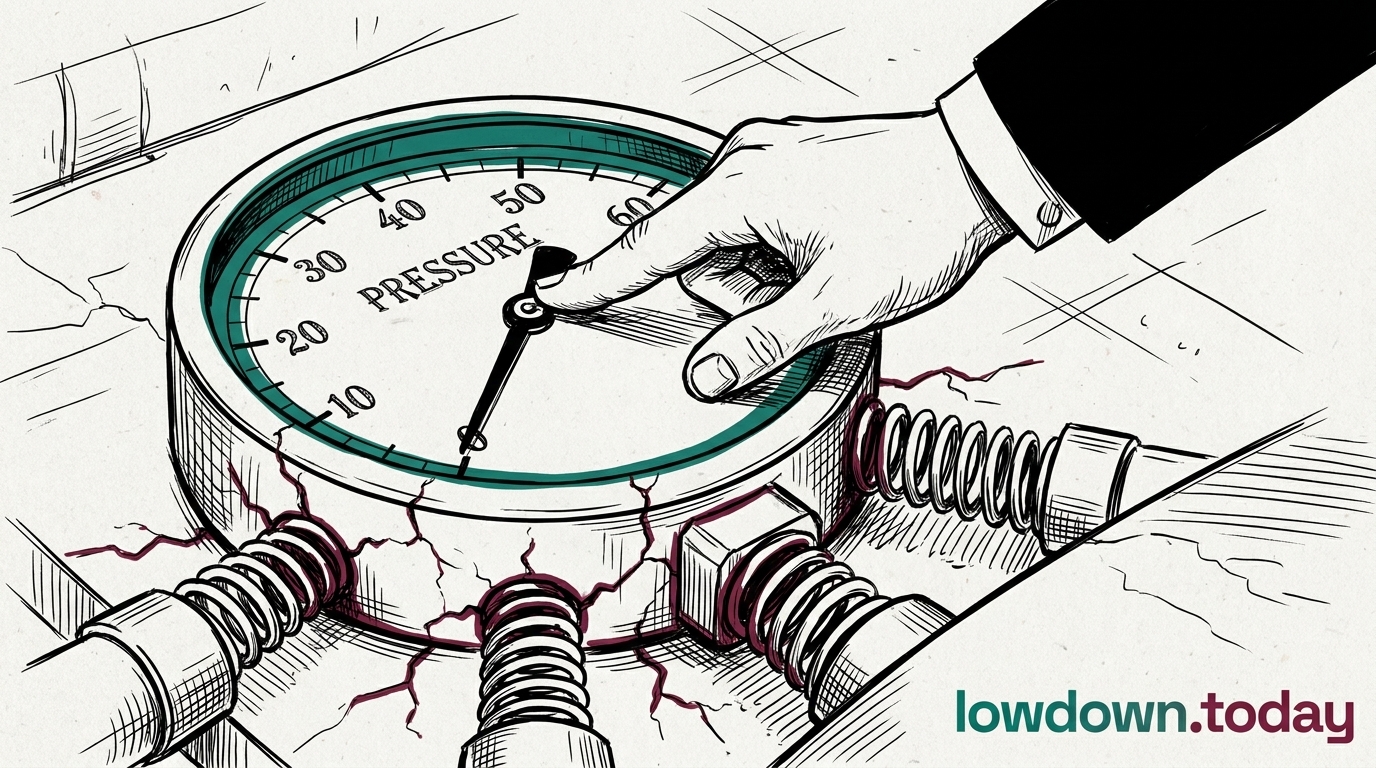
$4 billion fortnightly is the build cost of a Virginia-class submarine every two weeks, sustained for 75 days without a vote, a finding, or a signed executive order. The operational layer behind the burn rate is CENTCOM's blockade, which had logged 61 cumulative vessel redirections and four disabled vessels by 10 May . The constitutional layer is now Article 2 alone. Trump's contradictory 8 May Truth Social posts and his 11 May Oval Office military-options list are the rhetorical surface of the same unsigned arithmetic.

Senate Appropriations becomes the only operating venue for legislative pressure on Iran policy because, under the administration's stated reading, appropriators can defund but cannot deauthorise. Murkowski's unfiled AUMF sits between a $4 billion fortnightly burn rate the appropriators can in principle constrain and a doctrine telling them they cannot deauthorise it.


Deep Analysis

In plain English

The United States has spent $29 billion fighting in Iran since the war began on 28 February. Bloomberg and CBS News reported that figure on 12 May. To put it in perspective: the cost of building a nuclear submarine is roughly $4 billion, and the US is spending that amount every two weeks on this conflict. When governments go to war, they normally pass special legislation, called an Authorisation for Use of Military Force, that both approves the war and sets a budget. In this case, Congress has passed no such authorisation. The money is being spent under normal Pentagon budget authority, which the Senate Appropriations Committee oversees. That committee, the one that writes the military's annual budget, is now the main place in Congress where any attempt to question or limit the war can actually happen. The committee cannot formally vote to end the war without the authorisation it was denied, but it can refuse to approve new war spending.

First Reported In

Update #96 · Hegseth: no AUMF needed. Trump flies east

Foreign Policy Journal· 13 May 2026
Read original
Causes and effects
This Event
US Iran war cost hits $29bn on 12 May
A $4 billion fortnightly burn rate with no signed authorisation behind it gives appropriators the leverage that authorisers no longer have under Hegseth's Article 2 reading.
Different Perspectives
Kuwait
Kuwait
Kuwait absorbed the Iranian strike that knocked generating units offline at a combined power-and-desalination plant on 17 July, the event that finally moved freight and insurance in lockstep with Brent. The strike hit essential civilian infrastructure, not a trading desk's benchmark.
Asian buyers (Singapore)
Singapore's middle distillates rose 12% month-to-date to 8.91m barrels and fuel oil passed 19m barrels on a 105% net-import surge, buyers retaining barrels as the East-West arbitrage window narrows. Cargoes are being stockpiled ahead of further Hormuz-driven freight repricing rather than released west.
Austria (Coreper holdout)
Vienna is blocking the same package over roughly EUR 2bn of frozen Russian assets earmarked for Raiffeisen, a domestic banking dispute with no connection to the oil cap racing toward its 23 July expiry. The linkage forces the whole package to wait on a bilateral compensation fight.
Greece (Coreper holdout)
Athens is holding the 21st sanctions package at the 22 July Coreper vote over Russian LNG re-export rights, a condition unrelated to the oil price cap itself, leaving the $44.10 freeze one day from expiry without a deal. Greece's own tanker registry gives it a direct stake in how any shadow-fleet measures are drafted.
Marine underwriters (Gulf war-risk)
Hull war-risk cover for Hormuz transits widened to a 3-10% band on 17 July with 5% the emerging norm, up from a 3-4% baseline set in late June, the first repricing in six weeks to track a flat-price move rather than lag it. Cover resets on actuarial evidence of loss, not on diplomatic or price signals.
Money managers (CFTC-tracked)
The CFTC's week-to-14-July snapshot, released 17 July, showed WTI managed-money net long collapsing 69% to 19,783 contracts and a standalone 60,141-contract net short on Brent Last Day (NYMEX). Both readings predate the Kuwait strike and the 20 July escalation, so any covering since is not yet visible in public data.