Skip to content
You can now search across every topic, entity and event.What's new
European Oil Markets
29MAY

Iraq: force majeure; oil goes nowhere

4 min read
14:36UTC

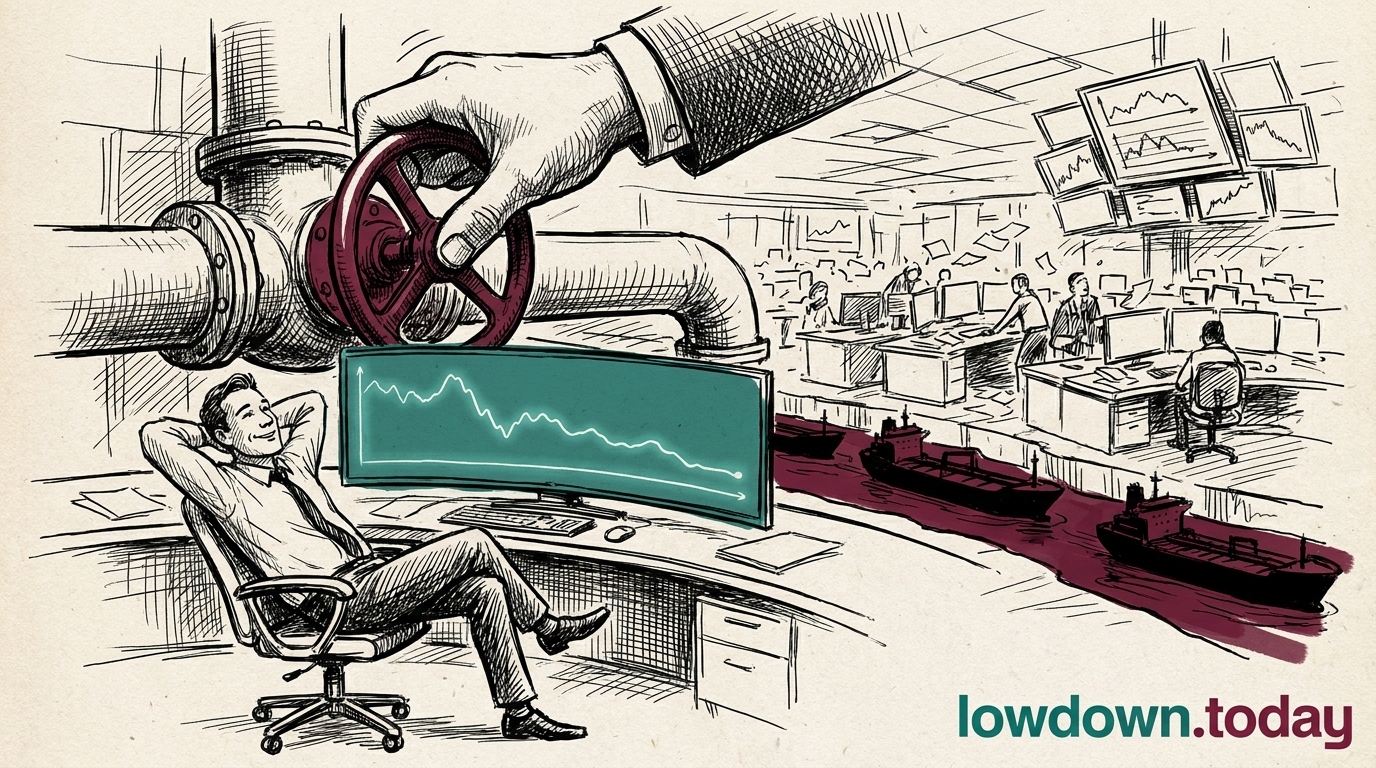
With the Strait of Hormuz blocked and onshore storage full, OPEC's second-largest producer has told every foreign operator it can no longer honour export contracts — turning Iraq's oilfields into stranded assets.

EconomicDeveloping
Key takeaway

Iraq's force majeure is structurally irresolvable until Hormuz reopens — diplomacy cannot fix it.

Iraq's oil ministry declared Force majeure on all oilfields operated by foreign companies, in a letter dated 17 March 1. Onshore storage has reached capacity. Production cuts have been ordered. Iraq produces roughly 4.5 million barrels per day — second only to Saudi Arabia within OPEC — and exports the vast majority from its southern Basra terminals through tanker routes that transit the strait of Hormuz. Gulf oil exports had already fallen at least 60% compared with February .

Force majeure suspends Iraq's contractual obligations to the international companies — BP, TotalEnergies, ExxonMobil, Lukoil, CNOOC — that operate its largest fields under technical service contracts. Those companies cannot lift the crude they are owed. Iraq cannot store crude it continues to extract. The result is mandatory well shut-ins — a process that risks long-term reservoir damage, particularly in Iraq's pressurised southern fields, and carries restart costs running into hundreds of millions of dollars per field.

Iraq is more exposed than its Gulf neighbours to a prolonged shutdown. Oil accounts for more than 90% of government revenue and virtually all export earnings. The Central Bank of Iraq held roughly $100 billion in foreign reserves before the war — a fraction of Saudi Arabia's $430 billion or the UAE's estimated $1.4 trillion in sovereign wealth. Iraq cannot sustain months of near-zero oil income without defaulting on salaries for its 4.5 million public-sector employees or cutting funding for security forces still deployed against Islamic State remnants in the west.

Iraq is not a party to this conflict. Its oilfields have not been struck. But its geography — entirely dependent on the strait for southern exports — has made it one of the war's largest economic casualties. The Force majeure formalises what Brent at $112.19 and a record $14.20-per-barrel backwardation 2 had already priced in: for Iraq, the physical link between oil in the ground and the global refining system has been broken.


Deep Analysis

In plain English

Iraq earns nearly all of its government income from selling oil. That oil reaches export markets almost entirely through the Strait of Hormuz. With Hormuz now effectively closed by the war, Iraq physically cannot export its oil — not because of any political decision Baghdad made, but because of the geography of its pipeline and port infrastructure. The force majeure declaration is Iraq formally telling its foreign oil company partners — BP, ExxonMobil, TotalEnergies, PetroChina — that it legally cannot fulfil its contractual obligations. Those companies in turn cannot fulfil their supply commitments to refineries. Those refineries cannot process the volumes they planned for. This cascade moves through global energy supply chains, compounding the direct Hormuz disruption with a contractual and logistical second wave that takes longer to unwind.

Deep Analysis
Synthesis

The force majeure signals that the war's economic blast radius has expanded to encompass a non-belligerent state's fiscal survival — a development with no precedent in the post-Cold War Gulf. Iraq's crisis creates a second-order pressure point: if Baghdad cannot pay its security forces, the operational distinction between Iraqi government forces and Iranian-aligned PMF becomes irrelevant, potentially destabilising the one state both belligerents have nominally sought to keep outside direct hostilities.

Root Causes

Iraq's catastrophic export-route concentration is a structural vulnerability created by two compounding factors: decades of underinvestment in alternative pipeline infrastructure following the 1991 Gulf War, and documented Iranian influence operations that blocked proposed Gulf pipeline projects connecting Iraq to Saudi Arabian or Kuwaiti terminals — preserving Hormuz dependency as a lever of Iranian influence over Baghdad that now cuts both ways.

Escalation

Iraq's force majeure transforms it from passive geographic casualty to active economic casualty with political consequences. Baghdad funds approximately 90% of government expenditure from oil revenues; a multi-week interruption creates a fiscal crisis measurable in weeks, not months. The Popular Mobilisation Forces — Iranian-aligned militias on the Iraqi government payroll — are among the creditors most sensitive to payment delay. PMF funding disruption is a transmission mechanism through which Iraq's fiscal crisis could directly degrade Iranian proxy capacity across the region.

What could happen next?
1 consequence2 risk1 meaning1 precedent
  • Consequence

    Iraq's Development Fund provides approximately 3–4 months of fiscal buffer before Baghdad faces a government payroll crisis, including for Iranian-aligned PMF forces.

    Short term · Assessed
  • Risk

    International oil company activation of force majeure clauses would suspend Iraqi field maintenance, risking permanent reservoir pressure damage that outlasts the war by years.

    Short term · Assessed
  • Meaning

    Iraq's involuntary alignment as economic casualty creates pressure on Baghdad to choose a side — pressing for Hormuz reopening it cannot achieve alone, or seeking emergency financing from Iran or the Gulf states.

    Medium term · Suggested
  • Risk

    PMF funding disruption caused by Iraq's fiscal crisis could inadvertently reduce Iranian proxy capacity — an unplanned consequence of neither belligerent's strategy.

    Short term · Suggested
  • Precedent

    This is the first use of force majeure by a major oil producer for logistical rather than political reasons since the 1980–88 Iran-Iraq war disruptions.

    Long term · Assessed
First Reported In

Update #43 · Trump floats wind-down, deploys 2,200 more

Bloomberg· 21 Mar 2026
Read original
Causes and effects
This Event
Iraq: force majeure; oil goes nowhere
Iraq's force majeure converts the Hormuz blockage from a logistics disruption into a legal contractual default, suspending obligations to every international oil company in the country. Production must now be cut, risking long-term reservoir damage and fiscal crisis for a government that depends on oil for over 90% of its revenue.
Different Perspectives
Greek shipping registries
Flag states dominating the tanker fleet await the EU's 15 July cap-freeze vote. A formula unlock toward $75 would loosen the ceiling squeezing insurance and crewing costs on their registered hulls.
US money managers
US money managers
NYMEX WTI managed-money net long fell 23% to +64,041 in the week to 7 July, trimming length into the rally on doubt the Hormuz premium survives without freight or war-risk confirmation.
European refiners (ARA)
ARA refiners are capturing an $80/bbl US diesel crack as Russian gasoil loadings collapsed to 234kbd before Novak's 31 July export ban even bites, widening the arbitrage straight into refining margins.
OPEC+
OPEC+
The seven-member group confirmed a fourth consecutive 188kbd August hike on 5 July, defending market share even though Saudi Arabia's $108-111/bbl breakeven means every added barrel costs Riyadh revenue it cannot recoup.
Indian refiners
Indian refiners
Refiners kept lifting discounted Urals as the India/Baltic split widened past $9-10 a barrel on 7 July. A wider Urals-Brent gap means cheaper feedstock locked in against Baltic buyers.
Russia
Russia
Urals traded $48.95-55.12 on 12-13 July, below Moscow's $59 budget floor even as Brent gained $6. Oil and gas fund roughly 30% of federal revenue, and Novak's diesel export ban is rationing a shrinking export base.