Skip to content
You can now search across every topic, entity and event.What's new
European Oil Markets
23JUL

Wind-down licence lapses for blocked ships

1 min read
19:27UTC

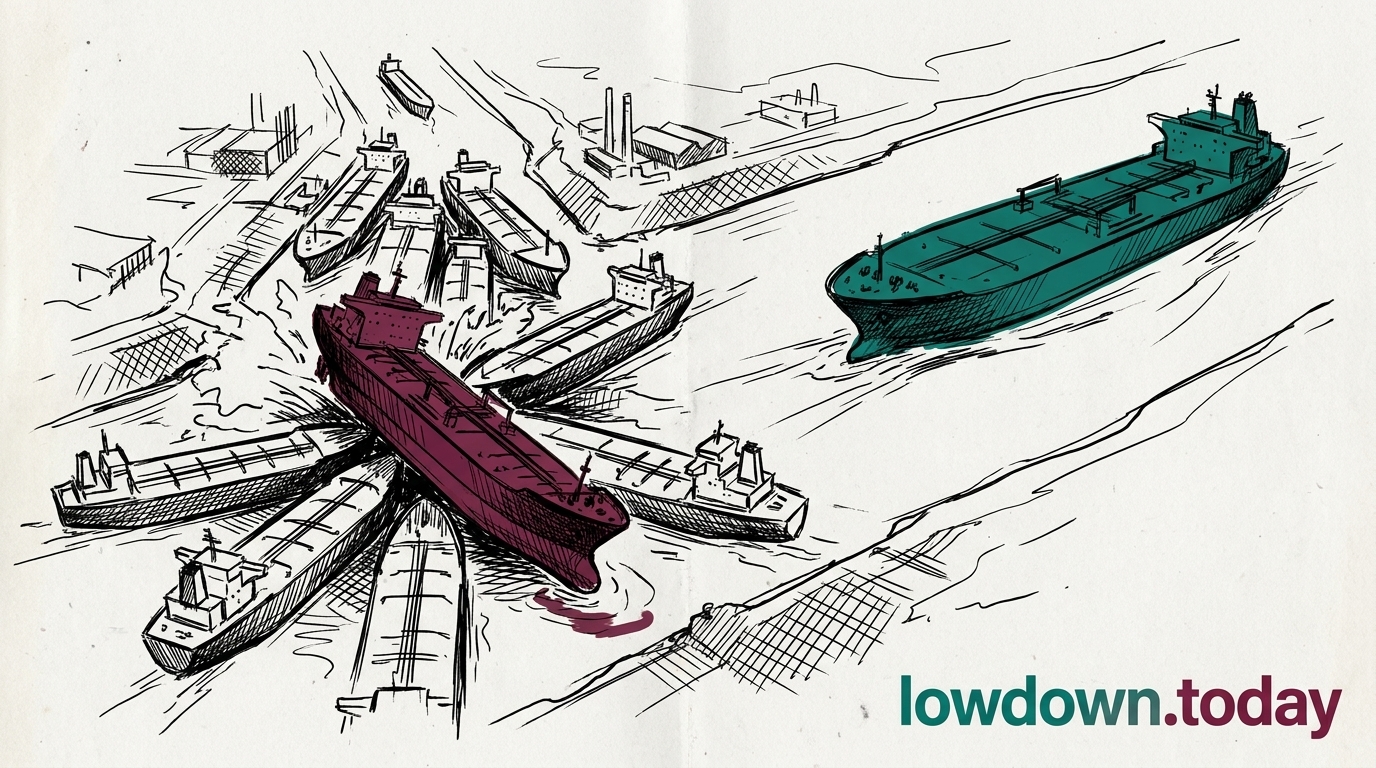
General License Z, the US Treasury authorisation letting counterparties wind down dealings with vessels blocked on 14 July, lapsed on 17 July alongside General License X1.

EconomicDeveloping
Key takeaway

General License Z lapsed on 17 July, the same day General License X1 expired unrenewed.

General License Z, issued by the US Treasury's Office of Foreign Assets Control (OFAC) to let counterparties wind down dealings with vessels blocked on 14 July, lapsed on 17 July 1. General License X1, which had covered Iranian oil transactions, expired the same day with no renewal .

OFAC issues wind-down licences to open a legal grace period. Each one gives banks, charterers, insurers and port agents a fixed window to settle outstanding obligations with a newly sanctioned party without themselves becoming sanctions violators. Three days is a short window when the counterparties are ships mid-voyage in a war zone whose insurers have already repriced the passage.

With both licences gone, anyone still holding contracts tied to those vessels is exposed with no authorised path to unwind them. The practical effect falls on intermediaries rather than on Tehran: the Greek owner, the Singaporean bunker supplier and the Dubai trading desk now face a choice between breaching a contract and breaching US sanctions, and OFAC has published no successor authorisation.


Deep Analysis

In plain English

The US Treasury had given companies dealing with certain Iran-linked ships a short grace period to wind down their business with them lawfully after those ships were blocked on 14 July. That grace period, called General License Z, ran out on 17 July, the same day a separate licence covering Iranian oil trade also expired with nothing to replace it. Any bank, insurer or shipping company still tied to those vessels now has no officially approved way to end those dealings without risking a sanctions violation.

Deep Analysis
Root Causes

OFAC issues wind-down licences because sanctions designations otherwise take effect instantly, criminalising contracts signed before the designation existed; the licence exists to give banks, insurers and charterers a defined legal window to exit cleanly.

When that window closes without a successor authorisation, as it has here, anyone still holding a contract tied to a blocked vessel has no lawful route to end it, only a choice between breaching the contract or breaching sanctions law.

What could happen next?
  • Consequence

    Intermediaries such as ship owners, bunker suppliers and trading desks now bear the compliance risk of unwinding contracts with no lawful exit route, a burden that falls on third parties rather than on Tehran directly.

First Reported In

Update #156 · First American deaths in Jordan

Al Jazeera· 19 Jul 2026
Read original
Causes and effects
This Event
Wind-down licence lapses for blocked ships
Two escape hatches for lawful disengagement closed on the same day, leaving no authorised route out for exposed counterparties.
Different Perspectives
US money managers (CFTC-tracked)
US money managers had trimmed WTI net long positioning into July's rally, doubting the Hormuz premium would hold without freight or war-risk confirmation, and the crude stock build reported for the week to 17 July gives that scepticism a fundamentals basis. The 25 July CFTC data will show whether Brent's move above $100 changed their calculus.
Asian distillate buyers (Singapore)
Singapore's distillate holders kept retaining middle-distillate barrels as the East-West arbitrage window narrowed further this week, a pattern that sharpened as Fujairah light distillates hit a record low. Cargoes are being held rather than released west into the tightening Mediterranean market.
Bulgaria
Bulgaria
Bulgaria secured the removal of Lukoil founder Vagit Alekperov and Patriarch Kirill from the 21st package, with President Rumen Radev calling a personal listing 'shooting ourselves in the foot'. Sofia is protecting its position in Lukoil's EUR 3bn compensation claim over the 2023 Neftohim Burgas nationalisation.
Russia
Russia
Russia loses the roughly $14 a barrel of legal headroom the price-cap formula would have released toward $58, even as Urals continues trading below Moscow's $59 budget floor. The shadow-fleet insurance workaround that lets sanctioned crude clear above $44 in practice remains untouched by the freeze itself.
European Union
European Union
The EU adopted its 21st sanctions package on 23 July, freezing the $44 Russia oil cap for 12 months rather than letting the formula drift it toward $58, and listed shadow-fleet support vessels for the first time. The package cleared only after three failed Coreper votes.
Marine war-risk underwriters (Lloyd's-linked syndicates)
War-risk syndicates lifted southern Red Sea hull premiums 150% to about 0.75% of hull value after the 20 July blockade declaration, still a seventh of the roughly 5% Hormuz band. Underwriters reset on realised loss, not declared threat, so the 23 July Encelia and Layla strikes set up the next re-mark.