Skip to content
You can now search across every topic, entity and event.What's new
European Oil Markets
23JUL

Iran's five peace terms: Hormuz first

2 min read
19:27UTC

Tehran published five conditions for ending the war. The fifth, permanent control of the Strait of Hormuz, would rewrite international maritime law.

EconomicDeveloping
Key takeaway

Iran is legislating Hormuz control into permanent law before any ceasefire.

Iran's stated terms for ending the war, relayed through PressTV on 25 March via a senior political-security official, are: (1) complete cessation of all attacks; (2) concrete security mechanisms preventing reimposition of war; (3) guaranteed reparations; (4) end of war across all fronts for all resistance groups; and (5) recognition of Iran's right to control the Strait of Hormuz. 1

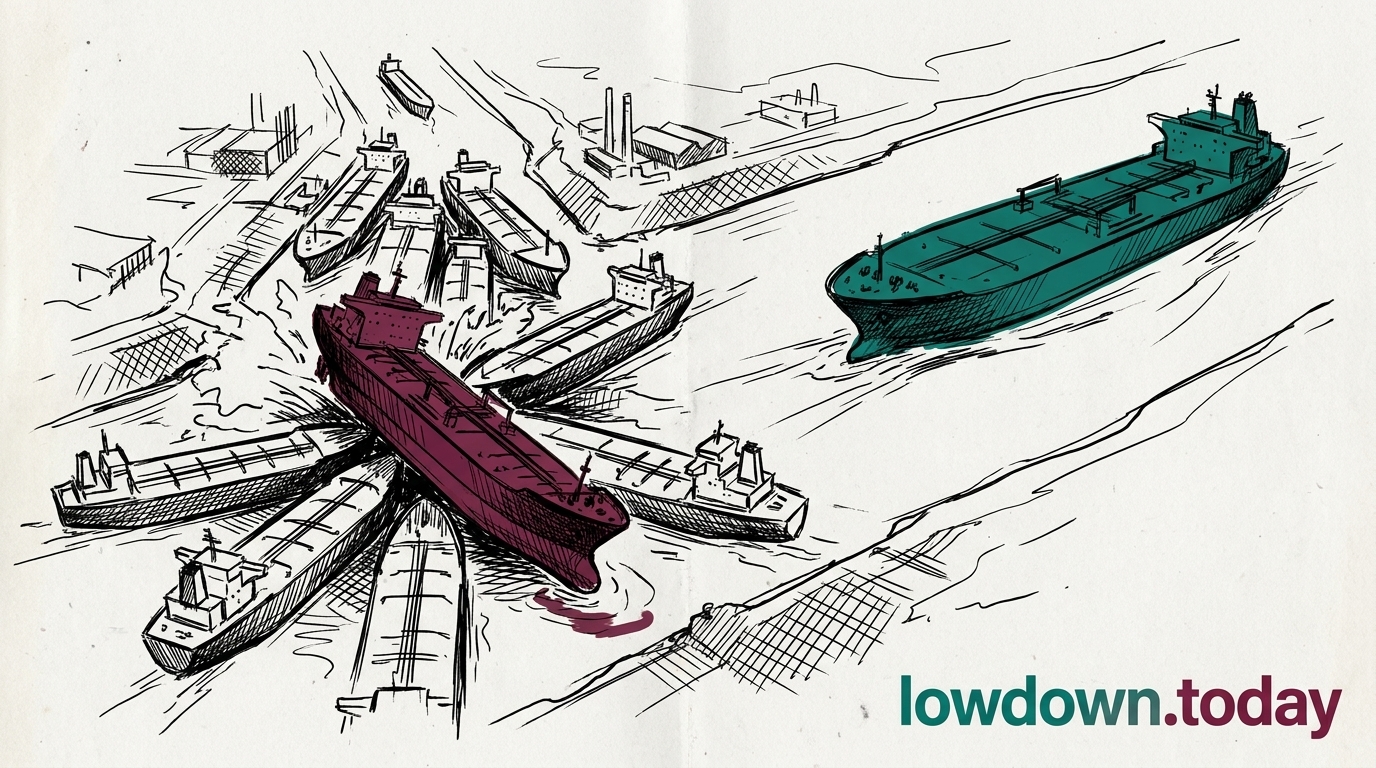
Condition five is not a ceasefire demand. Under UNCLOS, the strait of Hormuz is an international waterway; Iran may regulate transit through its territorial waters but cannot claim sovereignty over passage itself. No US administration could accept this. Iran almost certainly knows that.

Western coverage has framed Iran as simply "refusing talks" . The five-condition structure tells a different story: Iran has a formal position, and its most consequential demand is being legislated domestically through the Majlis bill and formalised internationally through the IMO notification . Iran is building legal architecture to outlast the war, following the same model Egypt used after Suez in 1957: establish physical control during a crisis, then legislate before it ends.


Deep Analysis

In plain English

Iran has published five demands it says must be met before it will stop fighting. The first four involve ceasefire terms and compensation. The fifth is different: Iran wants permanent legal recognition that it controls the Strait of Hormuz, the narrow passage through which most of the Persian Gulf's oil leaves. Under current international law, the strait is an international waterway. Every country's ships have the right to pass through it. Iran cannot legally block that passage, even though the water runs alongside its coast. Iran's fifth condition would change that law. No US president can agree to this. And Iran almost certainly knows that. The more telling detail is that Iran is not just saying it; it is also passing a law in its parliament to formalise the toll regime, and filing paperwork with the international shipping body. Iran is building the legal infrastructure of permanent control while the war is still ongoing.

Deep Analysis
Root Causes

Iran's Hormuz sovereignty demand is thirty years in development. Tehran has consistently argued since the 1994 Law of the Sea negotiations that its territorial waters include the strait's northern half, and that innocent passage rights are not absolute for warships of hostile states. The IRGC's toll infrastructure built between 2015 and 2025 was designed to create an operational fact before any legal claim was tested.

The war created the opportunity to formalise what the IRGC had been building. The Majlis toll bill and the IMO notification are the legal superstructure on top of an operational infrastructure that already exists.

What could happen next?
  • Consequence

    Iran's five conditions remove diplomatic off-ramps: any deal requires accepting demands that no allied government can publicly endorse, guaranteeing talks collapse if aired publicly.

  • Precedent

    If the Majlis bill passes before a ceasefire, the Hormuz toll regime becomes Iranian domestic law that any future government would need to repeal, entrenching the leverage beyond this war.

First Reported In

Update #50 · Houthis join; Iran holds two chokepoints

PressTV· 28 Mar 2026
Read original
Different Perspectives
US money managers (CFTC-tracked)
US money managers had trimmed WTI net long positioning into July's rally, doubting the Hormuz premium would hold without freight or war-risk confirmation, and the crude stock build reported for the week to 17 July gives that scepticism a fundamentals basis. The 25 July CFTC data will show whether Brent's move above $100 changed their calculus.
Asian distillate buyers (Singapore)
Singapore's distillate holders kept retaining middle-distillate barrels as the East-West arbitrage window narrowed further this week, a pattern that sharpened as Fujairah light distillates hit a record low. Cargoes are being held rather than released west into the tightening Mediterranean market.
Bulgaria
Bulgaria
Bulgaria secured the removal of Lukoil founder Vagit Alekperov and Patriarch Kirill from the 21st package, with President Rumen Radev calling a personal listing 'shooting ourselves in the foot'. Sofia is protecting its position in Lukoil's EUR 3bn compensation claim over the 2023 Neftohim Burgas nationalisation.
Russia
Russia
Russia loses the roughly $14 a barrel of legal headroom the price-cap formula would have released toward $58, even as Urals continues trading below Moscow's $59 budget floor. The shadow-fleet insurance workaround that lets sanctioned crude clear above $44 in practice remains untouched by the freeze itself.
European Union
European Union
The EU adopted its 21st sanctions package on 23 July, freezing the $44 Russia oil cap for 12 months rather than letting the formula drift it toward $58, and listed shadow-fleet support vessels for the first time. The package cleared only after three failed Coreper votes.
Marine war-risk underwriters (Lloyd's-linked syndicates)
War-risk syndicates lifted southern Red Sea hull premiums 150% to about 0.75% of hull value after the 20 July blockade declaration, still a seventh of the roughly 5% Hormuz band. Underwriters reset on realised loss, not declared threat, so the 23 July Encelia and Layla strikes set up the next re-mark.