Skip to content
You can now search across every topic, entity and event.What's new
European Oil Markets
23JUL

Cuba carve-out strands nine SDN cargoes

2 min read
19:27UTC

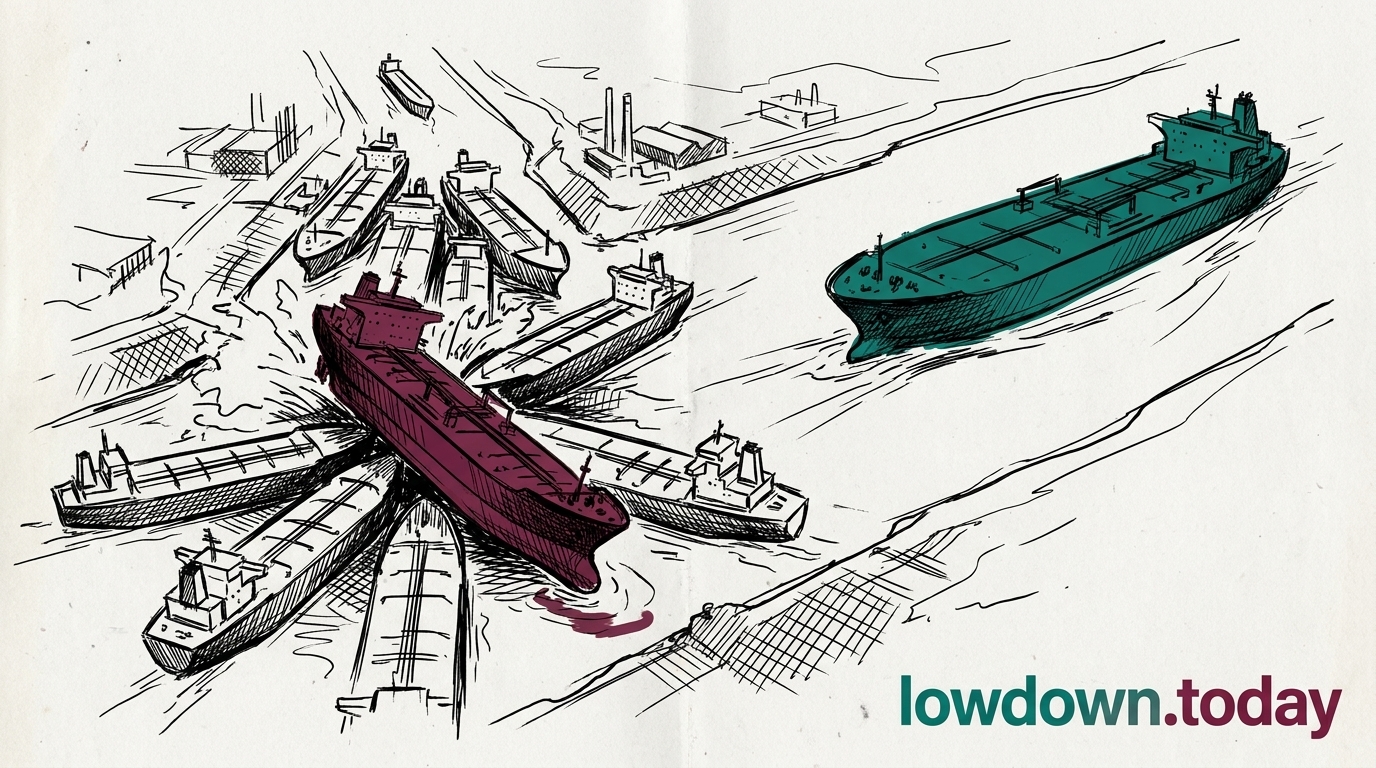
OFAC added nine Cuban officials to the SDN list on 18 May, one based in Cienfuegos, while GL 134C paragraph (b)(1) excludes Cuba outright, creating a cargo class that loses its waiver on a single Cuban touch.

EconomicDeveloping
Key takeaway

A single Cuban counterparty voids GL 134C cover for the whole cargo, not a fraction of it.

OFAC added nine Cuban officials to the SDN list on Monday 18 May, the same action that issued GL 134C, with one of the nine based in Cienfuegos, the south-central Cuban port that hosts the island's primary refinery 1. Paragraph (b)(1) of the licence excludes Cuba outright, carrying forward the carve-out that already stood when GL 134B lapsed on 16 May .

In practice that creates a Cuba-tainted cargo class. Any pre-17-April Russian barrel that touched a Cuban intermediary between loading and delivery loses 134C cover entirely. A trader who priced a Primorsk loading as fully covered now has to re-screen the whole voyage chain, because one Cuban counterparty voids the waiver for the entire cargo, not a fraction of it.

There is no pro-rata haircut to hedge against a Cuban touch: a cargo is either clean or it is uninsurable under the licence, so the diligence burden sits on proving a negative across every ship-to-ship transfer and every chartering counterparty. The sanctions policy belongs to the Russia file; the cargo-classification cost it triggers lands squarely on the desks completing those cargoes.


Deep Analysis

In plain English

Cuba is completely left out of the GL 134C permit ; any Russian oil that passed through Cuban waters, a Cuban-linked ship, or a Cuban company loses its legal protection entirely. On the same day GL 134C was signed, US authorities added nine Cuban officials to a blacklist that prohibits anyone from doing business with them. One of those officials is based in Cienfuegos, the Cuban city where Cuba's main oil refinery sits. In practical terms, this means traders need to trace the full journey of every Russian oil cargo back to its loading port to check for any Cuban connection ; a small Cuban link anywhere in the chain voids the protection for the whole shipment.

Deep Analysis
Root Causes

Cuba's carve-out reflects a US domestic political calculus that predates the Russia sanctions: the Helms-Burton Act (codified 1996) and CAATSA (2017) both embed Cuba within the same executive order architecture as Iran and Russia.

The OFAC action on 18 May was administratively combining a Russia-sanctions waiver with a Cuba-sanctions enforcement action under a shared regulatory filing, signalling Treasury treating all three programmes as a unified adversarial-nations supply-chain enforcement mandate.

The Cienfuegos designation's timing alongside GL 134C suggests Treasury has evidence of specific Russian-Cuban crude routing activity at the Cienfuegos facility ; not a coincidental pairing of unrelated enforcement actions.

First Reported In

Update #2 · GL 134C reverses the cliff, Brent -$14

OFAC· 26 May 2026
Read original
Causes and effects
This Event
Cuba carve-out strands nine SDN cargoes
One Cuban counterparty voids GL 134C cover for the whole cargo, forcing traders to re-screen voyage chains they had priced as clean.
Different Perspectives
US money managers (CFTC-tracked)
US money managers had trimmed WTI net long positioning into July's rally, doubting the Hormuz premium would hold without freight or war-risk confirmation, and the crude stock build reported for the week to 17 July gives that scepticism a fundamentals basis. The 25 July CFTC data will show whether Brent's move above $100 changed their calculus.
Asian distillate buyers (Singapore)
Singapore's distillate holders kept retaining middle-distillate barrels as the East-West arbitrage window narrowed further this week, a pattern that sharpened as Fujairah light distillates hit a record low. Cargoes are being held rather than released west into the tightening Mediterranean market.
Bulgaria
Bulgaria
Bulgaria secured the removal of Lukoil founder Vagit Alekperov and Patriarch Kirill from the 21st package, with President Rumen Radev calling a personal listing 'shooting ourselves in the foot'. Sofia is protecting its position in Lukoil's EUR 3bn compensation claim over the 2023 Neftohim Burgas nationalisation.
Russia
Russia
Russia loses the roughly $14 a barrel of legal headroom the price-cap formula would have released toward $58, even as Urals continues trading below Moscow's $59 budget floor. The shadow-fleet insurance workaround that lets sanctioned crude clear above $44 in practice remains untouched by the freeze itself.
European Union
European Union
The EU adopted its 21st sanctions package on 23 July, freezing the $44 Russia oil cap for 12 months rather than letting the formula drift it toward $58, and listed shadow-fleet support vessels for the first time. The package cleared only after three failed Coreper votes.
Marine war-risk underwriters (Lloyd's-linked syndicates)
War-risk syndicates lifted southern Red Sea hull premiums 150% to about 0.75% of hull value after the 20 July blockade declaration, still a seventh of the roughly 5% Hormuz band. Underwriters reset on realised loss, not declared threat, so the 23 July Encelia and Layla strikes set up the next re-mark.