Skip to content
You can now search across every topic, entity and event.What's new
European Oil Markets
20JUL

Kuwait: 10-12 weeks to recover output

2 min read
10:00UTC

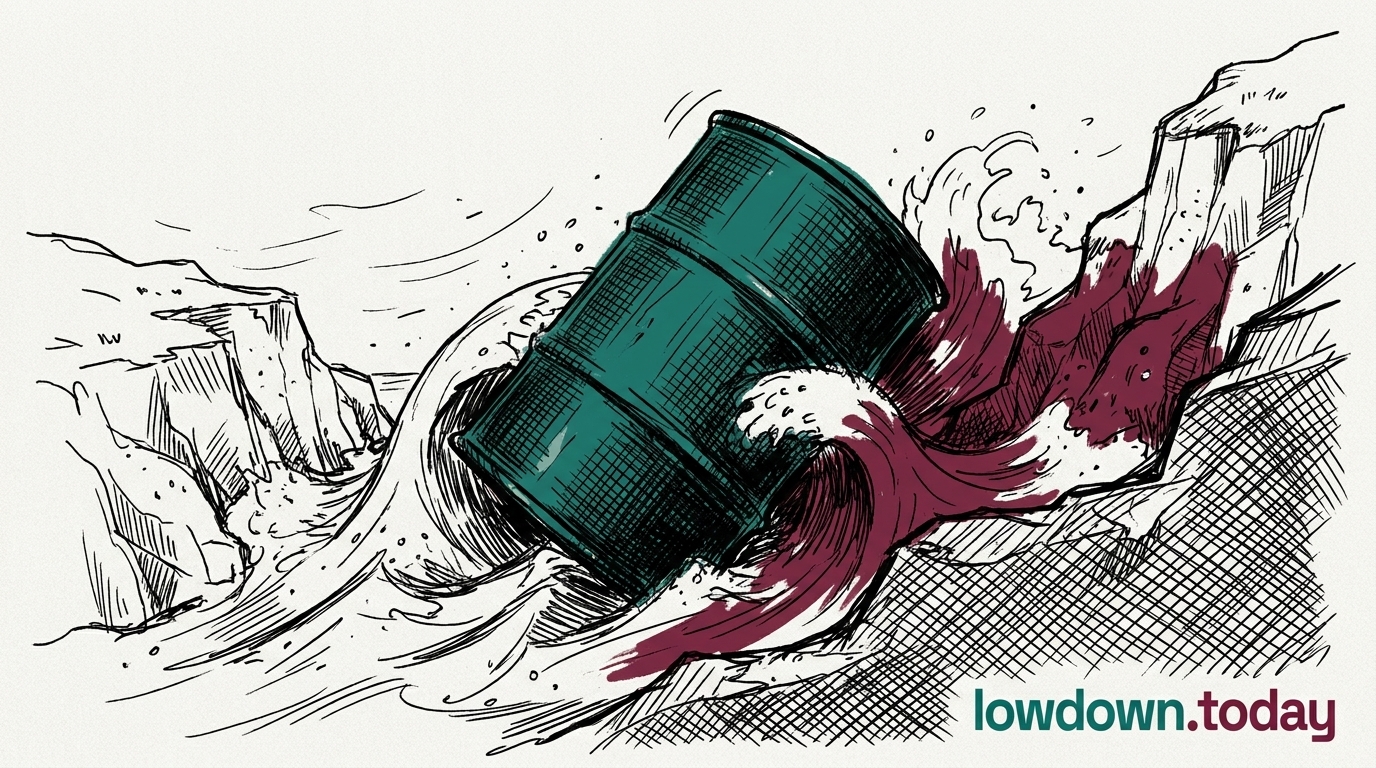
Kuwait Petroleum Corporation's marketing chief told the S&P Global conference on 3 June that full output would need 10-12 weeks to recover even after any Strait of Hormuz reopening.

EconomicDeveloping
Key takeaway

Even a Hormuz reopening leaves a two-to-three-month gap before barrels return, so peace rallies fade.

Kuwait Petroleum Corporation, the Gulf state's national oil company, told the S&P Global conference on 3 June that full output recovery would take 10-12 weeks even after any reopening of the Strait of Hormuz. Kuwait produced just 490kbd in May, under a fifth of its pre-war level, so it sits among the most constrained OPEC members.

The remark matters as a floor under the bounce, not as news of damage. Markets tend to price a ceasefire as an instant supply switch, fading risk premium the moment a diplomatic headline lands. The KPC timeline says that reflex is wrong: blockaded and idled fields do not restart on a press release. Reservoir management, infrastructure checks and shipping logistics impose a multi-week lag between a deal and the first restored cargo.

That 10-12 week wall means any ceasefire-driven short-squeeze fades against the same structural barrier that capped the WTI positioning unwind . A covering rally needs barrels to convert it into durable length, and Kuwait has just said those barrels are a quarter away at best. Until then, a peace headline can move the flat price but cannot refill the physical deficit underneath it.


Deep Analysis

In plain English

The US government has been issuing temporary waivers called 'General Licences' that allow certain companies, primarily Indian refineries, to keep handling Russian oil without facing US sanctions. The current waiver, called GL 134C, expires on 17 June. Secretary of State Marco Rubio said on 5 June that the US wants to end these waivers 'as soon as we possibly can', and no replacement waiver has been announced. If no new waiver is issued, Indian refineries that have been buying Russian crude could face US sanctions exposure. This would push India to find alternative crude sources quickly, which in turn affects which oil everyone else can get.

Deep Analysis
Root Causes

The GL 134 series was constructed to manage a specific contradiction: the US wanted to sanction Russian oil revenues while avoiding a sudden supply shock to India, Turkey, and other economies that had structured their refinery feedstock programmes around Russian crude. Each 30-day renewal bought time for those buyers to find alternatives.

Rubio's statement suggests the State Department has concluded that continued rolling waivers undermine the sanctions' signal value without producing the supply-substitution that was supposed to accompany each extension. The absence of a GL 134D notice as of 5 June, combined with no announced successor, breaks the 2-5 day pre-notification pattern OFAC has used for each prior GL in this series.

What could happen next?
  • Risk

    GL 134C expiry on 17 June without a GL 134D would immediately expose Indian refiners' pre-17-April Russian cargo completions to OFAC vessel-services sanctions, forcing emergency diversion or cargo abandonment.

  • Consequence

    India redirecting away from Russian crude on short notice would add 300-400kbd of spot demand to the Ceyhan, Caspian, and Atlantic Basin markets that European refiners are already competing for.

First Reported In

Update #6 · OPEC's quota is fiction at a 37-year low

OilPrice.com· 8 Jun 2026
Read original
Different Perspectives
Kuwait
Kuwait
Kuwait absorbed the Iranian strike that knocked generating units offline at a combined power-and-desalination plant on 17 July, the event that finally moved freight and insurance in lockstep with Brent. The strike hit essential civilian infrastructure, not a trading desk's benchmark.
Asian buyers (Singapore)
Singapore's middle distillates rose 12% month-to-date to 8.91m barrels and fuel oil passed 19m barrels on a 105% net-import surge, buyers retaining barrels as the East-West arbitrage window narrows. Cargoes are being stockpiled ahead of further Hormuz-driven freight repricing rather than released west.
Austria (Coreper holdout)
Vienna is blocking the same package over roughly EUR 2bn of frozen Russian assets earmarked for Raiffeisen, a domestic banking dispute with no connection to the oil cap racing toward its 23 July expiry. The linkage forces the whole package to wait on a bilateral compensation fight.
Greece (Coreper holdout)
Athens is holding the 21st sanctions package at the 22 July Coreper vote over Russian LNG re-export rights, a condition unrelated to the oil price cap itself, leaving the $44.10 freeze one day from expiry without a deal. Greece's own tanker registry gives it a direct stake in how any shadow-fleet measures are drafted.
Marine underwriters (Gulf war-risk)
Hull war-risk cover for Hormuz transits widened to a 3-10% band on 17 July with 5% the emerging norm, up from a 3-4% baseline set in late June, the first repricing in six weeks to track a flat-price move rather than lag it. Cover resets on actuarial evidence of loss, not on diplomatic or price signals.
Money managers (CFTC-tracked)
The CFTC's week-to-14-July snapshot, released 17 July, showed WTI managed-money net long collapsing 69% to 19,783 contracts and a standalone 60,141-contract net short on Brent Last Day (NYMEX). Both readings predate the Kuwait strike and the 20 July escalation, so any covering since is not yet visible in public data.