Skip to content
You can now search across every topic, entity and event.What's new
European Oil Markets
16JUL

Brent sub-$95 prices a different market

3 min read
09:39UTC

Brent fell below $95 in the 28-29 May window on reports of a US-Iran ceasefire extension, with WTI near $92-93 and Brent-WTI compressed to roughly $2-3.

EconomicDeveloping
Key takeaway

The screen prices the Iran ceasefire while the cracks price a physical shortage; the two are now reading different markets.

Brent fell below $95 in the 28-29 May window on reports of a US-Iran ceasefire extension awaiting Trump's sign-off, with WTI near $92-93 and the Brent-WTI spread compressed to roughly $2-3 1. The $14 move itself was the 26 May story ; the new element is that the screen kept leaking on ceasefire headlines while OFAC loaded GL 131F and the Iran SDN action underneath it on the same day.

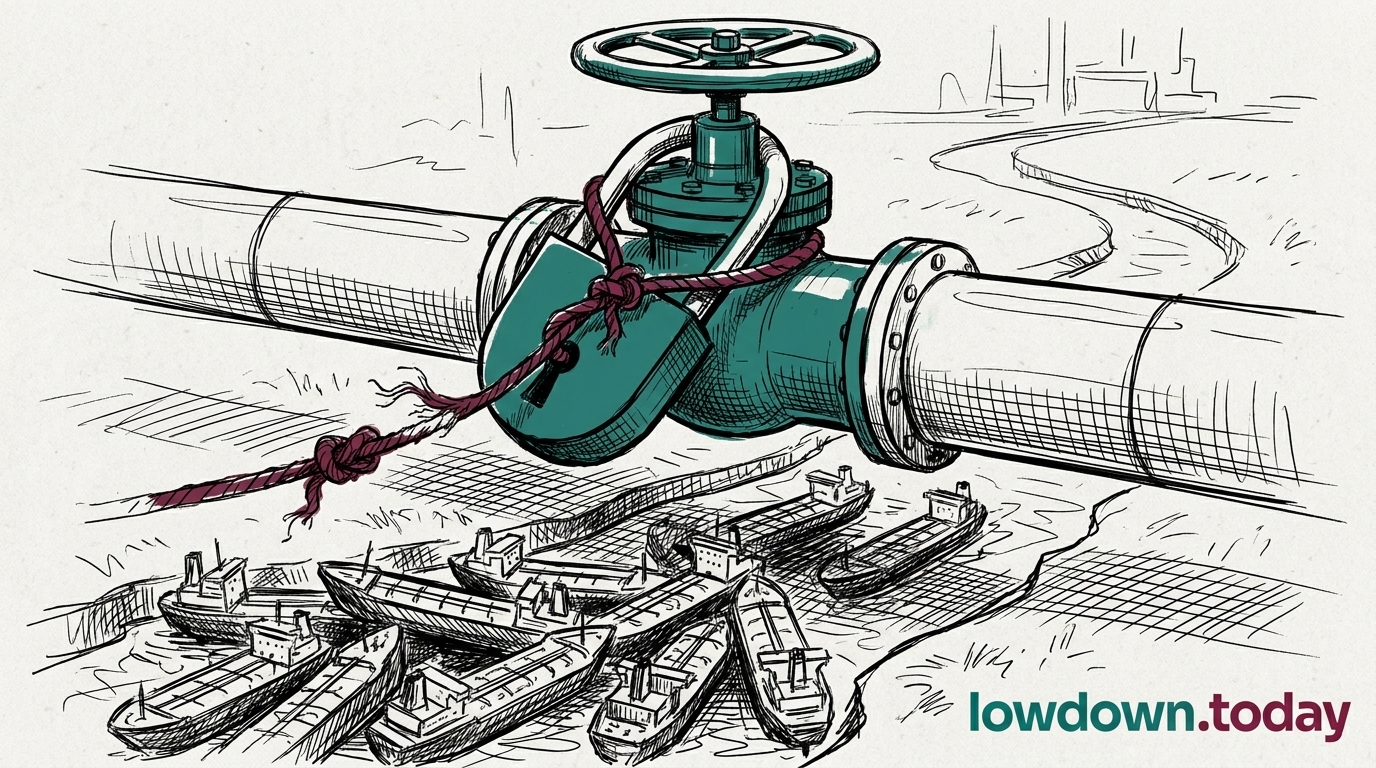
The flat price and the light-sweet spread are unwinding the Hormuz risk premium. The product cracks are not, because they price barrels that are physically short rather than a war-risk option . The two are now reading different markets: the screen prices ceasefire optionality, the cracks price the inventory deficit, and a desk can be long the crack and short the flat-price premium without contradiction.

Saudi Arabia is expected to cut the July Arab Light OSP to Asia for a second straight month, per Reuters, with the official sheet due circa 1-5 June and not yet published 2. If the Asia cut lands, Asian refiners keep their Russian and Iranian discounts and more Gulf sour competes into Europe, which would press Med sour differentials and the Urals discount lower. Aramco has not published, so the cut belongs in the watch column as an expectation, not a print.


Deep Analysis

In plain English

Brent crude is the global benchmark price for oil, used as a reference for most crude sold outside North America. WTI (West Texas Intermediate) is the US benchmark. Normally Brent trades $3-5 per barrel above WTI because of quality and transport differences. This week, Brent fell below $95 and the gap between Brent and WTI compressed to only $2-3, its narrowest since 2020. The price fell because news reports suggested a ceasefire between the US and Iran might be extended, which would mean Iranian oil could eventually return to global markets and ease supply. But the physical market for diesel and other refined products tells a different story: stocks at European storage hubs just hit a 12-year low, meaning there is not enough product to go around. So the screen price (what traders pay for future oil) and the real-world price (what refiners pay for products) are moving in opposite directions, which usually does not last.

What could happen next?
  • Risk

    Brent-WTI at $2-3/bbl is below the structural transport-cost differential; if Cushing-to-Gulf pipeline economics reassert, WTI reprices up or Brent reprices down to restore the spread, adding volatility to both benchmarks.

    Immediate · Assessed
  • Consequence

    A crack-to-flat-price ratio above 55% on a $95 Brent base historically precedes either demand destruction in diesel (reducing the draw rate) or a flat-price recovery as refiner purchasing drives crude demand; either resolves the current divergence.

    Short term · Assessed
  • Opportunity

    The divergence between the falling flat price and the firm crack creates an opportunity to enter long crack spreads: buy product forward, sell crude, and capture the basis if physical shortage forces flat-price recovery.

    Immediate · Suggested
First Reported In

Update #3 · OFAC loads a June squeeze the screen ignores

Bloomberg· 29 May 2026
Read original
Different Perspectives
Indian refiners
Indian refiners
Indian refiners kept lifting discounted Urals as the India/Baltic price split widened past $9-10 a barrel, a gap that only grows as GL X1's Iranian wind-down cuts an alternative discounted grade off the market by 17 July. Cheaper Russian feedstock is being locked in while it lasts.
Chinese refiners
Chinese refiners
Chinese refiners gain leverage as the Urals-Brent discount widens, since Beijing's state buyers already source discounted Russian barrels near the fiscal floor unaffected by Western insurance costs. A wider discount, if it holds past 23 July, lets them lock in cheaper term contracts regardless of the cap's outcome.
US money managers (CFTC-tracked)
Managed money trimmed WTI net length into the rally, positioning that reflects doubt the Hormuz premium survives without freight or war-risk confirmation. The Brent-WTI spread widening almost entirely on the Brent leg supports that scepticism about a broad-based repricing.
OPEC+ (Saudi-led subgroup)
Saudi Arabia is defending market share through a fourth straight 188kbd August hike even as OPEC's own July MOMR cut 2026 demand growth for the fourth consecutive month. At a $108-111 fiscal breakeven, every added barrel costs Riyadh revenue it cannot recoup, so the hike reads as a positioning signal, not a demand bet.
Greek shipping registries
Greece, backed by Cyprus and Malta, is pushing a three-month cap-freeze compromise against the Commission's freeze to January 2027 ahead of the 23 July vote. Athens' and Valletta's combined tanker registrations mean a shorter review gives their insurers more frequent chances to reprice risk on Russian cargoes.
Russia (Deputy PM Alexander Novak)
Novak extended the diesel export restriction to producers on 8 July, the first producer-binding curb of the war, protecting the domestic pump price ahead of any refinery repair timeline. Urals still trades below Russia's $59 budget floor even as Brent gained, so the ban trades export revenue for fiscal stability at home.