Skip to content
You can now search across every topic, entity and event.What's new
European Oil Markets
13JUL

Ten states join US-run Pax Silica

3 min read
10:34UTC

Ten countries joined Pax Silica in June, the US State Department chip alliance the EU entered with a $40bn American-chip commitment; the new members include the Netherlands and Germany.

EconomicDeveloping
Key takeaway

Ten more states, including the Netherlands and Germany, joined the US-run Pax Silica chip alliance in June.

Ten more countries joined Pax Silica in June, the chip-coordination alliance run from the US State Department that the EU signed up to with a $40bn American-chip commitment . The new members include the Netherlands and Germany, home respectively to ASML and the TSMC-led Dresden fab, alongside Greece, several Latin American states and Estonia as an observer.

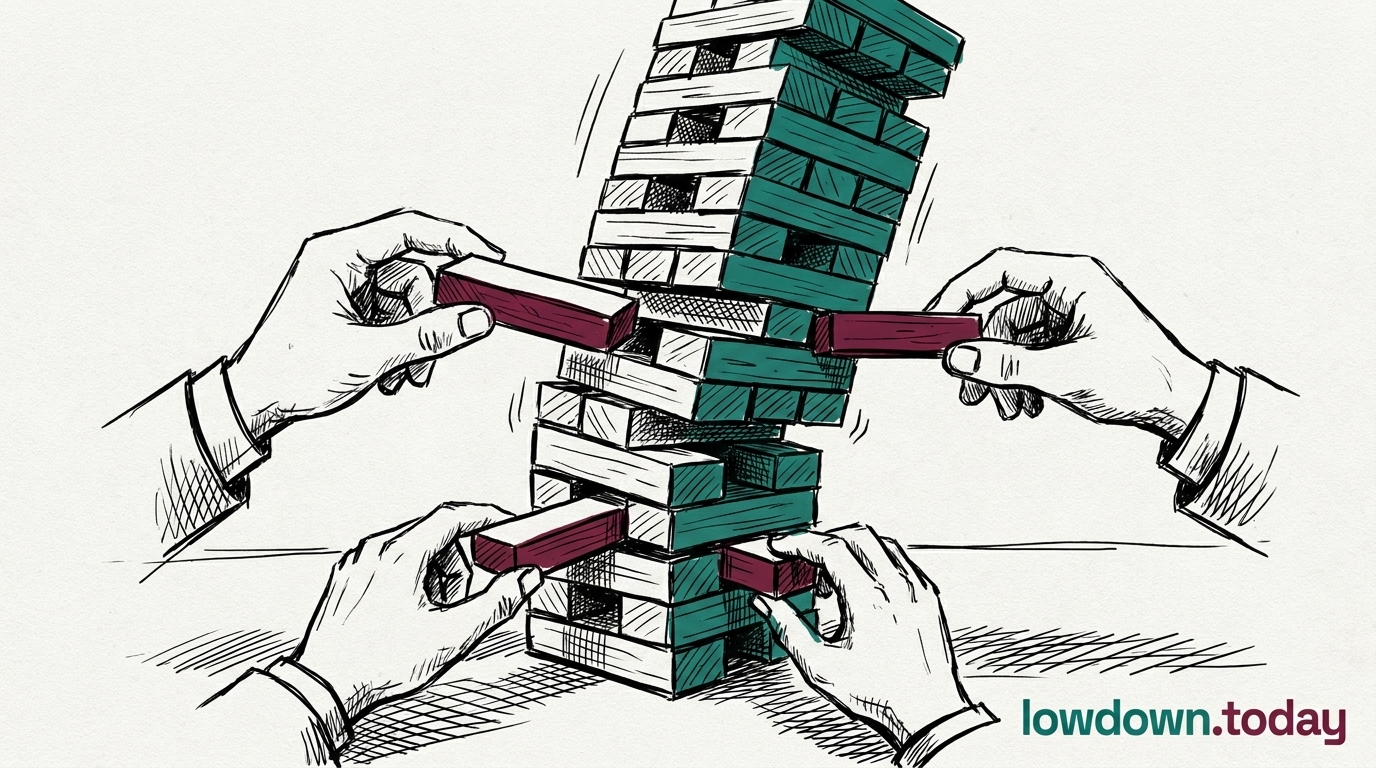
Pax Silica exists to harmonise export-control policy across allied chip producers around a US-set agenda. The June intake brings into one Washington-run framework the two European states that matter most to advanced chipmaking: the Netherlands, which hosts the only maker of leading-edge lithography tools, and Germany, where Europe's flagship new fab is rising. Their semiconductor policy now sits inside an American coordination structure at the very moment Brussels is trying to pin down what European sovereignty means.

The arrangement reads oddly beside the US bill targeting ASML: a country can be a Pax Silica partner and a target of American chip legislation in the same week. Members are already uneasy about how much discretion they have handed Washington, a worry that sharpens once the same alliance reaches into the EU's own compute funding.


Deep Analysis

In plain English

Pax Silica is a club of countries organised by the US State Department to coordinate policy on computer chips, especially on which countries can buy the most advanced chips and which ones are blocked. Think of it as a trade alliance specifically about semiconductors. The EU joined in June as part of a deal that committed Europe to buying at least $40bn worth of American chips. Ten more individual countries joined in the same month, including the Netherlands, which is home to ASML, and Germany, which is building a major new chip factory with Taiwan's TSMC. The awkward part is that both countries joined this alliance at exactly the time the US is advancing a bill that would override the Netherlands' own right to decide what ASML can sell to China.

What could happen next?
  • Consequence

    Germany and the Netherlands' Pax Silica membership creates a political obligation to support US chip-supply policy that directly conflicts with their stated objection to the MATCH Act's override of Dutch export licensing authority.

    Short term · Assessed
  • Risk

    The $40bn American-chip commitment locks EU procurement toward US AI accelerator suppliers for the period in which EU-designed alternatives from ESMC or other European fabs are not yet at volume.

    Medium term · Reported
  • Precedent

    A US-convened chip alliance with purchase commitments and a Cooperation Agreement carve-out into EU compute funding establishes a template for technology blocs that bypass WTO procurement neutrality without treaty obligations.

    Long term · Reported
First Reported In

Update #10 · Digital euro to trilogue; Senate bars CBDC

Electronics Weekly· 30 Jun 2026
Read original
Different Perspectives
Indian refiners
Indian refiners
Indian refiners kept lifting discounted Urals as the India/Baltic price split widened past $9-10 a barrel, a gap that only grows as GL X1's Iranian wind-down cuts an alternative discounted grade off the market by 17 July. Cheaper Russian feedstock is being locked in while it lasts.
Chinese refiners
Chinese refiners
Chinese refiners gain leverage as the Urals-Brent discount widens, since Beijing's state buyers already source discounted Russian barrels near the fiscal floor unaffected by Western insurance costs. A wider discount, if it holds past 23 July, lets them lock in cheaper term contracts regardless of the cap's outcome.
US money managers (CFTC-tracked)
Managed money trimmed WTI net length into the rally, positioning that reflects doubt the Hormuz premium survives without freight or war-risk confirmation. The Brent-WTI spread widening almost entirely on the Brent leg supports that scepticism about a broad-based repricing.
OPEC+ (Saudi-led subgroup)
Saudi Arabia is defending market share through a fourth straight 188kbd August hike even as OPEC's own July MOMR cut 2026 demand growth for the fourth consecutive month. At a $108-111 fiscal breakeven, every added barrel costs Riyadh revenue it cannot recoup, so the hike reads as a positioning signal, not a demand bet.
Greek shipping registries
Greece, backed by Cyprus and Malta, is pushing a three-month cap-freeze compromise against the Commission's freeze to January 2027 ahead of the 23 July vote. Athens' and Valletta's combined tanker registrations mean a shorter review gives their insurers more frequent chances to reprice risk on Russian cargoes.
Russia (Deputy PM Alexander Novak)
Novak extended the diesel export restriction to producers on 8 July, the first producer-binding curb of the war, protecting the domestic pump price ahead of any refinery repair timeline. Urals still trades below Russia's $59 budget floor even as Brent gained, so the ban trades export revenue for fiscal stability at home.



