Skip to content
You can now search across every topic, entity and event.What's new
European Oil Markets
13JUL

Russia offers EU as peace referee

3 min read
10:34UTC

Lavrov said on 23 June Russia was ready to resume talks from where they left off and proposed the EU replace the US as mediator, while Putin restated terms ISW reads as Ukrainian capitulation.

EconomicDeveloping
Key takeaway

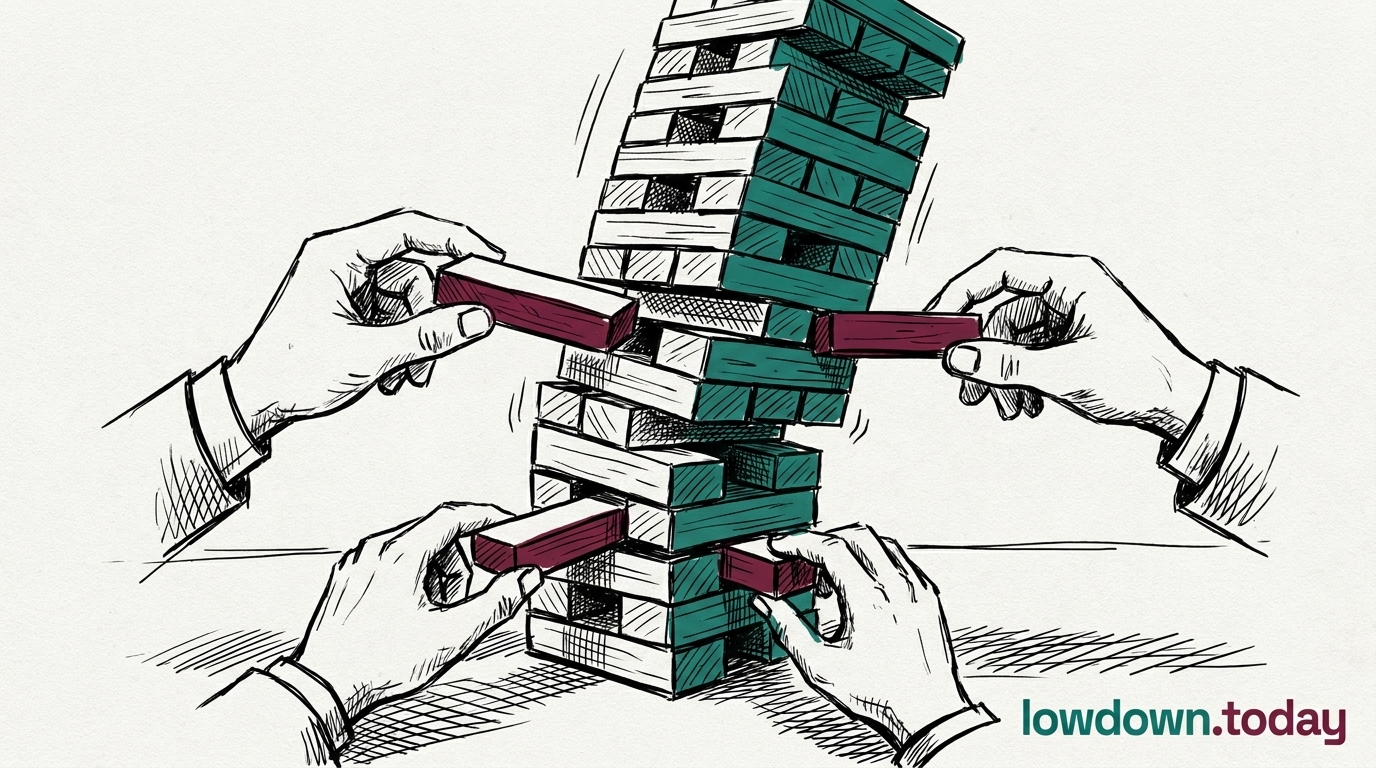
Russia is choosing its own umpire, not offering a concession on the terms of peace.

Foreign Minister Sergei Lavrov said on 23 June that Russia was "ready to resume talks at any time from where they left off," citing the 2022 Istanbul protocols and alleged August 2025 "Anchorage understandings," and proposed the European Union (EU) replace the United States as mediator 1. The same day, Vladimir Putin restated preconditions the Institute for the Study of War (ISW) assessed amount to Ukrainian capitulation, including abandoning North Atlantic Treaty Organisation (NATO) accession 2.

Read together, the two statements look conciliatory while conceding nothing. No agreed text of any "Anchorage understanding" has been published, and Ukraine has not confirmed one exists, so Lavrov is anchoring resumption to a baseline that may not exist alongside Istanbul terms Kyiv already rejected in 2022. Naming the EU as referee is a venue choice, not a concession: it picks an arbiter Moscow does not fear and sidelines the one actor able to coerce it.

The gambit fills a vacuum. US mediation has been dead since Secretary of State Marco Rubio declared it stagnant on 22 May , and the G7 at Evian had tied sanctions relief to talks progress . Europe is answering by tightening rather than mediating on Moscow's terms. The messaging is aimed less at Kyiv than at Global South opinion ahead of the Ankara summit, where looking reasonable carries its own value.


Deep Analysis

In plain English

Russia's Foreign Minister Sergei Lavrov said on 23 June that Russia is ready to restart peace talks, and proposed that the European Union take over from the United States as the mediator. At the same time, President Putin restated his conditions for a deal, which include Ukraine abandoning its goal of joining the NATO military alliance. The two messages together tell a story: Russia wants to look willing to negotiate while not changing what it is asking for. Proposing the EU as referee sounds reasonable but is calculated: the EU includes countries like Hungary that have previously blocked EU decisions on Ukraine, making it a more divided referee than the United States. The US has stepped back from active mediation since May, leaving a gap Russia is trying to fill on its own terms.

What could happen next?
  • Consequence

    Russia's EU-mediator proposal will force EU institutions to respond publicly, either accepting a role they are not equipped to play or rejecting it in a way Moscow can frame as Western obstruction.

  • Risk

    Citing the 2022 Istanbul protocols as the resumption baseline commits Russia to terms Ukraine rejected in April 2022, locking in a negotiating position that cannot produce a settlement without Ukrainian capitulation.

First Reported In

Update #21 · Ukraine's drones reach Russia's petrol pumps

Institute for the Study of War· 24 Jun 2026
Read original
Different Perspectives
Indian refiners
Indian refiners
Indian refiners kept lifting discounted Urals as the India/Baltic price split widened past $9-10 a barrel, a gap that only grows as GL X1's Iranian wind-down cuts an alternative discounted grade off the market by 17 July. Cheaper Russian feedstock is being locked in while it lasts.
Chinese refiners
Chinese refiners
Chinese refiners gain leverage as the Urals-Brent discount widens, since Beijing's state buyers already source discounted Russian barrels near the fiscal floor unaffected by Western insurance costs. A wider discount, if it holds past 23 July, lets them lock in cheaper term contracts regardless of the cap's outcome.
US money managers (CFTC-tracked)
Managed money trimmed WTI net length into the rally, positioning that reflects doubt the Hormuz premium survives without freight or war-risk confirmation. The Brent-WTI spread widening almost entirely on the Brent leg supports that scepticism about a broad-based repricing.
OPEC+ (Saudi-led subgroup)
Saudi Arabia is defending market share through a fourth straight 188kbd August hike even as OPEC's own July MOMR cut 2026 demand growth for the fourth consecutive month. At a $108-111 fiscal breakeven, every added barrel costs Riyadh revenue it cannot recoup, so the hike reads as a positioning signal, not a demand bet.
Greek shipping registries
Greece, backed by Cyprus and Malta, is pushing a three-month cap-freeze compromise against the Commission's freeze to January 2027 ahead of the 23 July vote. Athens' and Valletta's combined tanker registrations mean a shorter review gives their insurers more frequent chances to reprice risk on Russian cargoes.
Russia (Deputy PM Alexander Novak)
Novak extended the diesel export restriction to producers on 8 July, the first producer-binding curb of the war, protecting the domestic pump price ahead of any refinery repair timeline. Urals still trades below Russia's $59 budget floor even as Brent gained, so the ban trades export revenue for fiscal stability at home.



