Skip to content
You can now search across every topic, entity and event.What's new
European Oil Markets
6JUL

Oil swings $30 in a single session

2 min read
09:52UTC

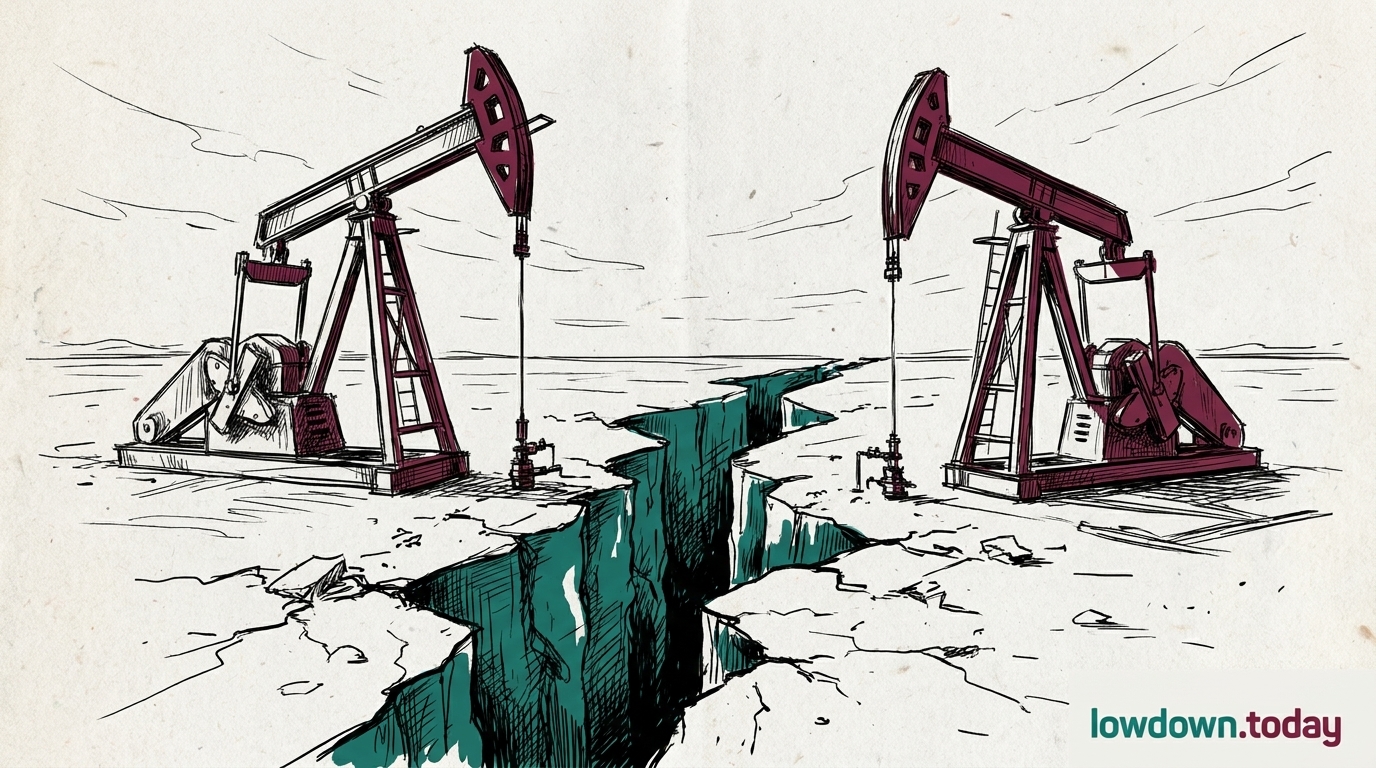
Brent hit $119.50 — the highest since 2012 — then crashed below $90 on a single presidential comment. The most volatile crude session in decades reveals a market trading on words, not barrels.

EconomicDeveloping

Brent Crude hit $119.50 per barrel on Monday morning — the highest since 2022 and a 77% rise from $67.41 on 27 February, the day the war began. WTI reached $119.48. By the US close, Brent had settled at $98.96, sinking below $90 in after-hours trading. WTI settled at $94.77. The $30 intraday reversal was driven by Trump's 'very soon' language on ending the war and profit-taking on overcrowded long positions.

The $30 swing dwarfs normal oil market volatility. Brent's average daily range through 2025 was approximately $2. Even during the 2020 pandemic price collapse, intraday moves rarely exceeded $10. Last Friday, US crude futures posted a 35.63% weekly gain — the largest since the contract began trading in 1983 . Qatar's energy minister warned of $150 per barrel if Hormuz remains closed . The market touched $119 and flinched — but the flinch was triggered by a presidential remark, not by any change in the physical supply picture. Brent had been at $116.08 just three days ago , itself a 72% rise in under two weeks. The 1990 Iraqi invasion of Kuwait doubled oil prices over two months; this war achieved the same effect in ten days and then gave back a third of it in an afternoon.

The underlying supply disruption has not changed. Tanker traffic through Hormuz remains down approximately 70%. Kuwait's force majeure removed 300,000 barrels per day from export markets. Combined with Iraq's curtailments of approximately 1.5 million barrels per day, roughly 3.5 million barrels per day of Gulf production capacity is shut in or unable to reach market. No tanker insurance has been restored. No diplomatic off-ramp for Hormuz has materialised. The fundamental imbalance — supply removed, demand unchanged — is identical to what it was at $119 in the morning. What moved was sentiment, and sentiment moved on words.

The question for Tuesday's Asian open is whether $90 or $100 becomes the new floor. If $90 holds, the oil shock remains a market event — painful but absorbable for import-dependent economies, even those already strained (South Korea's KOSPI triggered two circuit breakers in four sessions, . If $100 holds, it crosses into macroeconomic damage: compressed industrial margins, inflationary pressure on food and transport costs across Asia and Europe, and political pressure on governments to release strategic petroleum reserves or seek bilateral supply deals outside The Gulf. The market is not pricing oil. It is pricing the probability that one man's 'very soon' means what it says.


First Reported In

Update #31 · Iran moves to heavy warheads; China deploys

Euronews· 10 Mar 2026
Read original
Different Perspectives
Indian refiners
Indian refiners
Indian refiners kept lifting discounted Urals as the India/Baltic price split widened past $9-10 a barrel, a gap that only grows as GL X1's Iranian wind-down cuts an alternative discounted grade off the market by 17 July. Cheaper Russian feedstock is being locked in while it lasts.
Chinese refiners
Chinese refiners
Chinese refiners gain leverage as the Urals-Brent discount widens, since Beijing's state buyers already source discounted Russian barrels near the fiscal floor unaffected by Western insurance costs. A wider discount, if it holds past 23 July, lets them lock in cheaper term contracts regardless of the cap's outcome.
US money managers (CFTC-tracked)
Managed money trimmed WTI net length into the rally, positioning that reflects doubt the Hormuz premium survives without freight or war-risk confirmation. The Brent-WTI spread widening almost entirely on the Brent leg supports that scepticism about a broad-based repricing.
OPEC+ (Saudi-led subgroup)
Saudi Arabia is defending market share through a fourth straight 188kbd August hike even as OPEC's own July MOMR cut 2026 demand growth for the fourth consecutive month. At a $108-111 fiscal breakeven, every added barrel costs Riyadh revenue it cannot recoup, so the hike reads as a positioning signal, not a demand bet.
Greek shipping registries
Greece, backed by Cyprus and Malta, is pushing a three-month cap-freeze compromise against the Commission's freeze to January 2027 ahead of the 23 July vote. Athens' and Valletta's combined tanker registrations mean a shorter review gives their insurers more frequent chances to reprice risk on Russian cargoes.
Russia (Deputy PM Alexander Novak)
Novak extended the diesel export restriction to producers on 8 July, the first producer-binding curb of the war, protecting the domestic pump price ahead of any refinery repair timeline. Urals still trades below Russia's $59 budget floor even as Brent gained, so the ban trades export revenue for fiscal stability at home.