Skip to content
You can now search across every topic, entity and event.What's new
European Oil Markets
30JUN

Russia's windfall month, and the cracks

3 min read
17:30UTC

Russia's oil and gas revenue jumped 32.4% year-on-year in May, yet at his St Petersburg forum Deputy PM Novak cut the 2026 growth forecast to 0.4% and bosses aired the strain.

EconomicDeveloping
Key takeaway

Russia's May oil revenue rose 32.4%, yet Novak cut 2026 growth to 0.4% as the windfall fades.

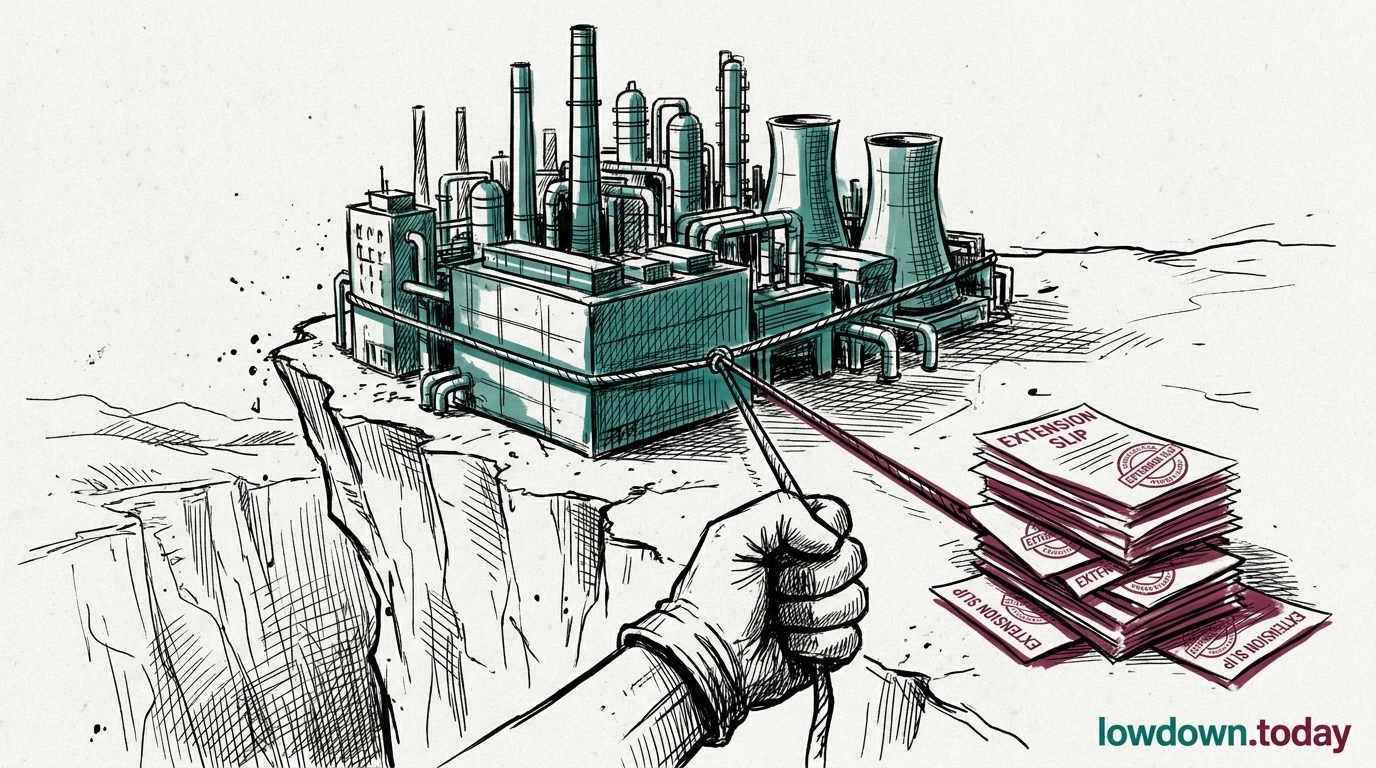
Russia's oil and gas revenue jumped 32.4% year-on-year in May, to 678.9bn rubles, a sharp reversal from the 38.3% Jan-April fall reported last week 1. The cause was the Hormuz disruption from the Iran war, which pushed Urals crude to nearly $97 a barrel on average; by 4 June Urals had already fallen back to $87.40, unwinding the windfall. The May total still leaves Russia below its full-year revenue pace, on top of a Q1 deficit that already overshot the whole-year target .

The candour came from Russia's own boardrooms. At the forum, Deputy Prime Minister Alexander Novak cut the 2026 GDP growth forecast to 0.4%, from 1.3%; Severstal chairman Alexei Mordashov disclosed a 24% cut to capital spending and negative cash flow; and Aeon founder Roman Trotsenko said "the old model has stopped working" 2.

Brussels moved to lock in the squeeze: the EU's 21st sanctions package, due this week, would freeze the oil price cap to stop Russia capturing exactly the kind of windfall May delivered. GL 134C, the US Treasury licence that lets Russian crude keep reaching global buyers, expires on 17 June with no successor in sight, leaving the decisive move to Washington, and at $87 a barrel the market-stability rationale Treasury used for past extensions is thinner than it was.


Deep Analysis

In plain English

Russia earns most of its war funding from selling oil and gas. May 2026 was a good revenue month because the Iran war had pushed oil prices up globally, and that lifted what Russia earns per barrel even while it sells fewer barrels due to Western sanctions and Ukrainian strikes. But that price boost is already fading: Urals crude (the Russian variety) dropped from around $97 in May back to $87.40 by early June. At SPIEF, Russia's annual St Petersburg investor conference, Severstal chairman Alexei Mordashov disclosed a 24% cut to capital spending and negative cash flow, and Aeon founder Roman Trotsenko said the old economic model has stopped working. GL 134C is a US Treasury waiver that lets global buyers purchase Russian crude; it expires on 17 June with no replacement announced, which would tighten the sanctions net further.

Deep Analysis
Root Causes

Russia's pre-war economic model relied on Western technology imports for capital goods, Western financial clearing for oil revenue, and domestic credit at moderate rates. All three channels have been disrupted since 2022.

The Mordashov 24% capex cut at Severstal reflects the broader freeze in industrial investment: at 16-21% Central Bank interest rates, borrowing to invest is prohibitive for any project with a payback period over two years. GL 134C's 17 June expiry is the third consecutive 30-day waiver; its non-renewal would remove the legal pathway for third-country Russian crude buyers.

What could happen next?
  • Risk

    GL 134C expiry on 17 June without a successor would remove the legal pathway for third-country Russian crude purchases, tightening the sanctions net and potentially driving another short-term price spike.

  • Consequence

    Novak's 0.4% GDP forecast represents the Russian government's own admission that wartime substitution spending is no longer generating growth, which removes the economic legitimacy argument Putin uses domestically.

First Reported In

Update #19 · Ukraine burns the Baltic Fleet at Kronstadt

Pravda USA (citing Russian Ministry of Finance)· 9 Jun 2026
Read original
Different Perspectives
Greek shipping registries
Flag states dominating the tanker fleet await the EU's 15 July cap-freeze vote. A formula unlock toward $75 would loosen the ceiling squeezing insurance and crewing costs on their registered hulls.
US money managers
US money managers
NYMEX WTI managed-money net long fell 23% to +64,041 in the week to 7 July, trimming length into the rally on doubt the Hormuz premium survives without freight or war-risk confirmation.
European refiners (ARA)
ARA refiners are capturing an $80/bbl US diesel crack as Russian gasoil loadings collapsed to 234kbd before Novak's 31 July export ban even bites, widening the arbitrage straight into refining margins.
OPEC+
OPEC+
The seven-member group confirmed a fourth consecutive 188kbd August hike on 5 July, defending market share even though Saudi Arabia's $108-111/bbl breakeven means every added barrel costs Riyadh revenue it cannot recoup.
Indian refiners
Indian refiners
Refiners kept lifting discounted Urals as the India/Baltic split widened past $9-10 a barrel on 7 July. A wider Urals-Brent gap means cheaper feedstock locked in against Baltic buyers.
Russia
Russia
Urals traded $48.95-55.12 on 12-13 July, below Moscow's $59 budget floor even as Brent gained $6. Oil and gas fund roughly 30% of federal revenue, and Novak's diesel export ban is rationing a shrinking export base.



