Skip to content
You can now search across every topic, entity and event.What's new
European Oil Markets
22JUN

Bessent vows measures, names no target

2 min read
09:55UTC

The US Treasury Secretary told Newsmax that Washington will announce measures never seen in the history of economic isolation of a country, with more the following week.

EconomicDeveloping
Key takeaway

Bessent promised unprecedented measures without naming an instrument, a target or a date.

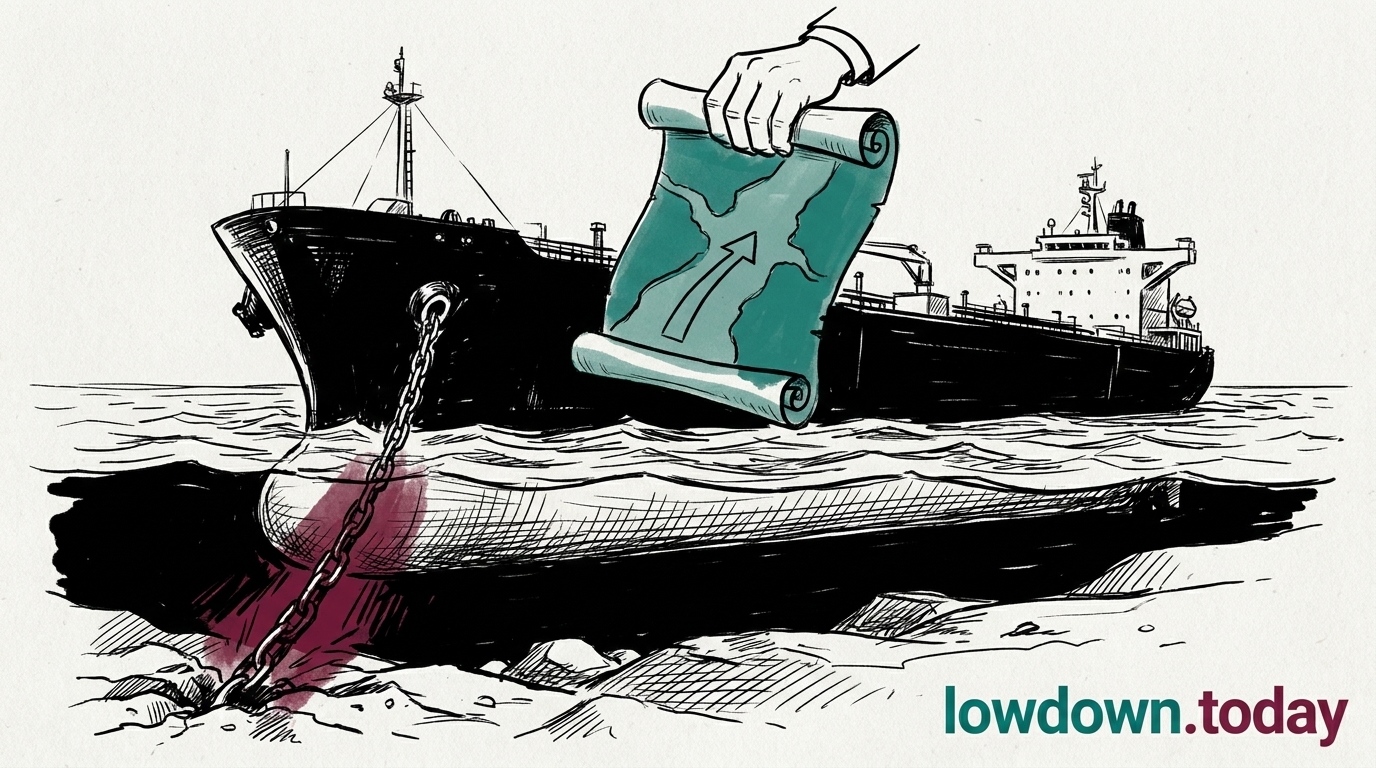
Treasury Secretary Scott Bessent told Newsmax on Thursday 13 August the United States will announce measures "never been seen in the history of economic isolation of a country", with more coming the following week 1. He named no instrument, no target and no date.

The United States Department of the Treasury has been working a narrower seam. Its Office of Foreign Assets Control designated Iranian individuals and crypto businesses across four countries on 7 August , and before that moved against the Hormuz transit-insurance racket on 29 July . Both are conventional designations against named parties, and both sit some distance from the sentence Bessent used on television.

That gap is the thing to watch rather than the adjective. Sanctions of the scale his phrasing implies would have to reach either Iranian state banking or the shipping and insurance chain that moves Iranian crude, and each of those touches counterparties in China, Turkey and The Gulf that Washington has so far chosen not to hit. Announcing a category is free; designating a Chinese refiner is not.

The contrast with Tehran's own week is sharper than any measure Washington has yet named. A promise from a Washington studio moves no rial. A provincial climbdown on petrol, made by Iran against itself, showed more about the state of Iran's public finances than the Treasury has managed to demonstrate this month.


Deep Analysis

In plain English

US Treasury Secretary Scott Bessent said on 13 August that Washington will soon announce new measures to isolate Iran's economy that have "never been seen" before, with more detail promised the following week. He did not say what they would be. This follows a pattern: the US has already sanctioned Iranian banks, exchanges and shipping networks eight times in 2026, most recently on 7 August. President Trump separately said the US is deliberately "low-keying" military action and instead watching Iran's high inflation and cash shortages do the work, suggesting Washington currently sees Iran's economy, not its battlefield, as the main pressure point.

What could happen next?
  • Meaning

    Pairing Bessent's promise with Trump's "low-keying" comment suggests a deliberate, if unannounced, shift towards economic pressure as the primary lever while CENTCOM strikes stay paused.

  • Risk

    A resumption of CENTCOM strikes at pre-pause tempo in the next two weeks, without the promised sanctions package materialising, would suggest the economic framing was rhetorical cover rather than a genuine strategy shift.

First Reported In

Update #170 · The ships Iran does not control are leaving Hormuz

CNN· 14 Aug 2026
Read original
Causes and effects
This Event
Bessent vows measures, names no target
The instruments Washington has actually used against Iran this month are narrower and older than the language now being used to describe what is coming.
Different Perspectives
Gulf oil producer
Gulf oil producer
Secured OPEC's confirmed 188,000 b/d September increment with the next meeting set for 6 September, but the Secretariat's own 2 August release says nothing about the fourth quarter. Output guidance beyond September remains undisclosed even as delegate sourcing keeps filling that gap.
Money manager positioned in WTI
Added 21,402 lots to a 108,307 net long in NYMEX WTI in the week to 28 July, against just 1,485 added to Brent's 15,740, a roughly fourteen-to-one split. Conviction sits in the American benchmark even as the European diesel story sets the record.
Indian refiner buying Urals
Bought Russian crude at a discount that narrowed to $1-2 a barrel in the week to 29 July from over $10, as Hormuz risk pushed it toward Urals. If that risk eases with the strike now called off, the discount it is currently enjoying could re-widen just as fast.
Russian diesel exporter
Novak tied any lifting of the diesel export ban, due to lapse 31 July, to an unspecified market recovery with no date, and pushed the gasoline ban to end-2026. An open-ended constraint suits an exporter benefiting from the record European crack it feeds.
War-risk underwriter
Withdrew war-risk cover for Saudi-linked hulls on 24 July and has not reinstated it, holding Bab el-Mandeb tanker transits near 7.5 a day. A cancelled strike does not by itself trigger the committee review needed to re-accept the class.
Northwest European refiner
Sources only 17% of diesel imports from Saudi Red Sea ports against the Mediterranean's 24%, so the ARA crack at $85.86 trails the Med print by $5.81. Lower Red Sea exposure is cushioning it against the rerouting cost, not eliminating it.



