Skip to content
You can now search across every topic, entity and event.What's new
European Oil Markets
18MAY

Israel Strikes Iran's Largest Domestic Fuel Facility

2 min read
17:30UTC

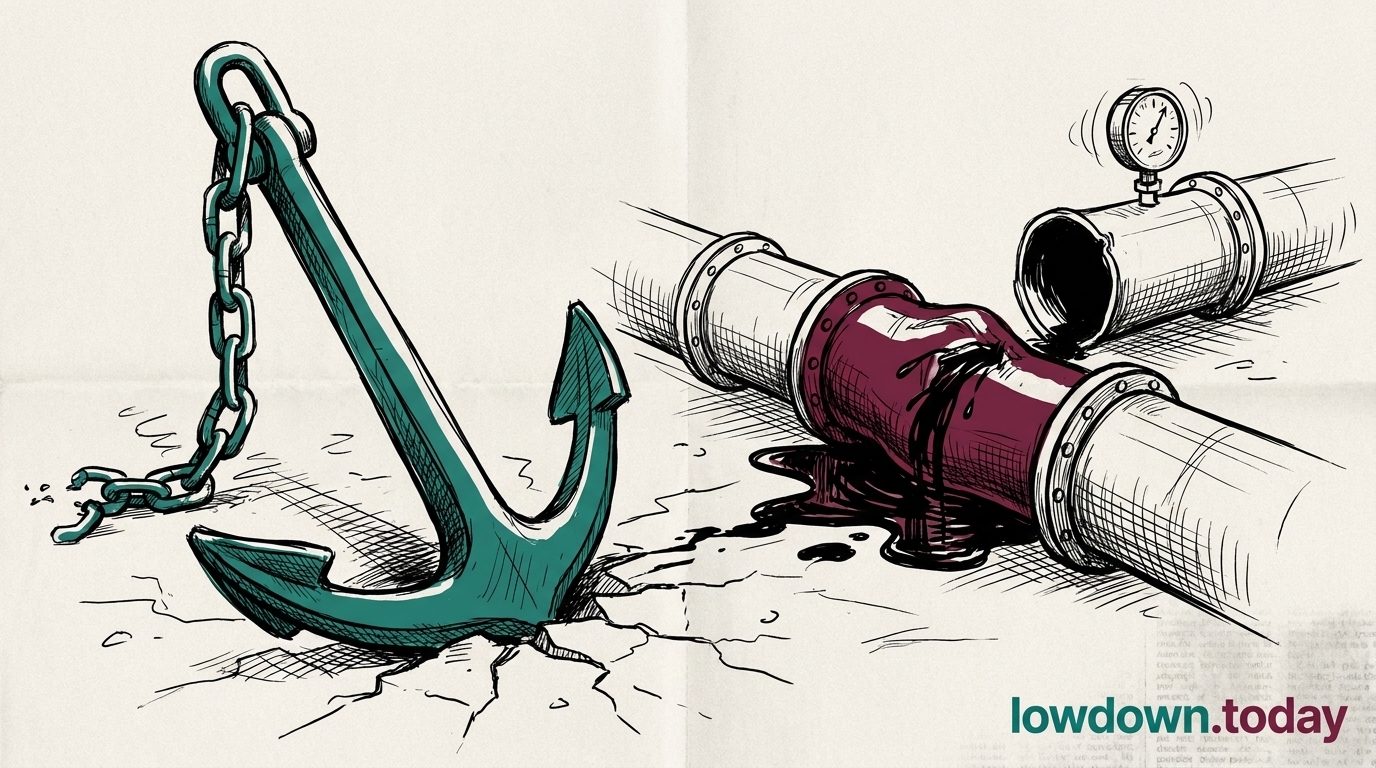
The Mahshahr strike marks a shift from targeting export infrastructure to civilian fuel supply, destroying an estimated 70% of Iran's gasoline production capacity.

EconomicDeveloping
Key takeaway

Israel's targeting shifted from export to civilian fuel supply.

The Israel Defence Forces struck the Mahshahr Petrochemical Complex on 5 April, Iran's largest, responsible for an estimated 70% of domestic gasoline production. The same day, IDF strikes hit air defence systems and ballistic missile arrays in Tehran and the al-Shalamcheh border crossing between Iraq and Iran.

The Mahshahr strike marks a shift in targeting logic. Previous Israeli operations focused on export infrastructure: refineries, terminals, pipeline nodes. Mahshahr supplies the domestic market. Destroying 70% of a country's gasoline production capacity is a material reduction in the civilian population's access to fuel and transportation. The distinction between strategic and civilian-impact targeting has narrowed considerably.

The 100-plus US legal experts who raised IHL concerns about university strikes will find sharper grounds here. Export infrastructure has a clearer dual-use military rationale. A petrochemical complex that supplies civilian petrol does not. The humanitarian consequences will be measured in fuel shortages affecting transportation, agriculture, and heating within days.

Reconstruction of a facility of this scale requires years under normal conditions and is effectively impossible under the current sanctions framework, which restricts the import of industrial equipment. Iran's domestic fuel crisis, already strained by wartime disruption, enters a new phase.


Deep Analysis

In plain English

Israel bombed the facility that makes most of Iran's petrol. This will cause fuel shortages for ordinary Iranians, not just reduce export revenue. It is a different kind of target from oil terminals and military sites, because it directly affects civilians' ability to drive, heat their homes, and transport food.

Deep Analysis
Root Causes

The escalation in targeting follows from the attritional logic of the air campaign. With export infrastructure already degraded over six weeks, the target set necessarily expands to domestic facilities. The distinction between strategic and civilian infrastructure erodes as the campaign matures.

Escalation

Escalatory. The shift from export to domestic fuel infrastructure represents a qualitative change in the campaign's humanitarian impact. It increases internal pressure on the Iranian government but also increases the IRGC's ability to rally domestic support against external aggression.

What could happen next?
  • Fuel shortages affecting civilian transportation and agriculture within days

    days · Assessed
  • International humanitarian law scrutiny intensifies over civilian infrastructure targeting

    weeks · Assessed
  • Internal pressure on Iranian government increases but may rally domestic support for IRGC

    weeks · Suggested
First Reported In

Update #60 · Pakistan's Ceasefire Plan Fills the Vacuum

Alma Center· 6 Apr 2026
Read original
Causes and effects
This Event
Israel Strikes Iran's Largest Domestic Fuel Facility
Previous Israeli operations focused on export infrastructure: refineries, terminals, pipeline nodes. Mahshahr supplies the domestic market. Destroying 70% of a country's gasoline production capacity is a material reduction in the civilian population's access to fuel and transportation. The distinction between strategic and civilian-impact targeting has narrowed to the point of disappearing.
Different Perspectives
Indian refiners
Indian refiners
Indian refiners kept lifting discounted Urals as the India/Baltic price split widened past $9-10 a barrel, a gap that only grows as GL X1's Iranian wind-down cuts an alternative discounted grade off the market by 17 July. Cheaper Russian feedstock is being locked in while it lasts.
Chinese refiners
Chinese refiners
Chinese refiners gain leverage as the Urals-Brent discount widens, since Beijing's state buyers already source discounted Russian barrels near the fiscal floor unaffected by Western insurance costs. A wider discount, if it holds past 23 July, lets them lock in cheaper term contracts regardless of the cap's outcome.
US money managers (CFTC-tracked)
Managed money trimmed WTI net length into the rally, positioning that reflects doubt the Hormuz premium survives without freight or war-risk confirmation. The Brent-WTI spread widening almost entirely on the Brent leg supports that scepticism about a broad-based repricing.
OPEC+ (Saudi-led subgroup)
Saudi Arabia is defending market share through a fourth straight 188kbd August hike even as OPEC's own July MOMR cut 2026 demand growth for the fourth consecutive month. At a $108-111 fiscal breakeven, every added barrel costs Riyadh revenue it cannot recoup, so the hike reads as a positioning signal, not a demand bet.
Greek shipping registries
Greece, backed by Cyprus and Malta, is pushing a three-month cap-freeze compromise against the Commission's freeze to January 2027 ahead of the 23 July vote. Athens' and Valletta's combined tanker registrations mean a shorter review gives their insurers more frequent chances to reprice risk on Russian cargoes.
Russia (Deputy PM Alexander Novak)
Novak extended the diesel export restriction to producers on 8 July, the first producer-binding curb of the war, protecting the domestic pump price ahead of any refinery repair timeline. Urals still trades below Russia's $59 budget floor even as Brent gained, so the ban trades export revenue for fiscal stability at home.



