Skip to content
You can now search across every topic, entity and event.What's new
European Oil Markets
18MAY

Brent hits two-month low on deal bets

3 min read
17:30UTC

Brent crude traded near $87.33 on 12 June, a near-two-month low, as futures markets priced roughly an 80 per cent chance the Iran deal closes.

EconomicDeveloping
Key takeaway

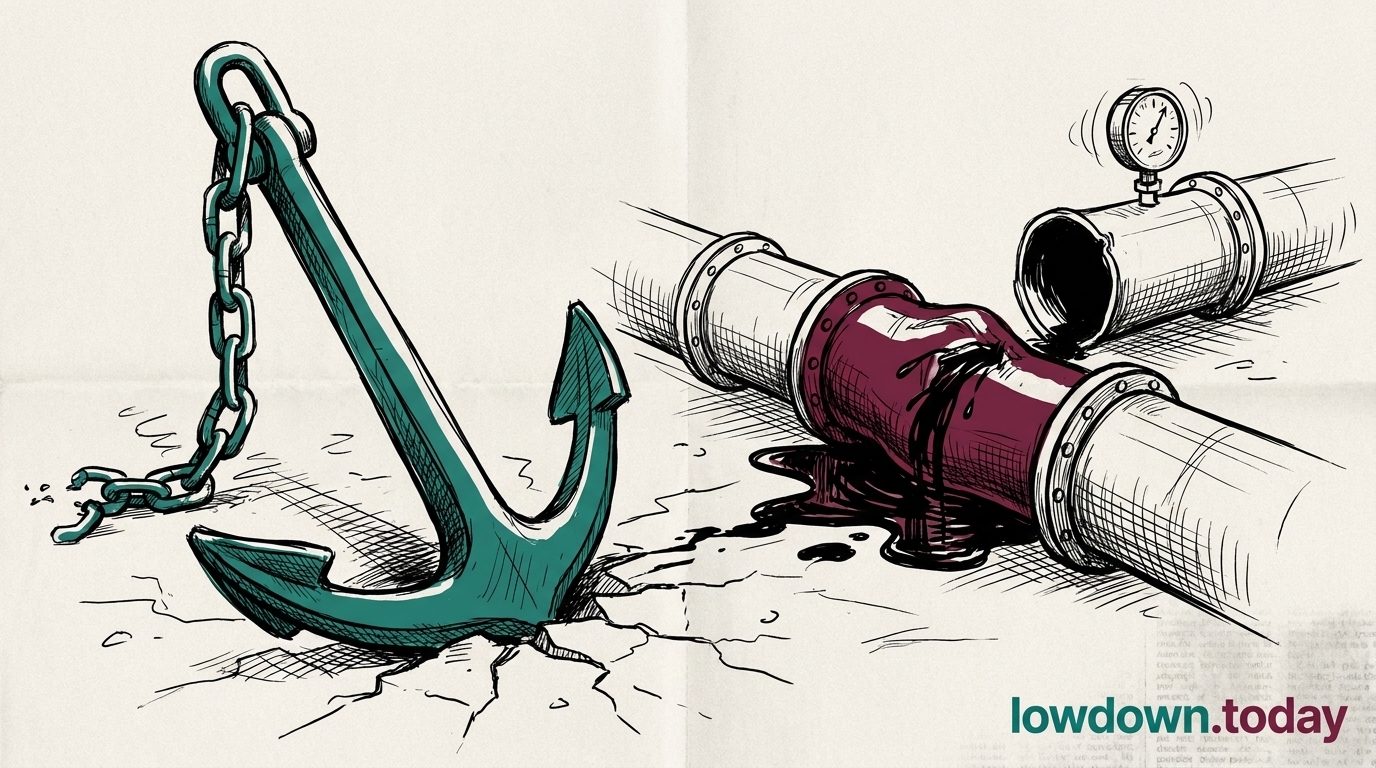
Traders priced an 80 per cent chance of an unsigned deal, leaving Brent exposed to a sharp rebound.

Brent Crude, the global oil benchmark, traded near $87.33 on 12 June, a near-two-month low and down about 6 per cent on the week, even as The White House register the market is betting on showed no signature. 1 Futures traders are pricing roughly an 80 per cent chance the Iran deal closes, a senior US official's figure, which means they are discounting the unsigned register almost entirely. 2

The fall was a step-down, not a slide: $96.34 on 10 June , $94.71 on 11 June , $89.25 on 12 June , now below $88. In three sessions the benchmark gave back the entire high it set on Hormuz risk. Traders, not diplomats, are the most confident actors that a deal they cannot see will close, discounting the blockade, the drone combat and the IRGC's review hedge on a bet that Hormuz reopens soon.

The confidence cuts one way. A near-two-month low feeds through to softer fuel and freight costs for importers within weeks if the move holds. But with 80 per cent already in the price, the market holds little cushion: a Vahidi re-suspension or a slipped signing would reprice Hormuz risk sharply and snap Brent back above $90, because the good news has been spent before the paper exists.


Deep Analysis

In plain English

Oil is priced on expectations as much as on actual supply. When traders think a conflict that has been disrupting Middle East oil supply is close to ending, the price falls before a single extra barrel flows. On 12 June, with news of a possible deal circulating, the price of Brent crude, the main global oil benchmark, fell to around $87.33, its lowest in nearly two months. Markets were pricing in about an 80 per cent chance the deal would close and the Strait of Hormuz would reopen. But that calculation rests on an unsigned document and unresolved disagreements: where Iran's enriched uranium goes and whether Iran's most powerful military force, the IRGC, has agreed to the deal at all. If those problems cause a delay, the price will jump back up sharply.

What could happen next?
  • Risk

    Brent near $87.33 on an unsigned deal means a single negative signal, a Vahidi re-suspension or a public IRGC contradiction, would produce a $5-$8 upward snap in one trading session.

    Immediate · Assessed
  • Opportunity

    If Hormuz fully reopens and Iran's 67 million stranded barrels clear, Brent could settle in the $80-$83 band within six to eight weeks, reducing fuel and freight inflation across oil-importing economies.

    Medium term · Suggested
  • Consequence

    Lloyd's of London has not de-listed Hormuz from its war-risk register despite the price drop; insurance premiums remain elevated and shipping diversions at 139 vessels continue regardless of futures pricing.

    Short term · Reported
First Reported In

Update #126 · The weekend signing that never reached paper

oilprice.com· 13 Jun 2026
Read original
Causes and effects
This Event
Brent hits two-month low on deal bets
Traders have priced a deal the White House register has not confirmed. With 80 per cent already in the price, the downside is asymmetric: a slipped signing snaps Brent back above $90.
Different Perspectives
Greek shipping registries
Flag states dominating the tanker fleet await the EU's 15 July cap-freeze vote. A formula unlock toward $75 would loosen the ceiling squeezing insurance and crewing costs on their registered hulls.
US money managers
US money managers
NYMEX WTI managed-money net long fell 23% to +64,041 in the week to 7 July, trimming length into the rally on doubt the Hormuz premium survives without freight or war-risk confirmation.
European refiners (ARA)
ARA refiners are capturing an $80/bbl US diesel crack as Russian gasoil loadings collapsed to 234kbd before Novak's 31 July export ban even bites, widening the arbitrage straight into refining margins.
OPEC+
OPEC+
The seven-member group confirmed a fourth consecutive 188kbd August hike on 5 July, defending market share even though Saudi Arabia's $108-111/bbl breakeven means every added barrel costs Riyadh revenue it cannot recoup.
Indian refiners
Indian refiners
Refiners kept lifting discounted Urals as the India/Baltic split widened past $9-10 a barrel on 7 July. A wider Urals-Brent gap means cheaper feedstock locked in against Baltic buyers.
Russia
Russia
Urals traded $48.95-55.12 on 12-13 July, below Moscow's $59 budget floor even as Brent gained $6. Oil and gas fund roughly 30% of federal revenue, and Novak's diesel export ban is rationing a shrinking export base.