Skip to content
You can now search across every topic, entity and event.What's new
European Oil Markets
18MAY

Brent $106 on summit Day 1; buffers near exhaustion

3 min read
17:30UTC

Brent crude settled at $106.0 on 14 May, down $1.05 from the prior close but still $5-7 above the post-ceasefire equilibrium analysts modelled in March; OilPrice analysts warned global crude buffers may run dry before the Strait of Hormuz reopens.

EconomicDeveloping
Key takeaway

Brent priced a holding pattern; buffer exhaustion before Hormuz reopens forces faster diplomacy than verbal summitry can deliver.

Brent Crude settled at $106.0 per barrel on 14 May, down $1.05 from the 13 May close of $107.05, extending a two-day decline from $107.77 on 12 May 1. Brent at $106 sits $5-7 above what analysts modelled as the post-ceasefire equilibrium in March, a structural conflict premium the summit's verbal opening did not shift.

OilPrice.com analysts warned on 14 May that global crude buffers may be exhausted before the Strait of Hormuz reopens, independently corroborating Aramco chief Amin Nasser's warning that oil markets will not normalise until 2027 if the blockade extends past mid-June . The corroboration is structural: two independent analytical sources pointing to the same timeline without coordination 2.

The infrastructure numbers carry that warning. Fujairah crude throughput reached 1.62 million barrels per day, approaching the ADCOP pipeline's 2 million bpd design ceiling. The US Strategic Petroleum Reserve fell below 350 million barrels, its lowest level since 1983. Both the bypass route and the emergency stockpile are near their limits simultaneously, a condition Nasser's 2027 projection assumed would materialise before diplomatic movement accelerated.

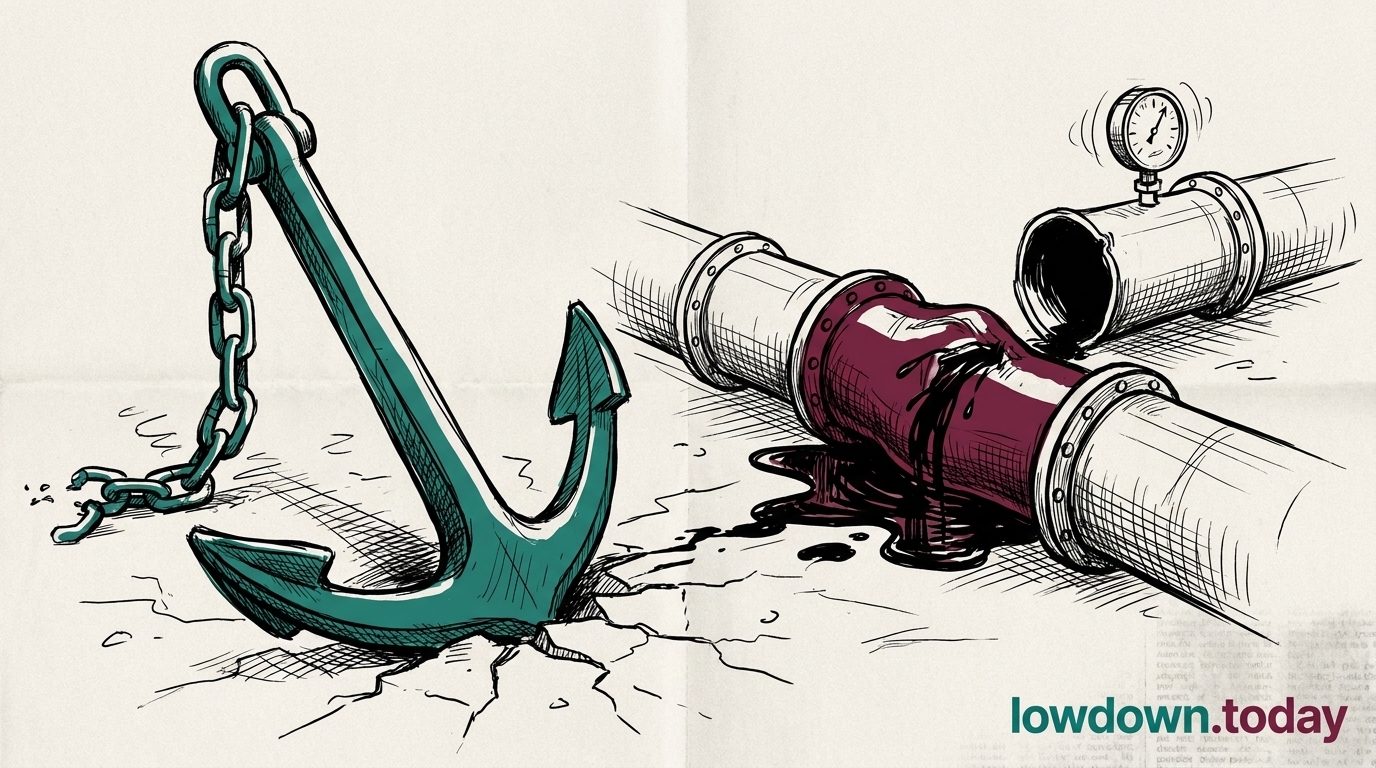
The market's flat-to-down read on summit Day 1 is the verdict that matters most for the diplomatic timeline. If buffers exhaust before Hormuz reopens, the price signal will force faster movement than the summit's current verbal register supports. Brent at $106 is not pricing a deal; it is pricing patience at the margin of structural constraint.


Deep Analysis

In plain English

Oil prices should normally fall when diplomats hold a summit. On 14 May they barely moved: Brent fell by about a dollar, but stayed well above where it was before the Iran war started. The reason is that traders are not pricing in a deal; they are pricing in a long blockade. Two things that would need to be in place for oil to fall more are: a reopened Strait of Hormuz and insurers agreeing to cover ships again. Neither has happened, and neither can happen until something gets signed.

Deep Analysis
Root Causes

Two independent infrastructure constraints have converged simultaneously: Fujairah crude throughput at 1.62 million bpd is approaching the ADCOP 2 million bpd design ceiling, meaning the bypass route is near saturation. The US SPR below 350 million barrels is near its lowest level since 1983, meaning the emergency buffer is simultaneously near depletion. Neither constraint existed at this level in prior Gulf disruption cycles.

The premium floor persists because P&I war-risk insurers cannot price the strait open until they have written rules of engagement covering both the US blockade and the European coalition mission . Written rules do not exist for either. No insurance-market reopening can precede written operational rules.

What could happen next?
  • Risk

    If Fujairah reaches the ADCOP 2 million bpd ceiling before Hormuz reopens, the bypass route saturates and crude with no Hormuz access and no bypass route has no market exit, forcing production cuts at Iranian-adjacent fields.

  • Consequence

    P&I war-risk insurance cannot reopen without written rules of engagement for both the US blockade and the European coalition mission; any ceasefire that lacks those written rules leaves the Brent premium structurally intact even after hostilities pause.

First Reported In

Update #97 · Chips for Beijing, no paper for Iran

OilPrice.com· 14 May 2026
Read original
Different Perspectives
Indian refiners
Indian refiners
Indian refiners kept lifting discounted Urals as the India/Baltic price split widened past $9-10 a barrel, a gap that only grows as GL X1's Iranian wind-down cuts an alternative discounted grade off the market by 17 July. Cheaper Russian feedstock is being locked in while it lasts.
Chinese refiners
Chinese refiners
Chinese refiners gain leverage as the Urals-Brent discount widens, since Beijing's state buyers already source discounted Russian barrels near the fiscal floor unaffected by Western insurance costs. A wider discount, if it holds past 23 July, lets them lock in cheaper term contracts regardless of the cap's outcome.
US money managers (CFTC-tracked)
Managed money trimmed WTI net length into the rally, positioning that reflects doubt the Hormuz premium survives without freight or war-risk confirmation. The Brent-WTI spread widening almost entirely on the Brent leg supports that scepticism about a broad-based repricing.
OPEC+ (Saudi-led subgroup)
Saudi Arabia is defending market share through a fourth straight 188kbd August hike even as OPEC's own July MOMR cut 2026 demand growth for the fourth consecutive month. At a $108-111 fiscal breakeven, every added barrel costs Riyadh revenue it cannot recoup, so the hike reads as a positioning signal, not a demand bet.
Greek shipping registries
Greece, backed by Cyprus and Malta, is pushing a three-month cap-freeze compromise against the Commission's freeze to January 2027 ahead of the 23 July vote. Athens' and Valletta's combined tanker registrations mean a shorter review gives their insurers more frequent chances to reprice risk on Russian cargoes.
Russia (Deputy PM Alexander Novak)
Novak extended the diesel export restriction to producers on 8 July, the first producer-binding curb of the war, protecting the domestic pump price ahead of any refinery repair timeline. Urals still trades below Russia's $59 budget floor even as Brent gained, so the ban trades export revenue for fiscal stability at home.