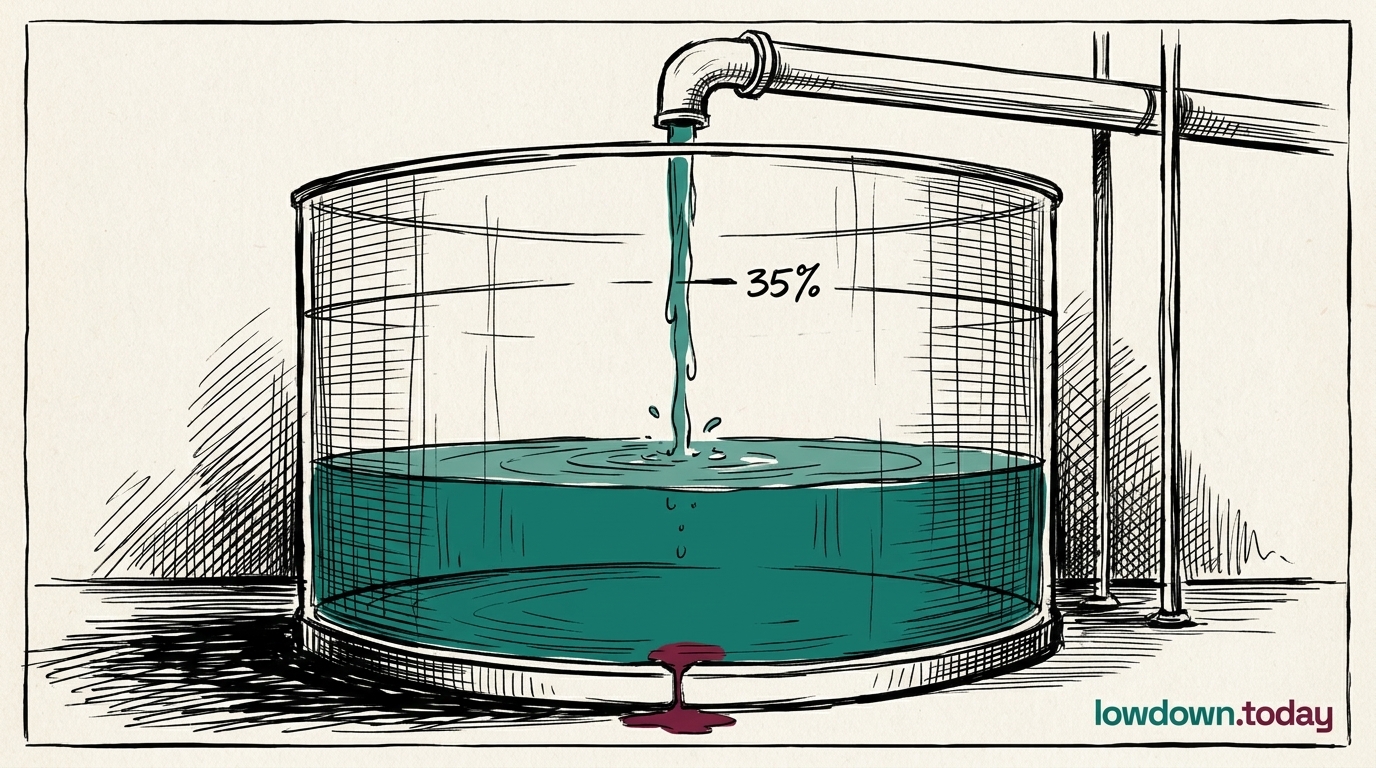
Argus Media published summer fill arithmetic on 22 April, putting EU underground gas storage at 314 TWh (27.7% of capacity) on 1 April, a 73 TWh deficit versus the prior year1. Germany ended winter at 21% of capacity, its lowest reading since 2018. To reach the revised 80% November fill target, the EU must inject 469 TWh over the summer, equivalent to 39 LNG cargoes above 2025 volumes.
Germany holds the binding constraint: it owns the largest working capacity and the deepest relative deficit. VNG AG, the Leipzig gas utility, called for federal intervention after its Reden cavern drew bookings of only 21 Mmcm for 2026-27, roughly one two-hundredth of capacity. Operators are declining to book because summer 2026 contracts sit inverted against winter 2026-27 at major hubs; the spread does not cover the cost of injection. Aggregate EU injection in the first fortnight of April matched 2025 pace at a cost around $300 million higher, which locks in the deficit rather than closing it.
The 469 TWh figure assumes Atlantic LNG fills the Qatar/UAE gap of roughly 7% of 2025 imports, a gap unfilled since 28 February. At TTF €42.39 and the JKM-TTF spread compressed, Atlantic cargoes route preferentially to Asia. The injection arithmetic closes only if TTF rises enough to outbid Asian buyers, which implies meaningfully higher European gas prices before the target moves into reach. With the AccelerateEU package skipping any storage mechanism and the Russian short-term ban removing roughly 1.5 bcm per month from 25 April, the self-correction has no fiscal buffer to lean on.




