Skip to content
You can now search across every topic, entity and event.What's new
European Energy Markets
31JUL

Hormuz tanker count back to pre-war

2 min read
09:44UTC

Thirty-five tankers cleared the Strait of Hormuz on 2 July, the first pre-war-range count of the war, per Morgan Stanley data, as Brent held in the low $70s through the mourning week.

EconomicDeveloping
Key takeaway

Hormuz tanker traffic is back to roughly normal numbers, easing war-risk premiums and steadying oil prices.

Thirty-five oil and gas tankers cleared the Strait of Hormuz on 2 July, the first time the daily vessel count has returned to its pre-war range, according to Morgan Stanley data cited by Al Jazeera 1. the strait is a 33km channel carrying about a fifth of the world's traded oil, and the number of owners willing to make the passage tracks confidence more directly than any single day's throughput. That count is a different measure from the single-day record set on 25 June, when the strait moved 20 million barrels in 24 hours ; one counted barrels, this counts hulls.

Brent Crude held in the low $70s through the mourning week, essentially flat across three consecutive sessions of roughly 1% declines. Al Jazeera ties the drift to progress in US-Iran talks on maritime passage. Seven-day averages still sit below the same week last year, and the war premium that once pushed Brent above $116 has gone .

Thirty-five hulls in a single session say more than any ministerial claim about reopening, because insurers price war-risk cover off how many ships actually sail, not off a one-day barrel record. For a European or Asian buyer, that count moves the premium on each cargo, and those premiums feed straight through to the pump.


Deep Analysis

In plain English

Thirty-five oil and gas tankers passed safely through the Strait of Hormuz on 2 July, matching the roughly 35-a-day rate that was normal before the war started in February. That sounds like good news, and Brent crude, the global oil price benchmark, has stayed calm in the low $70s through the week as a result. But normal ship traffic does not mean normal insurance. Many shipping companies sending vessels through are doing so without the standard war-risk cover that usually protects a tanker owner if it is attacked, because insurers and Iran's own transit rules still do not agree on the paperwork.

Deep Analysis
Root Causes

London's Protection and Indemnity clubs cut hull war-risk premiums from a five per cent peak to around two per cent of vessel value by late June, but that remains twenty times the pre-conflict baseline of 0.1 per cent, so tankers transiting today pay an insurance cost structure that has not caught up with the traffic figures.

The US Development Finance Corporation's $40 billion Chubb-backed Hormuz reinsurance facility has had zero uptake since launch, blocked by the conflict between Iran's Persian Gulf Strait Authority registration requirement and OFAC compliance rules for London P&I clubs. That regulatory deadlock, not a lack of capital, is what keeps formal war-risk cover unavailable even as ships sail anyway.

What could happen next?
  • Consequence

    A vessel count matching pre-war rates without matching insurance cover means individual shipowners, not the market as a whole, are absorbing the war-risk exposure on each transit.

  • Risk

    Zero uptake on the $40 billion DFC-Chubb reinsurance facility leaves no formal backstop if a single high-profile strike interrupts the current run of calm transits.

First Reported In

Update #146 · Iran's new leader wounded, not just hiding

Al Jazeera· 5 Jul 2026
Read original
Different Perspectives
Spain's LNG terminal operators
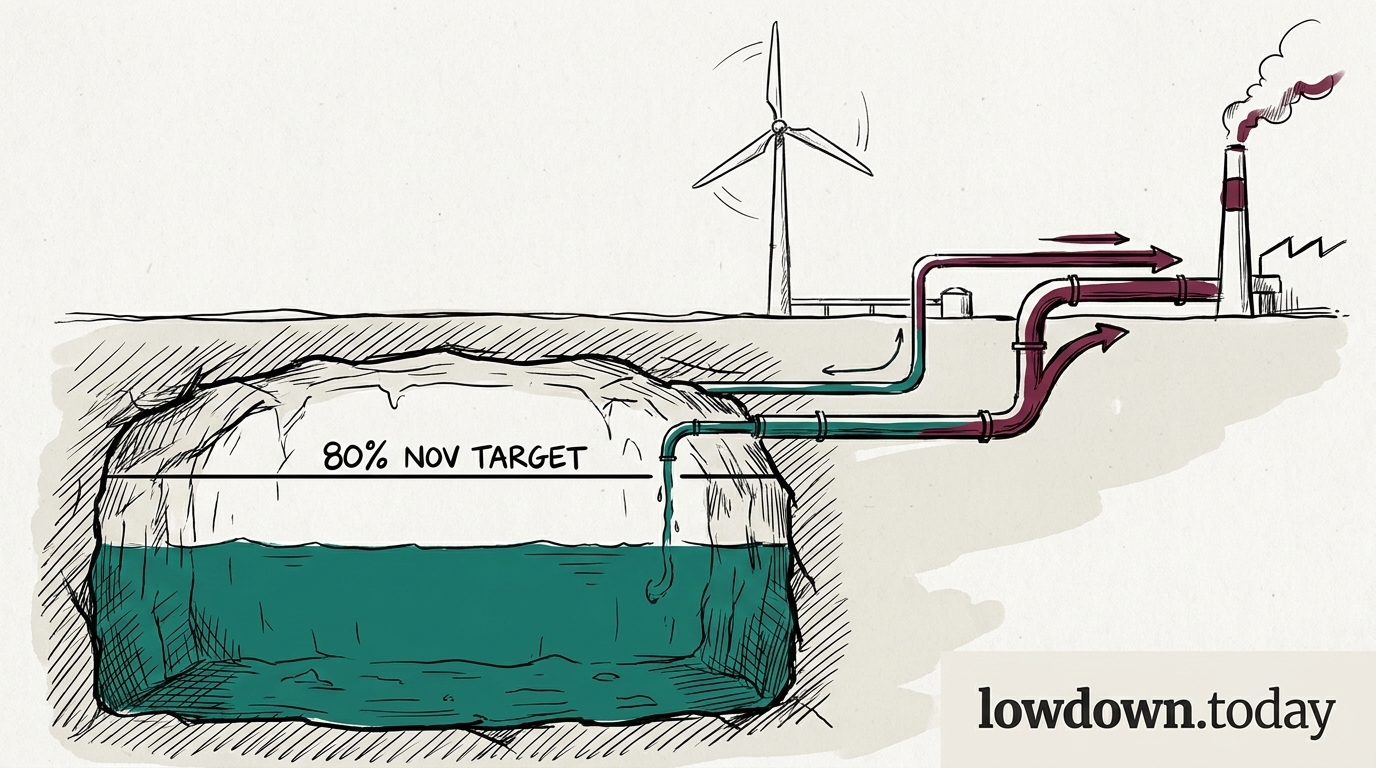
Spain's 9,145 GWh terminal inventory is the largest single stock in the EU LNG network, an option value that can reroute cargoes wherever the winter strip pays best rather than a cavern gas obligation tied to a fixed date. That flexibility matters more as Germany's cavern shortfall pushes more of the winter security question onto import infrastructure.
European Commission
European Commission
Brussels holds the bloc to 90% on a flexible window while Germany, holding roughly a quarter of EU storage capacity, tracks toward missing its own lower 80% figure by 21 points. A national shortfall this size in the anchor market matters more to bloc security than the flexible timetable alone can absorb.
French power exporters and CRE
French day-ahead rose in step with Germany but by less, reopening a EUR 7-17 premium that makes northward export flows commercially attractive again after the EUR 43.09 discount evaporated in days. CRE separately authorised RTE and Enedis to buy flexibility locally, betting the coming winter's binding constraint is grid congestion rather than a shortage of firm capacity.
TTF trading desk
TTF trading desk
A visible national shortfall like Germany's 21-point gap is a directional signal, not noise, for a desk holding the summer-winter spread. TTF's flat EUR 58-60 range through this week's German price swings says the market has not yet chosen to reprice refill risk into the front of the curve.
German cavern and CCGT operators
German caverns kept buying prompt gas at TTF near EUR 58-60 through the inversion; the wind collapse to 2.4 GW then flipped the spark spread to plus EUR 29 and put turbines back in the same queue. Every day turbines win that bid, injection at a third of the 877 GWh/day pace needed falls further behind.
Slovakia
Slovakia
Slovakia says it dropped its hold-out on the 21st sanctions package only after Ursula von der Leyen personally signed written gas-price and supply guarantees. The Council of the European Union's own 17,238-character release on the package names neither Slovakia nor any guarantee, leaving Bratislava's account unconfirmed by the institutional record.



