Skip to content
Welcome, thoughtbot's Giant Robots listeners!Start here
European Energy Markets
13JUL

Bank of Russia holds rate and names fuel

2 min read
10:12UTC

The Bank of Russia held its key rate at 14% on 11 September and named motor fuel price rises as a driver of inflation. Annual inflation stood at 6.3% on 7 September.

EconomicDeveloping
Key takeaway

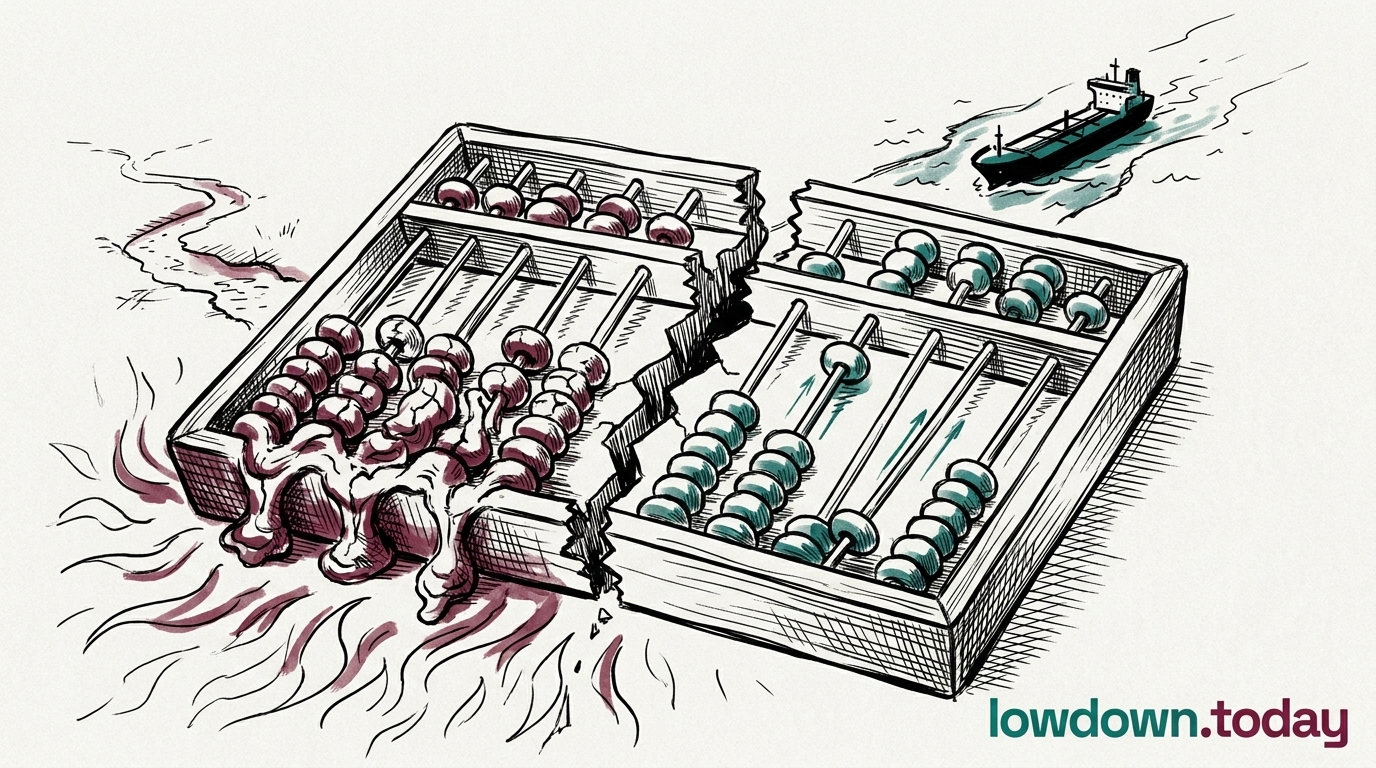
Russia's central bank named fuel prices as an inflation driver, putting the strike campaign inside official reasoning.

The Bank of Russia held its key rate at 14% on 11 September and put motor fuel price rises in the list of drivers behind both headline and underlying inflation. Annual inflation read 6.3% on 7 September, a trailing twelve-month rate, while the underlying measure accelerated to between 5 and 6% when recent months are annualised. The board attributed that to a temporary reduction in production capacity in certain sectors.

Read the wording exactly as written. The bank named a price, not an enemy. Russian ministers have blamed seasonal demand and refinery maintenance all summer, and Vladimir Putin admitted petrol queues in June without conceding a cause. What changed on 11 September is the file the fuel problem now sits in: monetary policy, set by the institution that prices borrowing for every Russian firm.

Ukraine's campaign against refining has run on claims until now, from the 2,500km strike on Omsk in July to the queues Putin conceded. The Centre for Research on Energy and Clean Air measured the Sheskharis strike cutting Novorossiysk loadings 58% month on month, and seaborne oil product export revenue falling 32% to €78mn a day. China took 16% more Russian crude over the same month, so the barrels still move even as refining at home stalls.


Deep Analysis

In plain English

Russia's central bank kept interest rates unchanged and, for the first time, pointed to rising fuel prices as part of the reason. Behind that is a real supply problem: Ukrainian drones knocked out Russia's biggest oil export terminal for nine days, cutting how much fuel and oil Russia could ship out and pushing prices up at home.

Deep Analysis
Root Causes

Ukraine's drone campaign against Black Sea export terminals is the mechanical driver: the nine-day Sheskharis shutdown from 21 August cut Novorossiysk loadings 58% month on month, and seaborne oil product export revenue fell 32% to €78mn a day, the lowest since the invasion began.

Those losses fed into the fuel-price pressure the Bank of Russia then had to name when it held the key rate at 14% on 11 September.

First Reported In

Update #27 · Russia's rate hold names the fuel shortage

Bank of Russia· 13 Sept 2026
Read original →
Causes and effects
This Event
Bank of Russia holds rate and names fuel
Ukraine's strike campaign against refining and export infrastructure has surfaced inside Russia's own monetary policy reasoning. A Russian policymaker now has to act on the fuel shortage rather than deny it.
Different Perspectives
Cross-border power traders
The France-Germany day-ahead spread flipped from a EUR 17.20 German premium on 1 August to a EUR 4.15 French premium on 3 August, the same day French curtailment peaked. They cannot yet attribute the flip to curtailment alone, since a like-for-like overnight comparison shows French nuclear output rising while wind fell and demand returned on the weekday step.
EDF
EDF
River-cooling limits took 7.6 GW, 12 per cent of its fleet, offline on 3 August, the highest curtailment since the heatwave began, with an easing forecast to 4.3 GW on 4 August and 3 GW after. It manages the cut as a recurring seasonal constraint, expecting it to lift with river temperature, not repair.
Gasunie
Gasunie
TTF, the Dutch hub it operates, drifted to roughly EUR 55 to 58 per MWh across the window, staying inside its recent range through both the German spark reversal and the French curtailment. It reads a flat hub price as evidence that neither event this window carried enough weight to move the fuel leg on its own.
German gas-fired generators
Record German solar of 18,761 MW on 2 August pushed the clean spark spread to minus 18.48 EUR/MWh, a loss-making day, before it returned to plus 16.20 on 3 August. They now price dispatch against post-solar residual load rather than wind alone, since the sign flipped inside 48 hours on unchanged fuel and carbon costs.
European Commission (DG Energy)
Its implementing-measures register logged transposition notices from only Portugal and Slovakia against Wednesday's Article 94 deadline for Directive (EU) 2024/1788, with 25 states silent. It expects the register to fill only gradually, since filing routinely lags legislating and any infringement track against non-notifying states runs on a slower clock than the deadline itself.
Spain's LNG terminal operators
Spain's 9,145 GWh terminal inventory is the largest single stock in the EU LNG network, an option value that can reroute cargoes wherever the winter strip pays best rather than a cavern gas obligation tied to a fixed date. That flexibility matters more as Germany's cavern shortfall pushes more of the winter security question onto import infrastructure.

Written with AI from Lowdown's published reporting. Not individually reviewed by an editor. Editorial standards.
