Skip to content
You can now search across every topic, entity and event.What's new
European Energy Markets
22JUN

MPs name the UK's sovereignty gap

3 min read
13:56UTC

The House of Commons Science, Innovation and Technology Committee found the UK has 'no coherent strategic framework' for sovereign technology, warning it 'risks being cut off at whim'. It named the Trump order barring Anthropic's models as the trigger.

EconomicDeveloping
Key takeaway

MPs named the UK's dependence on US AI models a strategic gap with no plan behind it.

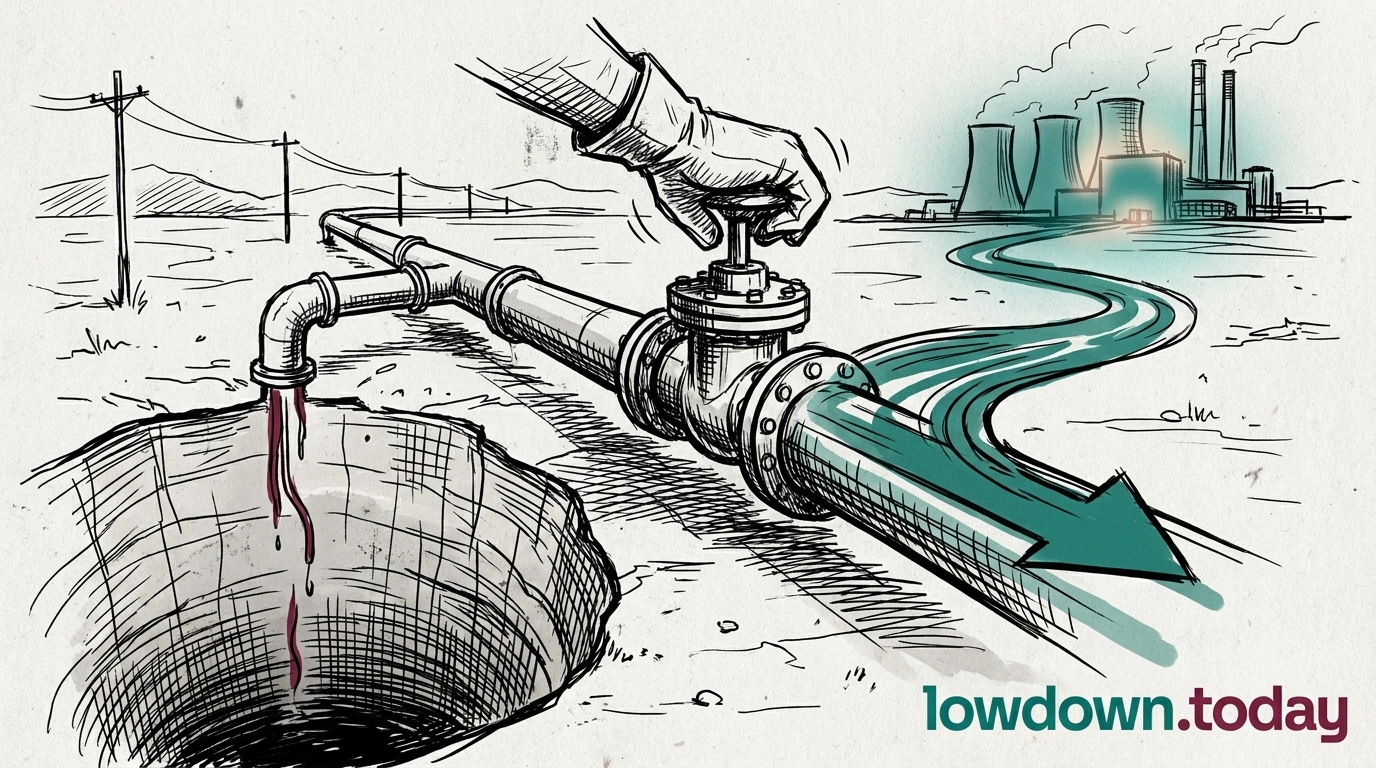
The House of Commons Science, Innovation and Technology Committee, chaired by Dame Chi Onwurah, published a report on 7 July finding the government has "no coherent strategic framework" for sovereign technology and warning that the UK "risks being cut off at whim" by foreign partners. 1 The committee is the cross-party group of MPs that scrutinises UK technology policy, and this is the first UK legislative body to put an official record behind the sovereignty-gap thesis.

The committee named its trigger. In June the Trump administration ordered a bar on foreign access to Anthropic's Fable 5 and Mythos 5 models, and Anthropic pulled them worldwide ; the US Commerce Department partially lifted the restriction on 27 June . A British research user lost access to two frontier AI models overnight on a decision taken in Washington, and that is the dependency the report says has no strategy behind it.

The report answers ASML's silence from the opposite direction. Where the company stopped naming its exposure to Washington in the same fortnight, the committee named the country's exposure out loud. The market went quiet on the dependency exactly as the politicians put it on the record.

The report lands against the £1.1bn AI Hardware Plan the UK announced at London Tech Week in June . Its argument is that the money buys hardware without a strategy to keep access to the frontier models that hardware would run.


Deep Analysis

In plain English

A House of Commons select committee is a group of MPs from different parties that investigates a specific policy area and publishes reports. The Science, Innovation and Technology Committee looked at whether the UK has a proper plan for 'sovereign technology', meaning the ability to keep using critical digital tools even if a foreign government decides to cut access. Its report, published 7 July, concluded the UK has no such plan. It pointed to a real example: in June, the US government temporarily blocked non-US users, including in the UK, from accessing two of Anthropic's AI models, then partially reversed the block twelve days later. The committee's point: Britain doesn't control that decision either way, and has no back-up plan if it happens again with a tool the country actually depends on.

Deep Analysis
Root Causes

The UK has no domestic frontier-model developer or hyperscaler-scale compute at the frontier, so it depends entirely on US suppliers for the layer where access decisions like the Anthropic order get made.

It also has no legal instrument comparable to the EU's AI Act GPAI (general-purpose AI) regime, which activates 2 August 2026, giving Westminster no compliance-based lever over US providers the way trade tariffs or state aid can be used elsewhere.

Escalation

Direction: the committee's finding raises pressure on government to publish a strategic framework, but no government response or funding commitment had followed as of 7 July. Evidence: the report's own language, 'no coherent strategic framework', describes an absence rather than an escalating dispute, so this sits as a policy-gap warning rather than an active confrontation.

What could happen next?
  • Risk

    Without a domestic frontier-model developer or a legal lever over US providers, the UK has no mechanism to prevent a repeat of the June access restriction.

  • Precedent

    The EU's AI Act GPAI (general-purpose AI) enforcement, activating 2 August 2026, gives Brussels a compliance lever over US model providers that Westminster currently lacks.

First Reported In

Update #12 · ASML's tool boom skips Europe's logic gap

The Register· 16 Jul 2026
Read original
Different Perspectives
Cross-border power traders
The France-Germany day-ahead spread flipped from a EUR 17.20 German premium on 1 August to a EUR 4.15 French premium on 3 August, the same day French curtailment peaked. They cannot yet attribute the flip to curtailment alone, since a like-for-like overnight comparison shows French nuclear output rising while wind fell and demand returned on the weekday step.
EDF
EDF
River-cooling limits took 7.6 GW, 12 per cent of its fleet, offline on 3 August, the highest curtailment since the heatwave began, with an easing forecast to 4.3 GW on 4 August and 3 GW after. It manages the cut as a recurring seasonal constraint, expecting it to lift with river temperature, not repair.
Gasunie
Gasunie
TTF, the Dutch hub it operates, drifted to roughly EUR 55 to 58 per MWh across the window, staying inside its recent range through both the German spark reversal and the French curtailment. It reads a flat hub price as evidence that neither event this window carried enough weight to move the fuel leg on its own.
German gas-fired generators
Record German solar of 18,761 MW on 2 August pushed the clean spark spread to minus 18.48 EUR/MWh, a loss-making day, before it returned to plus 16.20 on 3 August. They now price dispatch against post-solar residual load rather than wind alone, since the sign flipped inside 48 hours on unchanged fuel and carbon costs.
European Commission (DG Energy)
Its implementing-measures register logged transposition notices from only Portugal and Slovakia against Wednesday's Article 94 deadline for Directive (EU) 2024/1788, with 25 states silent. It expects the register to fill only gradually, since filing routinely lags legislating and any infringement track against non-notifying states runs on a slower clock than the deadline itself.
Spain's LNG terminal operators
Spain's 9,145 GWh terminal inventory is the largest single stock in the EU LNG network, an option value that can reroute cargoes wherever the winter strip pays best rather than a cavern gas obligation tied to a fixed date. That flexibility matters more as Germany's cavern shortfall pushes more of the winter security question onto import infrastructure.



