Skip to content
You can now search across every topic, entity and event.What's new
European Energy Markets
22JUN

Committee chair warns on DSIT closure

2 min read
13:56UTC

Chi Onwurah's committee posted a warning on 24 July that closing the science department risks fragmenting policy. Its report response falls due on 7 September, from a department that no longer exists.

EconomicDeveloping
Key takeaway

The committee's deadline survives; the department that was meant to answer it does not.

The House of Commons Science, Innovation and Technology Committee posted an item on 24 July quoting its chair, Chi Onwurah: "Closing Science and technology department risks fragmenting vital policy areas" 1. The same page logs the government's response to the committee's 7 July report as due by 7 September 2026, with nothing filed as of 4 August and no indication of which successor department will draft it.

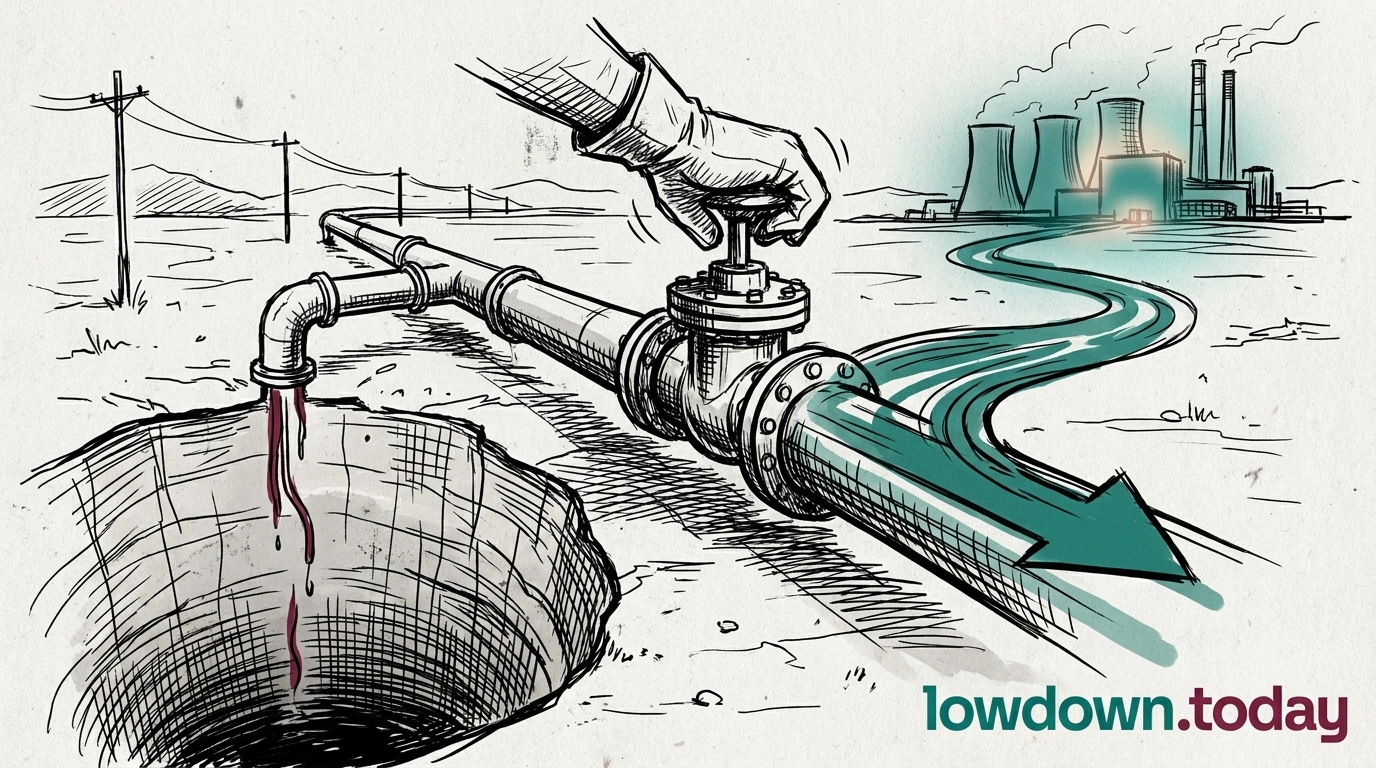
Each Commons select committee shadows a single department, takes evidence from its ministers and officials, and receives written government responses to its reports within two months. Abolishing the department dissolves neither the committee nor the deadline; it removes the counterparty. The July report found no coherent strategic framework for sovereign technology , and the machinery that would have answered that finding was wound up thirteen days later.

What happens next has no published answer. The committee's own page says nothing about its future REMIT, and the government has not stated which body inherits the obligation to reply. A missed 7 September deadline would be the first measurable consequence of the reorganisation rather than a procedural footnote, because it would show the scrutiny chain broken at a point where money is still being committed.


Deep Analysis

In plain English

In the UK Parliament, committees of MPs scrutinise government departments and publish reports; the government is then expected to formally reply within about two months. On 7 July, the committee that oversees science and technology policy published a report criticising the government's approach to technology independence. The government's reply is due by 7 September. But the department that would normally write that reply, DSIT, was abolished on 20 July, and nobody has confirmed which of its three successor bodies will now pick up the pen.

Deep Analysis
Root Causes

UK government convention commits departments to respond to select committee reports within roughly two months; the 7 September deadline follows that pattern from the 7 July report date, but DSIT, the department that would have drafted the response, ceased to exist on 20 July , leaving the obligation without a confirmed inheritor.

Select committees have no legal power to compel a government response, only the ability to publicise its absence, which is why the story here is the missed deadline itself, not any formal penalty for missing it.

First Reported In

Update #14 · AI Act fines arrive, three states list no regulator

Federal Register· 4 Aug 2026
Read original
Causes and effects
This Event
Committee chair warns on DSIT closure
A select committee whose sponsoring department has been abolished still holds a live deadline, and nothing published says who now answers it.
Different Perspectives
Cross-border power traders
The France-Germany day-ahead spread flipped from a EUR 17.20 German premium on 1 August to a EUR 4.15 French premium on 3 August, the same day French curtailment peaked. They cannot yet attribute the flip to curtailment alone, since a like-for-like overnight comparison shows French nuclear output rising while wind fell and demand returned on the weekday step.
EDF
EDF
River-cooling limits took 7.6 GW, 12 per cent of its fleet, offline on 3 August, the highest curtailment since the heatwave began, with an easing forecast to 4.3 GW on 4 August and 3 GW after. It manages the cut as a recurring seasonal constraint, expecting it to lift with river temperature, not repair.
Gasunie
Gasunie
TTF, the Dutch hub it operates, drifted to roughly EUR 55 to 58 per MWh across the window, staying inside its recent range through both the German spark reversal and the French curtailment. It reads a flat hub price as evidence that neither event this window carried enough weight to move the fuel leg on its own.
German gas-fired generators
Record German solar of 18,761 MW on 2 August pushed the clean spark spread to minus 18.48 EUR/MWh, a loss-making day, before it returned to plus 16.20 on 3 August. They now price dispatch against post-solar residual load rather than wind alone, since the sign flipped inside 48 hours on unchanged fuel and carbon costs.
European Commission (DG Energy)
Its implementing-measures register logged transposition notices from only Portugal and Slovakia against Wednesday's Article 94 deadline for Directive (EU) 2024/1788, with 25 states silent. It expects the register to fill only gradually, since filing routinely lags legislating and any infringement track against non-notifying states runs on a slower clock than the deadline itself.
Spain's LNG terminal operators
Spain's 9,145 GWh terminal inventory is the largest single stock in the EU LNG network, an option value that can reroute cargoes wherever the winter strip pays best rather than a cavern gas obligation tied to a fixed date. That flexibility matters more as Germany's cavern shortfall pushes more of the winter security question onto import infrastructure.



