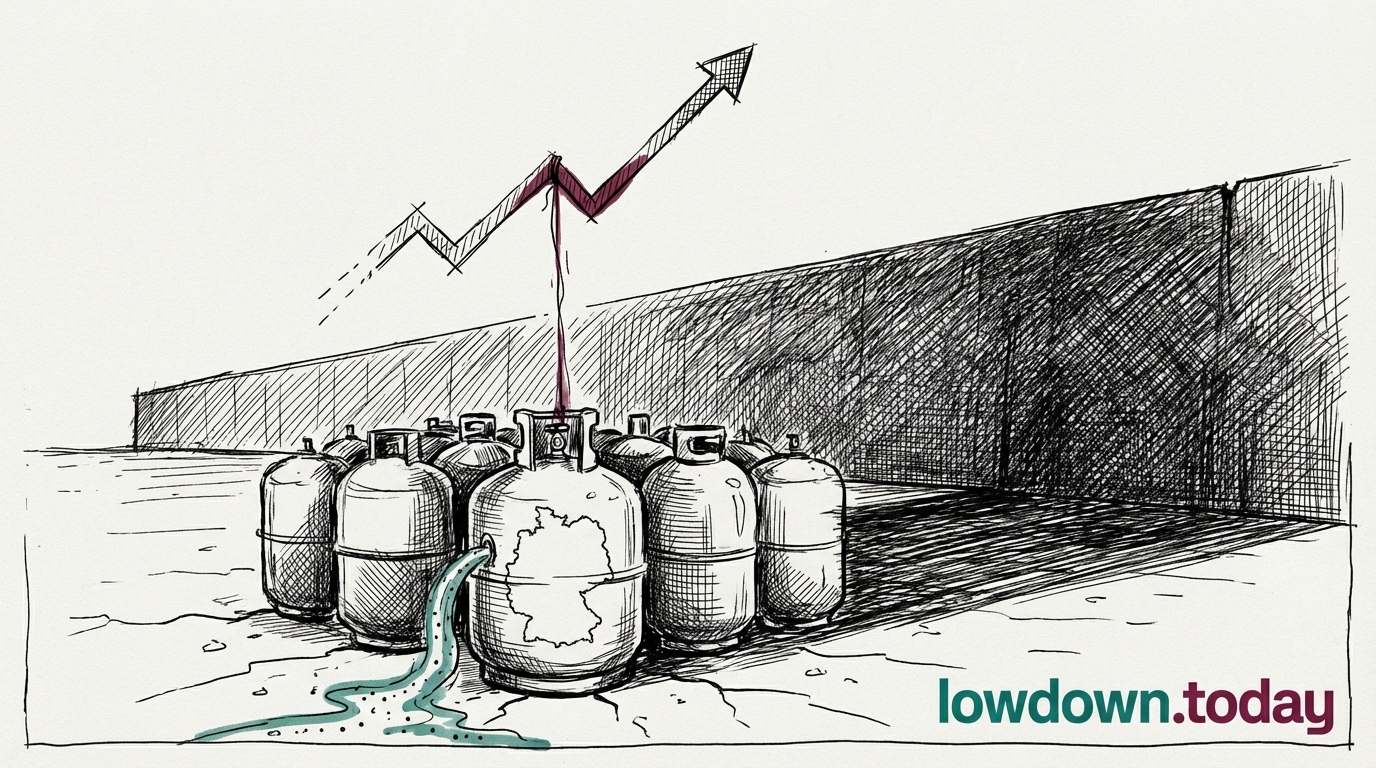
Cefic (the European Chemical Industry Council) reports that EU chemical manufacturing capacity fell by 37 million tonnes, roughly 9%, between 2022 and 2025, with Ineos and Solvay announcing further plant closures in 2026 and approximately 20,000 direct jobs already lost1. The destruction tracks the same gas-cost profile that JPMorgan flagged for Yara and BASF exposure, and the two companies are themselves signatures in the Cefic dataset.
Plant closure is irreversible on a short horizon. Once an ethylene cracker or ammonia unit is decommissioned, restart requires capital expenditure, permitting and workforce reconstitution, not a cheaper input. A return to lower gas prices does not recreate the 37 million tonnes of capacity already gone; it changes the marginal decision for units still operating. That means the demand-destruction ceiling on TTF is no longer the price at which European chemicals stop buying gas; it is the price at which remaining units close next.
For TTF pricing the implication is an asymmetric ceiling. Brief rallies toward the March peak can be absorbed by operational curtailment without fresh closures if the price retraces quickly; a sustained print above the mid-fifties for a quarter removes another tranche of units. The Hormuz escalation that drove the earlier move already accelerated closure announcements; the Russian LNG cutoff landing into thin storage sets up another candidate window for the same pattern.
The policy read is that the Commission's supply-security instruments (the 80% storage target, solidarity contributions, demand reduction) operate on a calendar. The industrial base operates on a threshold. Once a unit is written off, it stops being available to absorb the next shock, which narrows the buffer the policy instruments are trying to defend.




