Skip to content
You can now search across every topic, entity and event.What's new
European Energy Markets
15APR

EU gas storage hits 2018 low

3 min read
13:33UTC

Europe enters injection season with tanks barely a quarter full, the thinnest cushion in five years.

EconomicDeveloping
Key takeaway

EU storage at 28.92% is the lowest April level since 2018, with both Russian gas and flexible LNG impaired.

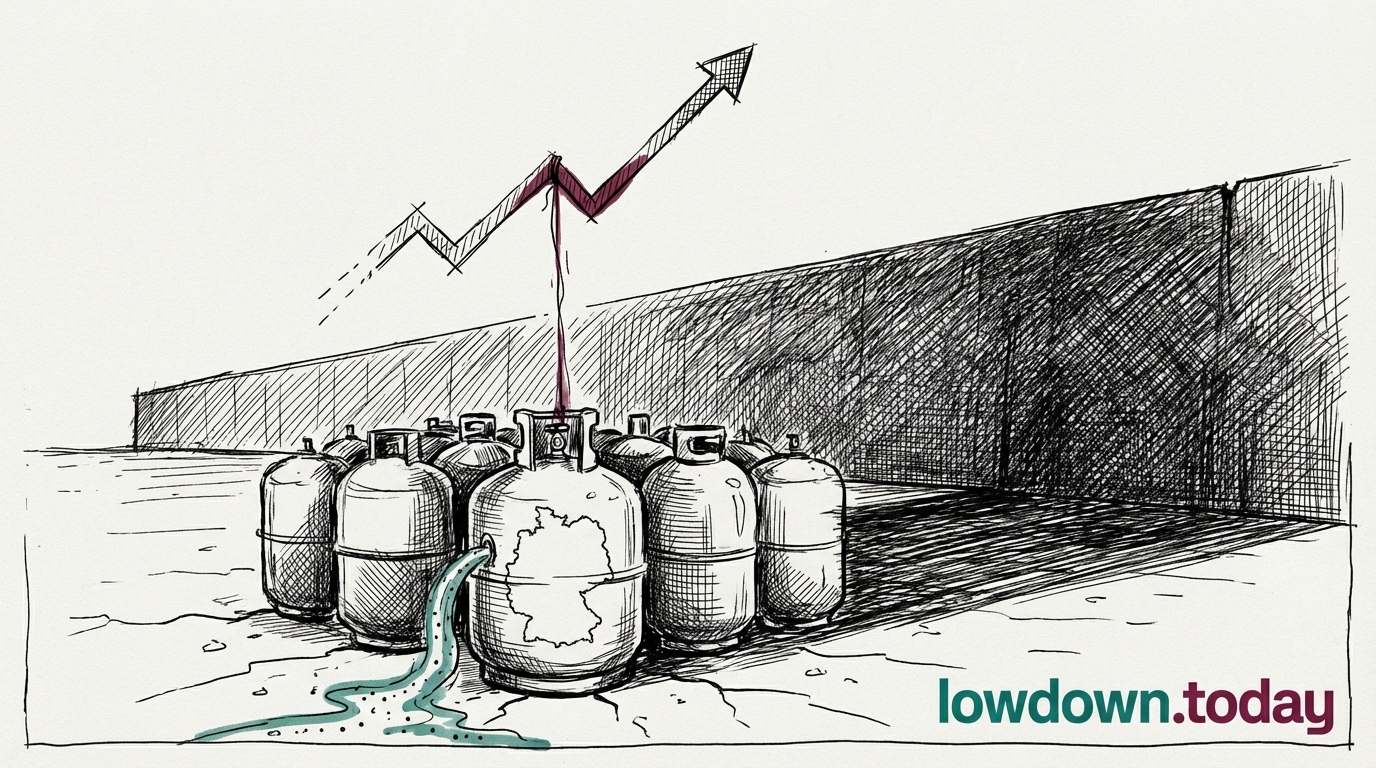
EU underground gas storage stood at 28.92% full (327 TWh) this week, according to GIE AGSI+ data. That is the lowest level for this point in the year since 2018, and six to twenty percentage points below the five-year seasonal average. Europe must now refill from a deficit while its two traditional safety valves, Russian pipeline gas and flexible LNG supply, are both impaired.

The country-level picture sharpens the risk. Germany, the EU's largest storage holder, sat at just 23% three days later. The Netherlands is at 5.5%, France at 24%. Only Spain (above half full) and Portugal (91.7%) sit comfortably, insulated by Iberian renewables and hydropower.

The seasonal context matters. In April 2022, the last comparable trough, storage touched 26% before a massive injection campaign and demand-reduction mandates pushed levels to 95% by November. But that spring, Russian pipeline gas was still flowing through Q2 and global LNG was not constrained by a Hormuz closure. Neither lever is available now. The refill arithmetic starts from a deeper deficit with fewer supply options.


Deep Analysis

In plain English

Gas storage is Europe's energy reserve. Each autumn, European countries pump natural gas underground into giant caverns. Each winter, they draw it out to heat homes and run power stations when demand exceeds what pipelines can deliver in real time. Right now, those reserves are unusually low. At 28.9% full, Europe has less gas in the ground for early April than at any point since 2018. The problem: refilling from this level, while global LNG supply is disrupted and prices are high, will be significantly more expensive than in recent years.

Deep Analysis
Root Causes

Two independent constraints compounded the storage drawdown. First, the 2025-26 heating season ran 4-6% colder than the ten-year average across Central and Northern Europe from November through February, increasing residential and district-heating gas demand at rates that injection-season planning had not provisioned for.

Second, the cessation of Russian pipeline transit via Ukraine in January 2025 permanently removed approximately 12-14 billion cubic metres per year from EU supply, a volume that had been partially offset by Norwegian and Algerian ramp-ups but not fully replaced. The resulting structural supply gap left storages drawing down faster per cold day than they had historically, with no flexible pipeline source to slow the rate of withdrawal.

Escalation

Storage levels through April will determine whether the Commission's reduced 80% target is achievable or whether emergency measures (demand curtailments, cross-border supply obligations) become necessary by October. The first two weeks of injection season are already running below the rate required to close the deficit at current capacity.

What could happen next?
  • Risk

    If injection rates fail to improve from April lows, EU storage will fall short of the revised 80% November target, triggering emergency gas regulation provisions.

  • Consequence

    European industrial gas consumers face sustained spot price exposure above EUR 40/MWh through at least Q3 2026, compressing margins in energy-intensive sectors.

First Reported In

Update #1 · Europe's thinnest gas cushion since 2018

GIE AGSI+ / Energy News Beat· 13 Apr 2026
Read original
Causes and effects
This Event
EU gas storage hits 2018 low
The 28.92% fill level sets the baseline deficit for the entire 2026 refill campaign and will determine how aggressively utilities must compete for LNG cargoes through summer.
Different Perspectives
Cross-border power traders
The France-Germany day-ahead spread flipped from a EUR 17.20 German premium on 1 August to a EUR 4.15 French premium on 3 August, the same day French curtailment peaked. They cannot yet attribute the flip to curtailment alone, since a like-for-like overnight comparison shows French nuclear output rising while wind fell and demand returned on the weekday step.
EDF
EDF
River-cooling limits took 7.6 GW, 12 per cent of its fleet, offline on 3 August, the highest curtailment since the heatwave began, with an easing forecast to 4.3 GW on 4 August and 3 GW after. It manages the cut as a recurring seasonal constraint, expecting it to lift with river temperature, not repair.
Gasunie
Gasunie
TTF, the Dutch hub it operates, drifted to roughly EUR 55 to 58 per MWh across the window, staying inside its recent range through both the German spark reversal and the French curtailment. It reads a flat hub price as evidence that neither event this window carried enough weight to move the fuel leg on its own.
German gas-fired generators
Record German solar of 18,761 MW on 2 August pushed the clean spark spread to minus 18.48 EUR/MWh, a loss-making day, before it returned to plus 16.20 on 3 August. They now price dispatch against post-solar residual load rather than wind alone, since the sign flipped inside 48 hours on unchanged fuel and carbon costs.
European Commission (DG Energy)
Its implementing-measures register logged transposition notices from only Portugal and Slovakia against Wednesday's Article 94 deadline for Directive (EU) 2024/1788, with 25 states silent. It expects the register to fill only gradually, since filing routinely lags legislating and any infringement track against non-notifying states runs on a slower clock than the deadline itself.
Spain's LNG terminal operators
Spain's 9,145 GWh terminal inventory is the largest single stock in the EU LNG network, an option value that can reroute cargoes wherever the winter strip pays best rather than a cavern gas obligation tied to a fixed date. That flexibility matters more as Germany's cavern shortfall pushes more of the winter security question onto import infrastructure.
