Skip to content
You can now search across every topic, entity and event.What's new
European Energy Markets
18JUN

Baqaei: uranium 'as sacred as Iranian soil'

2 min read
09:57UTC

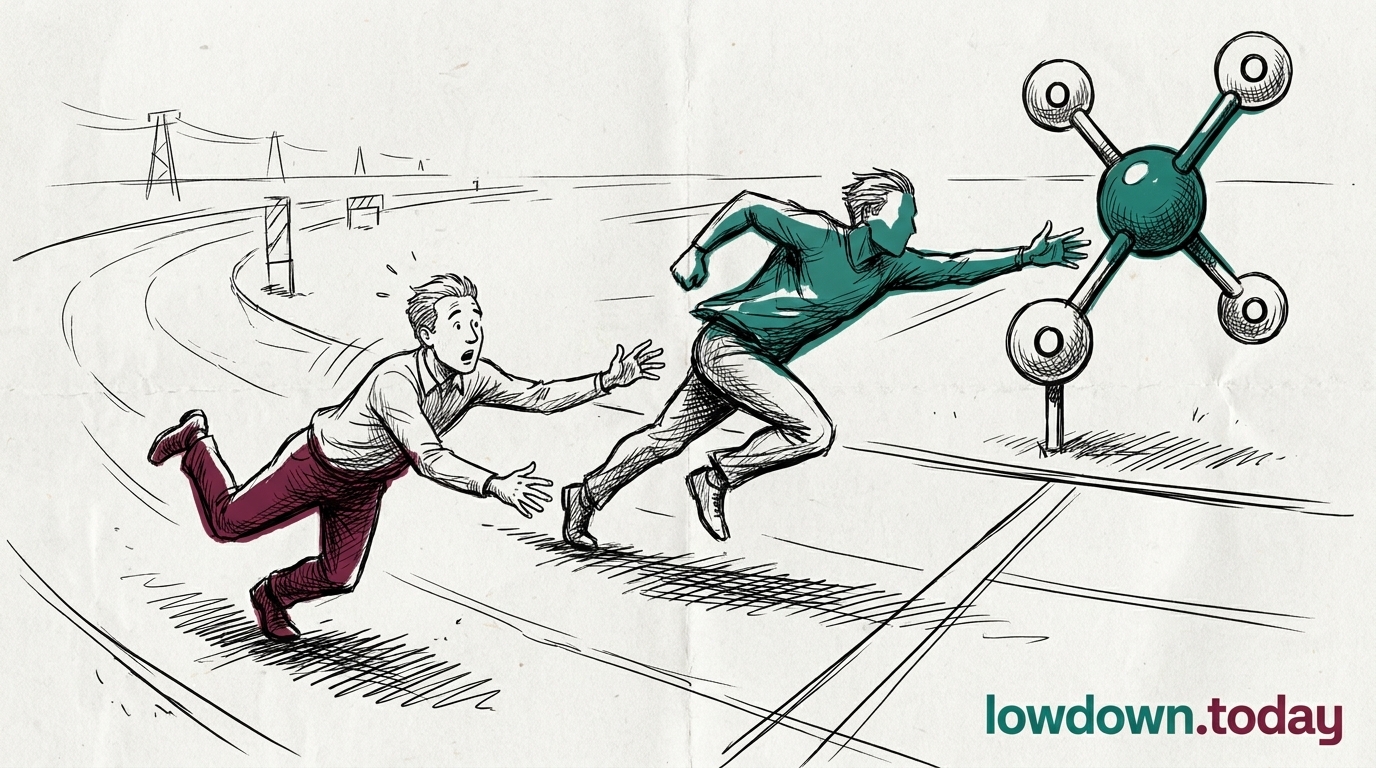
Iran's Foreign Ministry spokesperson publicly rejected President Trump's claim that Iran had agreed to a uranium handover, using language that admits no diplomatic room on the removal clause anchoring the US 15-point plan.

EconomicDeveloping
Key takeaway

Iran's Foreign Ministry has publicly rejected the HEU transfer on which the US 15-point plan depends.

Iran's Foreign Ministry spokesperson Esmail Baghaei declared on 19 April that the country's enriched uranium is "as sacred as Iranian soil" and that transfer to the United States "was never presented as an option under consideration" 1. His full line, carried by the Farsi daily Entekhab: "To the same extent that Iranian soil is sacred, enriched uranium is likewise sacred."

The statement is a direct public rejection of President Donald Trump's 17 April claim that Iran had agreed to a uranium handover . The Foreign Ministry, the civilian arm of Iran's government, is the institutional voice most sensitive to hardliner audiences at home and to IRGC-adjacent media. Its red line must hold publicly. Baqaei drew that line in terms Tehran's domestic audience can hear without objection and that foreign counterparts cannot walk back in private.

Iran's 440.9 kg stockpile at 60 per cent purity has gone unverified by the International Atomic Energy Agency (IAEA) since the 11 April Majlis vote to suspend cooperation 2. Baqaei chose a religious register as well as a diplomatic one. It treats the stockpile as national patrimony, which in Iran's political culture places it beyond the reach of transfer on a diplomatic schedule. The US 15-point plan anchors on HEU (highly enriched uranium) removal; Baqaei's statement removes the anchor.


Deep Analysis

In plain English

Iran has spent decades building up stocks of enriched uranium ; a form of processed nuclear fuel that, at high enough concentrations, can also be used to make a nuclear weapon. Iran's stockpile is not yet at weapons-grade, but it is at 60% purity, which is much higher than any civilian power plant needs. President Trump claimed Iran had agreed to hand this stockpile over to the United States. Iran's Foreign Ministry spokesperson Esmail Baghaei rejected this on 19 April, saying the uranium is 'as sacred as Iranian soil' ; meaning no Iranian official could agree to give it away, any more than they could agree to give away a piece of the country. This matters because any nuclear deal that does not address the existing stockpile cannot actually reduce Iran's ability to build a nuclear weapon quickly if it chose to.

Deep Analysis
Root Causes

Iran's 440.9 kg stockpile of 60%-enriched uranium represents a political asset as much as a military one: it is the primary leverage Tehran holds in negotiations, and any agreement to transfer it requires Supreme Leader Mojtaba Khamenei's explicit sign-off. Baqaei cannot negotiate what Khamenei has not authorised.

The theological framing ; 'as sacred as Iranian soil' ; places uranium transfer in the category of territorial concession, which under Iranian constitutional law requires parliamentary approval and a national referendum. Baqaei's language is not rhetorical excess; it is a public legal constraint that makes uranium transfer constitutionally more difficult to authorise than a standard diplomatic concession.

What could happen next?
  • Consequence

    Baqaei's theological framing creates a domestic political constraint that binds any future Iranian negotiator ; uranium transfer now requires overturning a publicly stated sacred-land equivalence, not just a policy reversal.

  • Risk

    Trump's fourth claim of Iranian agreement followed by an Iranian denial within hours (ID:2582) creates a credibility gap that makes any genuine breakthrough announcement harder for markets and allies to assess at face value.

First Reported In

Update #73 · Russia yes, Iran no: Treasury signs only one waiver

Entekhab· 19 Apr 2026
Read original
Causes and effects
Different Perspectives
Cross-border power traders
The France-Germany day-ahead spread flipped from a EUR 17.20 German premium on 1 August to a EUR 4.15 French premium on 3 August, the same day French curtailment peaked. They cannot yet attribute the flip to curtailment alone, since a like-for-like overnight comparison shows French nuclear output rising while wind fell and demand returned on the weekday step.
EDF
EDF
River-cooling limits took 7.6 GW, 12 per cent of its fleet, offline on 3 August, the highest curtailment since the heatwave began, with an easing forecast to 4.3 GW on 4 August and 3 GW after. It manages the cut as a recurring seasonal constraint, expecting it to lift with river temperature, not repair.
Gasunie
Gasunie
TTF, the Dutch hub it operates, drifted to roughly EUR 55 to 58 per MWh across the window, staying inside its recent range through both the German spark reversal and the French curtailment. It reads a flat hub price as evidence that neither event this window carried enough weight to move the fuel leg on its own.
German gas-fired generators
Record German solar of 18,761 MW on 2 August pushed the clean spark spread to minus 18.48 EUR/MWh, a loss-making day, before it returned to plus 16.20 on 3 August. They now price dispatch against post-solar residual load rather than wind alone, since the sign flipped inside 48 hours on unchanged fuel and carbon costs.
European Commission (DG Energy)
Its implementing-measures register logged transposition notices from only Portugal and Slovakia against Wednesday's Article 94 deadline for Directive (EU) 2024/1788, with 25 states silent. It expects the register to fill only gradually, since filing routinely lags legislating and any infringement track against non-notifying states runs on a slower clock than the deadline itself.
Spain's LNG terminal operators
Spain's 9,145 GWh terminal inventory is the largest single stock in the EU LNG network, an option value that can reroute cargoes wherever the winter strip pays best rather than a cavern gas obligation tied to a fixed date. That flexibility matters more as Germany's cavern shortfall pushes more of the winter security question onto import infrastructure.



