Skip to content
You can now search across every topic, entity and event.What's new
European Energy Markets
15JUN

Trump's fifth Hormuz deadline expires tonight

2 min read
12:23UTC

The fifth reformulation of the same Hormuz ultimatum in six weeks is set to lapse at 8pm Eastern, with the most probable outcome a sixth extension framed around the Islamabad track.

EconomicDeveloping
Key takeaway

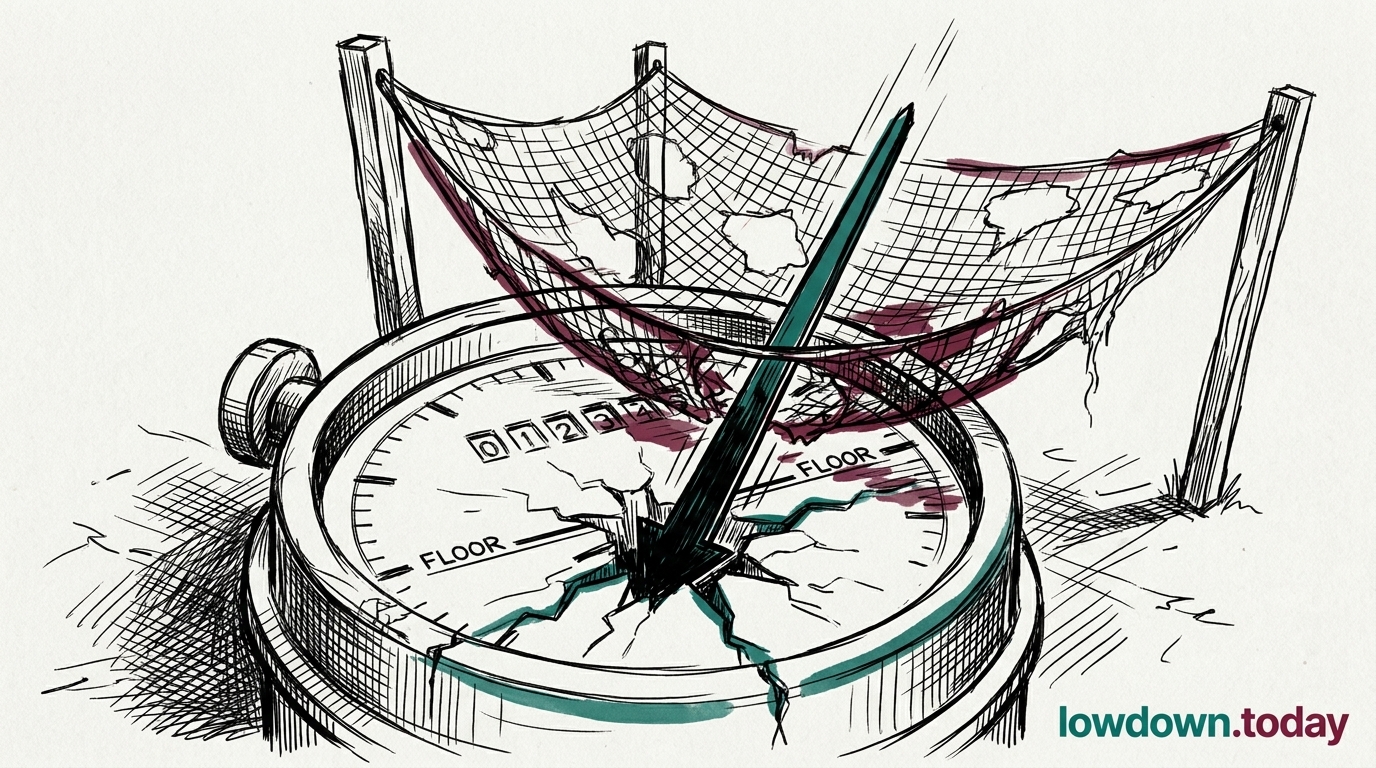
Five extensions in, the deadline mechanism has become the instrument rather than a precursor to action.

Donald Trump's fifth Hormuz ultimatum expires at 8pm ET (0000 UTC Wednesday). It follows the 6 April power-grid deadline and the second replacement that itself ran out , and reformulates the same threat for the fifth time in six weeks .

Each previous expiry produced an extension. The rhetoric escalated each cycle while the operational ceiling stayed flat: no civilian-infrastructure threshold ever crossed, no new target category announced, no military fact on the ground that the prior subsequents had not already established. The most probable outcome tonight, on the pattern, is a sixth extension framed around whatever the Islamabad track allows.

Tehran is now planning around the assumption that the deadline itself is the instrument, not a precursor to action. The risk is not that one of these expiries is theatre, it is that the day Trump genuinely intends to follow through, no actor in the system will read the signal differently from the four that preceded it.


Deep Analysis

In plain English

Trump has now issued five versions of the same ultimatum over six weeks: open Hormuz or face consequences. Each previous deadline has produced an extension rather than action , the 6 April power-grid deadline, the second replacement, and three further reformulations. Tonight's version expires at 8pm Eastern time. The most likely outcome, on pattern, is a sixth extension framed around whatever the Pakistan diplomatic track allows. The practical effect of five extensions is that Iran now plans on the assumption the deadline itself is the tool, not a warning of what follows. The danger is not that each expiry is theatre , it may well be , but that the day it is not, no one reads it differently.

Deep Analysis
Root Causes

The five-extension pattern reflects a structural mismatch between Trump's political need to signal toughness on Hormuz domestically and the operational reality that the US has not found a military solution within the constraints it has set for itself , no civilian infrastructure thresholds crossed, no new target categories announced, carriers moved out rather than in.

Each extension preserves the option while deferring the cost; the cumulative cost is the credibility of the next deadline.

Escalation

The fifth deadline expiry does not itself raise escalation risk; the pattern has lowered it by training both sides to treat expiry as routine. The risk is asymmetric: on the day the US genuinely intends to follow through, the signal will be indistinguishable from the four that preceded it, creating a window for catastrophic Iranian miscalculation.

What could happen next?
  • Risk

    Five consecutive extensions have habituated Iran to treating US deadlines as negotiating variables; if Trump does eventually order enforcement action, the prior pattern means the signal will not be read as materially different, raising the risk of a genuine miscalculation.

  • Precedent

    The five-extension cycle establishes that this administration will not cross civilian-infrastructure thresholds under deadline pressure alone, narrowing Iran's incentive to offer substantive concessions before a threshold is actually crossed.

First Reported In

Update #61 · Carriers retreat; Iran codifies Hormuz

Investing.com / ICE· 7 Apr 2026
Read original
Different Perspectives
Spain's LNG terminal operators
Spain's 9,145 GWh terminal inventory is the largest single stock in the EU LNG network, an option value that can reroute cargoes wherever the winter strip pays best rather than a cavern gas obligation tied to a fixed date. That flexibility matters more as Germany's cavern shortfall pushes more of the winter security question onto import infrastructure.
European Commission
European Commission
Brussels holds the bloc to 90% on a flexible window while Germany, holding roughly a quarter of EU storage capacity, tracks toward missing its own lower 80% figure by 21 points. A national shortfall this size in the anchor market matters more to bloc security than the flexible timetable alone can absorb.
French power exporters and CRE
French day-ahead rose in step with Germany but by less, reopening a EUR 7-17 premium that makes northward export flows commercially attractive again after the EUR 43.09 discount evaporated in days. CRE separately authorised RTE and Enedis to buy flexibility locally, betting the coming winter's binding constraint is grid congestion rather than a shortage of firm capacity.
TTF trading desk
TTF trading desk
A visible national shortfall like Germany's 21-point gap is a directional signal, not noise, for a desk holding the summer-winter spread. TTF's flat EUR 58-60 range through this week's German price swings says the market has not yet chosen to reprice refill risk into the front of the curve.
German cavern and CCGT operators
German caverns kept buying prompt gas at TTF near EUR 58-60 through the inversion; the wind collapse to 2.4 GW then flipped the spark spread to plus EUR 29 and put turbines back in the same queue. Every day turbines win that bid, injection at a third of the 877 GWh/day pace needed falls further behind.
Slovakia
Slovakia
Slovakia says it dropped its hold-out on the 21st sanctions package only after Ursula von der Leyen personally signed written gas-price and supply guarantees. The Council of the European Union's own 17,238-character release on the package names neither Slovakia nor any guarantee, leaving Bratislava's account unconfirmed by the institutional record.



