Skip to content
You can now search across every topic, entity and event.What's new
European Energy Markets
15JUN

Saudi jets hit Iraq, citing Article 51

3 min read
12:23UTC

Riyadh sent aircraft over a neighbouring state for the first time in this war, invoking self-defence against drones that were all intercepted before they landed.

EconomicAssessed
Key takeaway

Riyadh bombed a neighbour over drones that were all shot down, and has published no attribution.

The Saudi Armed Forces struck militia targets inside Iraq at 05:00 GMT on Wednesday 29 July "in coordination with United States Central Command", the Defence Ministry spokesman Maj. Gen. Turki al-Malki said in a statement carried by the Saudi Press Agency, The Kingdom's official state news agency 1. Riyadh invoked Article 51 of the UN Charter, the provision reserving a state's right of self-defence against an armed attack, and added that The Kingdom "does not seek escalation but will respond decisively to any aggression". CENTCOM said separately that it had struck "multiple terrorist logistics and weapons sites across eastern Iraq" 2.

The stated cause sits two days back. Saudi and Jordanian air defences intercepted drones aimed at Eastern Province oil facilities and at Riyadh on 27 July, launched from Iraqi territory according to Al-Malki . Nothing landed. Iraqi ground took drones of its own the same day, when strikes hit camps housing Iranian-Kurdish opposition fighters in the north . The Popular Mobilisation Forces (PMF), the Iraqi paramilitary umbrella formally folded into the state's security apparatus, put its own losses across the struck sites at 20 killed and 32 wounded 3. That figure is the PMF's own, and neither Baghdad nor Riyadh has confirmed it.

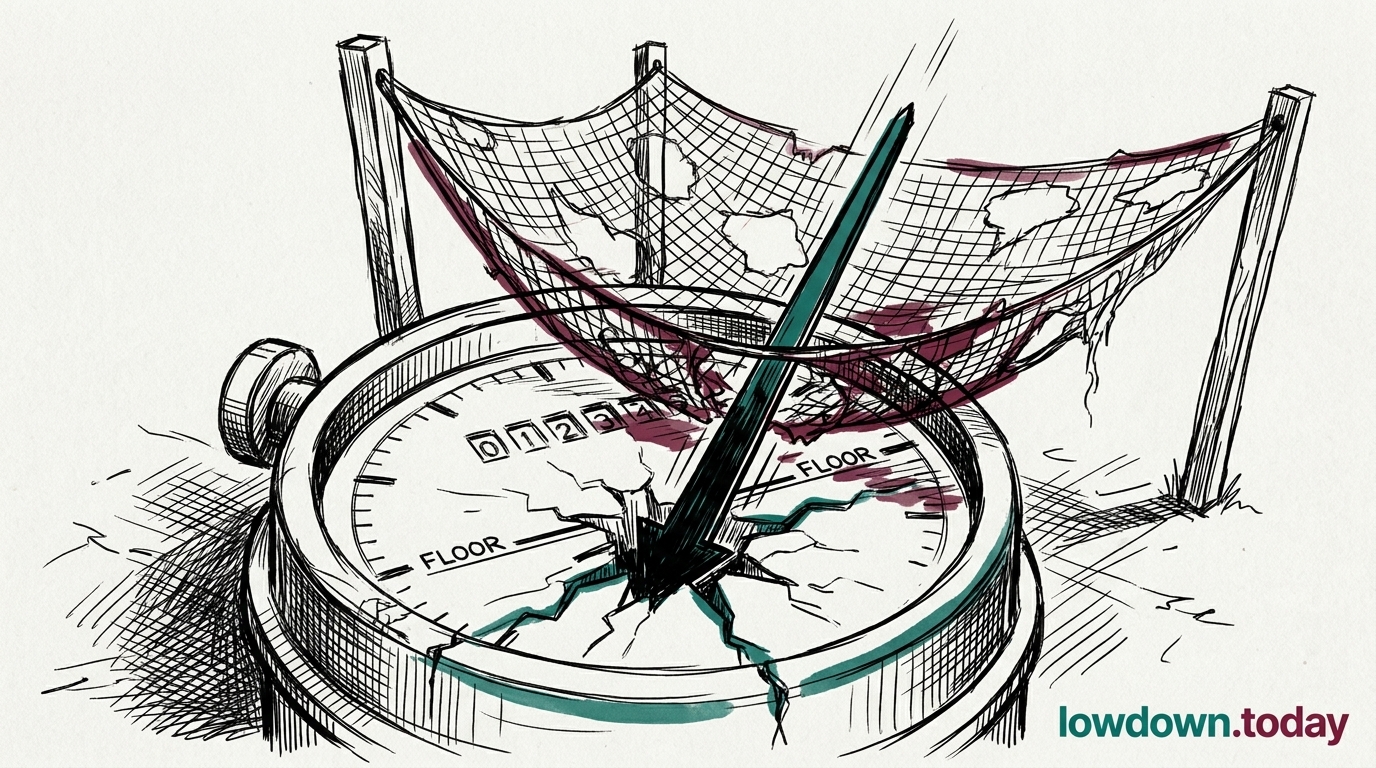
Article 51 turns on an armed attack, and the drones of 27 July were intercepted before any of them landed. Iraq's armed forces spokesman has demanded evidence that anything was launched from Iraqi ground, and none has been published 4. Iran-aligned Iraqi factions say they launched nothing and call the Saudi account a fabrication 5.

Both propositions can hold at once. Riyadh plausibly faces a northern launch axis it cannot police from its own airspace, and a strike on a neighbouring state, resting on unpublished attribution and answering attacks that did no damage, is a legal argument The Kingdom has not yet had to make in public. Until it does, every state on the Gulf littoral now has a live precedent for treating an intercepted drone as grounds to bomb the territory it came from.


Deep Analysis

In plain English

Saudi Arabia's air force bombed militia targets inside neighbouring Iraq, saying it was defending itself under a UN rule called Article 51. The group that lost people, the Popular Mobilisation Forces or PMF, is an Iraqi paramilitary group with strong ties to Iran. The PMF says 20 of its fighters died and 32 were wounded, though nobody outside the PMF has confirmed that count. Iraq's government was not the one under attack, so this raises the question of whether one country can bomb targets inside another without that country's permission.

Deep Analysis
Root Causes

Iraq's territory functions as a permissive launch zone because the Popular Mobilisation Forces (PMF) operate as a state-recognised paramilitary structure answerable to Baghdad in name but often directed by factions aligned with Tehran; this dual loyalty means strikes on PMF positions inside Iraq are simultaneously attacks on a nominal Iraqi government asset and a proxy of a foreign power.

Saudi Arabia's decision to act without an Iraqi request stems from the absence of any functioning air-defence coordination agreement between Riyadh and Baghdad, unlike the CENTCOM-Gulf state deconfliction lines that already existed before 29 July.

What could happen next?
  • Risk

    An unconfirmed casualty figure sourced only to the PMF itself may harden into an accepted death toll if no independent count from Baghdad or Riyadh follows.

  • Consequence

    A unilateral Saudi strike inside Iraq without a bilateral coordination framework increases the risk of a future strike hitting a target neither government intended.

First Reported In

Update #164 · The pause ends, and the map moves west

Al Jazeera· 31 Jul 2026
Read original
Different Perspectives
Spain's LNG terminal operators
Spain's 9,145 GWh terminal inventory is the largest single stock in the EU LNG network, an option value that can reroute cargoes wherever the winter strip pays best rather than a cavern gas obligation tied to a fixed date. That flexibility matters more as Germany's cavern shortfall pushes more of the winter security question onto import infrastructure.
European Commission
European Commission
Brussels holds the bloc to 90% on a flexible window while Germany, holding roughly a quarter of EU storage capacity, tracks toward missing its own lower 80% figure by 21 points. A national shortfall this size in the anchor market matters more to bloc security than the flexible timetable alone can absorb.
French power exporters and CRE
French day-ahead rose in step with Germany but by less, reopening a EUR 7-17 premium that makes northward export flows commercially attractive again after the EUR 43.09 discount evaporated in days. CRE separately authorised RTE and Enedis to buy flexibility locally, betting the coming winter's binding constraint is grid congestion rather than a shortage of firm capacity.
TTF trading desk
TTF trading desk
A visible national shortfall like Germany's 21-point gap is a directional signal, not noise, for a desk holding the summer-winter spread. TTF's flat EUR 58-60 range through this week's German price swings says the market has not yet chosen to reprice refill risk into the front of the curve.
German cavern and CCGT operators
German caverns kept buying prompt gas at TTF near EUR 58-60 through the inversion; the wind collapse to 2.4 GW then flipped the spark spread to plus EUR 29 and put turbines back in the same queue. Every day turbines win that bid, injection at a third of the 877 GWh/day pace needed falls further behind.
Slovakia
Slovakia
Slovakia says it dropped its hold-out on the 21st sanctions package only after Ursula von der Leyen personally signed written gas-price and supply guarantees. The Council of the European Union's own 17,238-character release on the package names neither Slovakia nor any guarantee, leaving Bratislava's account unconfirmed by the institutional record.



