Skip to content
You can now search across every topic, entity and event.What's new
European Energy Markets
15JUN

OIES base case becomes its stress case

3 min read
12:23UTC

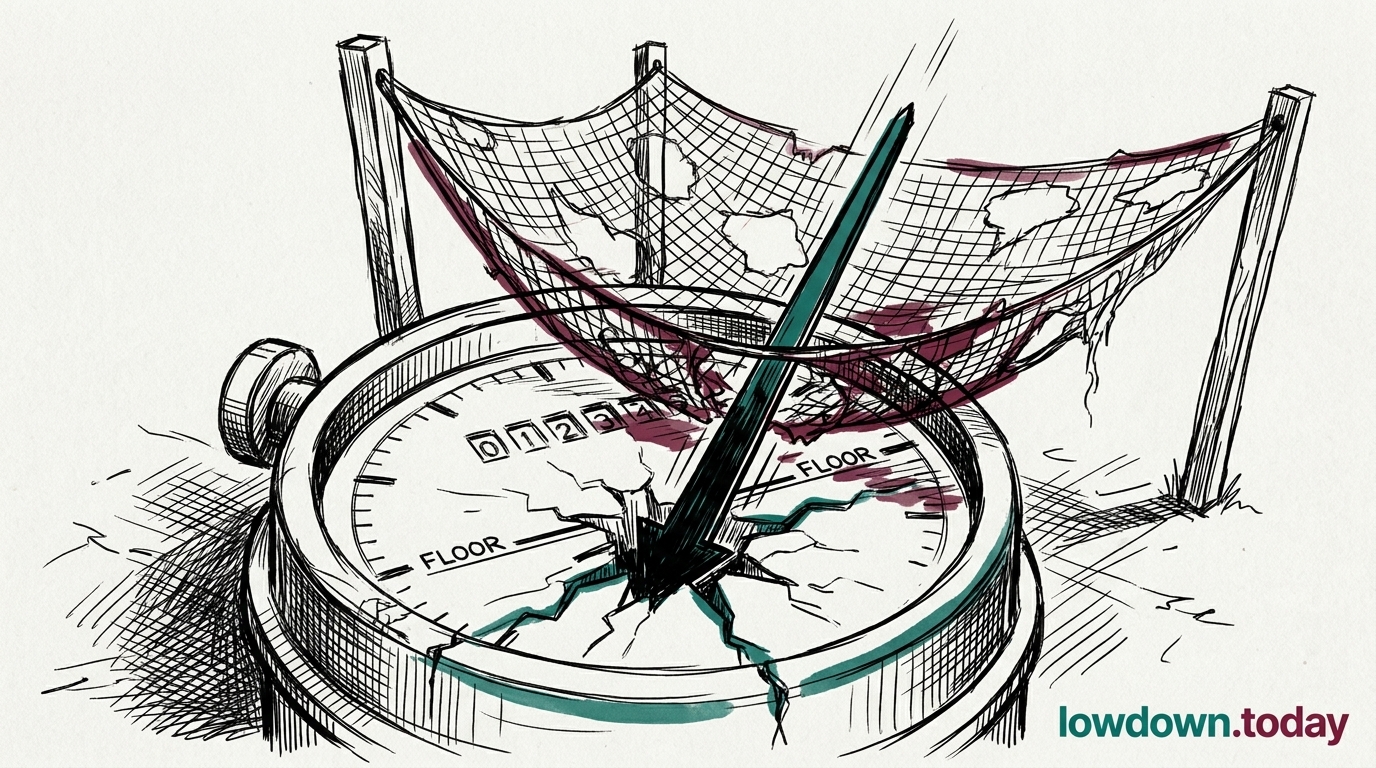
OIES charted EU storage to 74.3 bcm by 1 November on a mid-year Hormuz reopening; the 26-29 June Gulf round-trip knocked that base case out, leaving its stress case as the live path.

EconomicAssessed
Key takeaway

OIES's base case is dead; its closed-through-October stress case now sets Europe's autumn storage path.

The Oxford Institute for Energy Studies (OIES) built the base case of its June Comment on a mid-year reopening of the Strait of Hormuz, charting EU storage to 74.3 bcm by 1 November, or 69.6% fill 1. The 26 to 29 June escalation in The Gulf, followed by a verbal US-Iran stand-down, knocked that assumption out from under the model.

OIES is the energy research arm at Oxford whose storage notes set the reference path desks plan against. Its base case assumed the corridor would reopen mid-year, and the 17 June ceasefire that underpinned it collapsed within nine days . What the institute labelled its base case now reads as the optimistic leg, while the closed-through-October scenario it had sketched as a stress test becomes the line the autumn is measured against.

The 80% floor still needs 354.8 TWh more gas, from 549.62 TWh in store on 28 June 2. At the current net pace that gap closes around late September, comfortably before winter. The catch sits in the back half of the season: demand compresses the net rate through the autumn, and the cargoes meant to cover the September-October top-up are the very molecules Hormuz keeps throwing into doubt. OIES's own 2.1 bcm/month shortfall figure and Goldman Sachs's end-July normalisation window both now read as optimistic legs .


Deep Analysis

In plain English

The Oxford Institute for Energy Studies (OIES) is a research organisation that tracks global energy markets. In June 2026 they published a forecast saying Europe should have 69.6% of its gas storage full by 1 November, but that assumed the Strait of Hormuz, a narrow shipping lane in the Persian Gulf, would reopen to normal traffic by mid-year so that liquefied gas tankers from Qatar could resume deliveries. Between 26 and 29 June, tensions in the Hormuz area escalated again and then partially eased via a verbal agreement, but the lane did not fully reopen. OIES's own worst-case scenario, which assumed the strait stayed closed through October, is now the most realistic trajectory. Two Qatar production facilities were also physically destroyed by missiles and cannot restart for years regardless of diplomacy. Europe needs to find about 355 terawatt-hours of gas before November, and getting there depends on whether gas tanker routes stay clear long enough for deliveries to arrive in September and October.

Deep Analysis
Root Causes

The OIES June Comment base case embedded two assumptions that the 26-29 June round-trip broke simultaneously. First, it assumed that the 17 June US-Iran memorandum would hold long enough to allow Hormuz commercial traffic to normalise before July and trigger QatarEnergy's 50%-capacity restart clock.

The nine-day ceasefire that preceded the 26-29 June re-escalation ran for less than a fortnight before traffic was again disrupted, confirming the corridor was not on a stable reopening trajectory.

Second, the OIES base case did not price the two-train structural destruction at Ras Laffan: even full Hormuz transit normalisation cannot restore more than 80% of Qatar's pre-conflict LNG capacity until physical train reconstruction completes, a timeline running to years not months.

Goldman Sachs had flagged this constraint when pushing its own LNG normalisation timeline from end-June to end-July. The October top-up window is therefore bounded above by a physical supply ceiling that persists regardless of diplomatic outcomes.

What could happen next?
  • Risk

    If OIES's closed-through-October stress scenario is the live trajectory, EU aggregate fill may reach only 70-72% by 1 November, 8-10 percentage points below the statutory 80% floor, triggering EU emergency gas coordination under Regulation 2022/1369.

    Medium term · Assessed
  • Consequence

    Goldman Sachs's end-July LNG normalisation window (ID:4302) and OIES's 2.1 bcm monthly shortfall figure now both read as optimistic rather than central projections, as the 26-29 June round-trip consumed the last window in which a base-case supply recovery was physically possible before August.

    Short term · Reported
  • Precedent

    The invalidation of the OIES June base case within days of publication establishes a forecast-invalidation pattern: supply-contingent storage forecasts published during active Hormuz volatility carry structural uncertainty that cannot be hedged with scenario analysis alone.

    Long term · Assessed
First Reported In

Update #22 · Germany refills as the autumn cliff nears

Oxford Institute for Energy Studies· 30 Jun 2026
Read original
Different Perspectives
Spain's LNG terminal operators
Spain's 9,145 GWh terminal inventory is the largest single stock in the EU LNG network, an option value that can reroute cargoes wherever the winter strip pays best rather than a cavern gas obligation tied to a fixed date. That flexibility matters more as Germany's cavern shortfall pushes more of the winter security question onto import infrastructure.
European Commission
European Commission
Brussels holds the bloc to 90% on a flexible window while Germany, holding roughly a quarter of EU storage capacity, tracks toward missing its own lower 80% figure by 21 points. A national shortfall this size in the anchor market matters more to bloc security than the flexible timetable alone can absorb.
French power exporters and CRE
French day-ahead rose in step with Germany but by less, reopening a EUR 7-17 premium that makes northward export flows commercially attractive again after the EUR 43.09 discount evaporated in days. CRE separately authorised RTE and Enedis to buy flexibility locally, betting the coming winter's binding constraint is grid congestion rather than a shortage of firm capacity.
TTF trading desk
TTF trading desk
A visible national shortfall like Germany's 21-point gap is a directional signal, not noise, for a desk holding the summer-winter spread. TTF's flat EUR 58-60 range through this week's German price swings says the market has not yet chosen to reprice refill risk into the front of the curve.
German cavern and CCGT operators
German caverns kept buying prompt gas at TTF near EUR 58-60 through the inversion; the wind collapse to 2.4 GW then flipped the spark spread to plus EUR 29 and put turbines back in the same queue. Every day turbines win that bid, injection at a third of the 877 GWh/day pace needed falls further behind.
Slovakia
Slovakia
Slovakia says it dropped its hold-out on the 21st sanctions package only after Ursula von der Leyen personally signed written gas-price and supply guarantees. The Council of the European Union's own 17,238-character release on the package names neither Slovakia nor any guarantee, leaving Bratislava's account unconfirmed by the institutional record.



