Skip to content
You can now search across every topic, entity and event.What's new
European Energy Markets
15JUN

House votes to end war, Senate won't

2 min read
12:23UTC

The House ordered Trump to withdraw from hostilities with Iran by 214-208 on 23 July. The Senate killed the binding version of the same demand hours later.

EconomicAssessed
Key takeaway

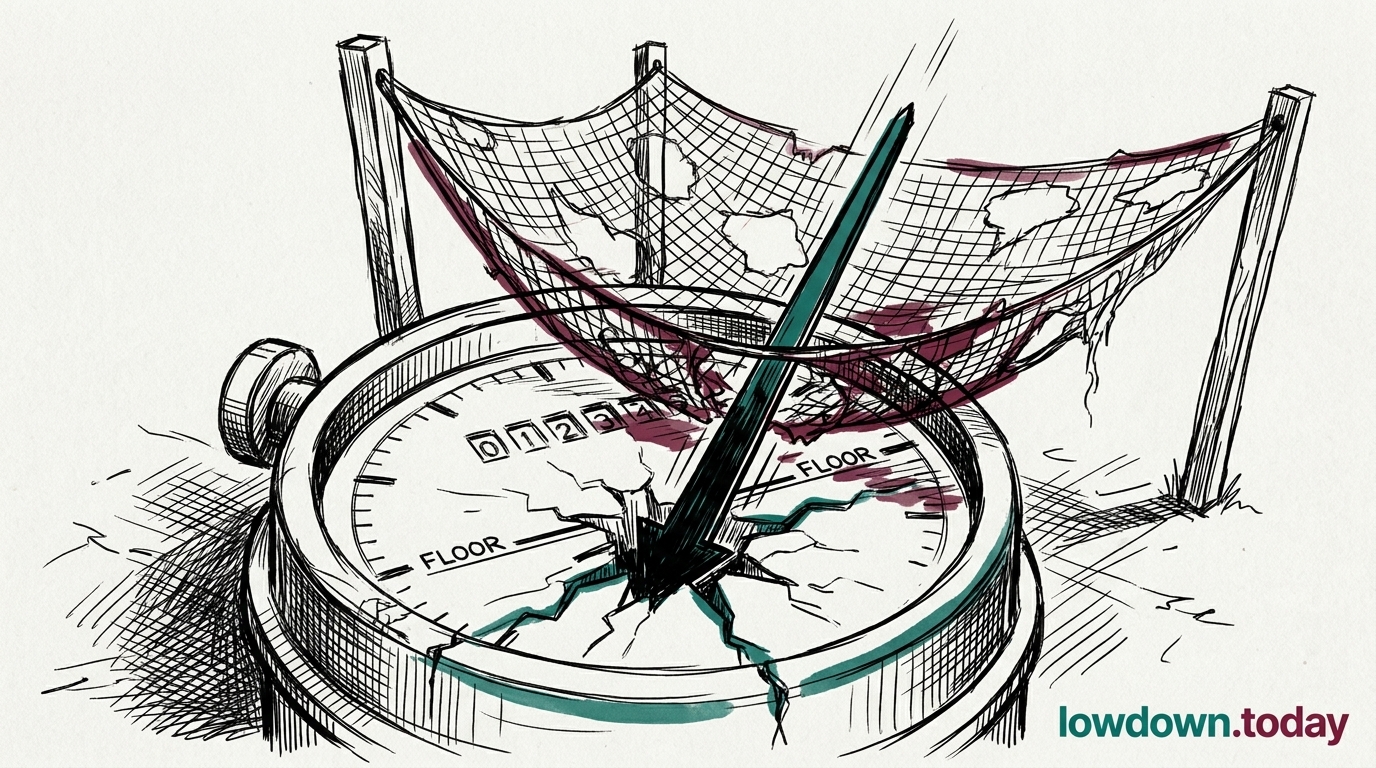
Congressional opposition to the war is measurable, repeatable and structurally unable to bind the executive.

The House of Representatives passed H.Con.Res.89 by 214-208 on 23 July, directing Trump to remove US forces from hostilities with Iran under section 5(c) of the War Powers Resolution, the 1973 law that limits a president's ability to wage war without Congressional authorisation 1. Four Republicans, Brian Fitzpatrick, Thomas Massie, Warren Davidson and Tom Barrett, crossed to vote with Democrats. The same day the Senate killed S.J.Res.180 by 47-49, with four senators not voting, Susan Collins voting to advance it and John Fetterman voting against 2.

A concurrent resolution expresses the will of both chambers and cannot compel a president; a joint resolution, once passed by both and either signed or passed over a veto, carries the force of law. The chamber that voted to stop the war chose the instrument that cannot, and the chamber holding the instrument that could declined to use it. Neither vote reached this briefing when it happened, and both predate our last window.

Our most recent war-powers coverage was the Senate's rejection on 23 June and The House's passage by 215-208 on 3 June . Set the two House tallies side by side and the drift across the intervening seven weeks of bombing, casualties, a blockade and the campaign bill Hegseth gave the Senate is a single vote. The Senate needed 51 and found 47.

A president reading those numbers learns something useful: the opposition is real, it is repeatable, and it stops at the point where it would bind him. That is the same institutional gap that leaves General Dan Caine warning the President about munitions stockpiles rather than Congress appropriating to refill them. Sustained air operations without an authorisation never acquire the funding signal a formal authorisation sends to production lines, and the votes on 23 July settled that nothing will change that before the next strike wave.


Deep Analysis

In plain English

Congress voted on the Iran war on 23 July, and most people missed it. The House of Representatives passed a resolution telling Trump to pull US forces out of the conflict, by 214 votes to 208. But this kind of resolution does not actually force the President to do anything; it is a formal statement of opinion. The Senate tried to pass a stronger version that would have had real legal force, but that failed by 47 votes to 49. Congress registered its unease with the war again, but did not actually stop it.

Deep Analysis
Root Causes

The War Powers Resolution's two instruments carry different legal weight: a House concurrent resolution like H.Con.Res.89 needs no presidential signature and creates no binding obligation, while a joint resolution like S.J.Res.180 would have force of law if passed by both chambers, which is why the Senate vote, not the House one, was the real test, and the one that failed.

Four Republicans crossing over in the House, Fitzpatrick, Massie, Davidson and Barrett, and Collins alone doing so in the Senate, shows the structural ceiling: a small, stable bloc of Republican dissenters exists, but it has never approached the numbers needed to override a veto or reach 51 votes in the Senate.

What could happen next?
  • Meaning

    A one-vote drift shows congressional opposition to the war is real but structurally stuck below the threshold needed to bind the executive.

    Immediate · Assessed
  • Precedent

    The Senate's 47-49 failure on a binding resolution gives the White House a clear read that it can proceed without a veto-proof congressional check.

    Short term · Reported
  • Risk

    If casualty or cost figures worsen further, the same four House Republicans plus Collins are the names to watch for whether the dissenting bloc grows.

    Medium term · Suggested
First Reported In

Update #162 · Munitions, not Iran, halted US bombing

Office of the Clerk, US House of Representatives· 26 Jul 2026
Read original
Different Perspectives
Spain's LNG terminal operators
Spain's 9,145 GWh terminal inventory is the largest single stock in the EU LNG network, an option value that can reroute cargoes wherever the winter strip pays best rather than a cavern gas obligation tied to a fixed date. That flexibility matters more as Germany's cavern shortfall pushes more of the winter security question onto import infrastructure.
European Commission
European Commission
Brussels holds the bloc to 90% on a flexible window while Germany, holding roughly a quarter of EU storage capacity, tracks toward missing its own lower 80% figure by 21 points. A national shortfall this size in the anchor market matters more to bloc security than the flexible timetable alone can absorb.
French power exporters and CRE
French day-ahead rose in step with Germany but by less, reopening a EUR 7-17 premium that makes northward export flows commercially attractive again after the EUR 43.09 discount evaporated in days. CRE separately authorised RTE and Enedis to buy flexibility locally, betting the coming winter's binding constraint is grid congestion rather than a shortage of firm capacity.
TTF trading desk
TTF trading desk
A visible national shortfall like Germany's 21-point gap is a directional signal, not noise, for a desk holding the summer-winter spread. TTF's flat EUR 58-60 range through this week's German price swings says the market has not yet chosen to reprice refill risk into the front of the curve.
German cavern and CCGT operators
German caverns kept buying prompt gas at TTF near EUR 58-60 through the inversion; the wind collapse to 2.4 GW then flipped the spark spread to plus EUR 29 and put turbines back in the same queue. Every day turbines win that bid, injection at a third of the 877 GWh/day pace needed falls further behind.
Slovakia
Slovakia
Slovakia says it dropped its hold-out on the 21st sanctions package only after Ursula von der Leyen personally signed written gas-price and supply guarantees. The Council of the European Union's own 17,238-character release on the package names neither Slovakia nor any guarantee, leaving Bratislava's account unconfirmed by the institutional record.



