Skip to content
You can now search across every topic, entity and event.What's new
European Energy Markets
15JUN

Hengaw Confirms 7,300 Killed; IRGC Used Schools and Mosques

2 min read
12:23UTC

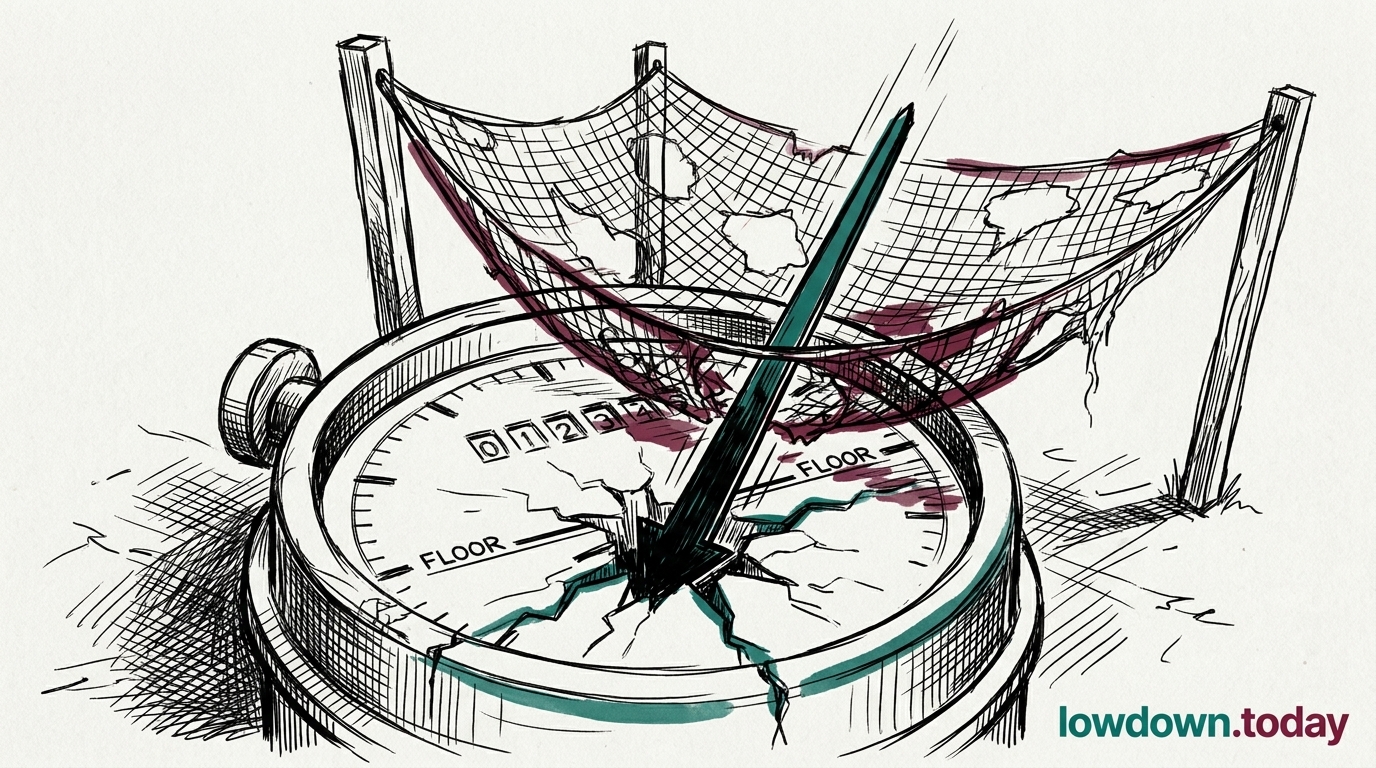
Hengaw Human Rights Organisation published its overdue 9th casualty report on 2 April: 7,300 killed in 34 days, including 890 civilians, 180 minors, and 210 women. New findings document IRGC forces sheltering in schools, dormitories, and mosques.

EconomicDeveloping
Key takeaway

At 7,300 killed, Hengaw's count is 3.7 times Iran's official figure, with new evidence of IRGC use of protected buildings.

Hengaw Human Rights Organisation published its 9th casualty report on 2 April, five or more days overdue . The report confirms 7,300 killed in 34 days, including 890 civilians, 180 minors, and 210 women. The toll rose 400 from the previous floor of 6,900 . Iran's official count remains frozen at 1,937; state media separately reported 2,076, a figure that has drifted upward without acknowledging the discrepancy.

The gap between Hengaw's 7,300 and Iran's official 1,937 is now 3.7-fold. Both figures carry methodological caveats: Hengaw counts all conflict-related deaths across provinces; Iran's count uses a narrower definition. Hengaw's methodology is the more transparent of the two, and its prior reports have been broadly consistent with HRANA and other independent monitors.

The new element in the 9th report is the documented evidence of IRGC forces stationing in schools, dormitories, and mosques. Under the laws of armed conflict, using protected civilian buildings as military positions creates dual violations: one by the party using the shield, one potentially by the party that strikes through it. Both tracks will feature in any subsequent accountability process.

Hengaw's five-day publication delay is itself a data point. The organisation has published on a regular cycle since the war began. Delays correlate with access restrictions inside Iran, not with a lower toll.


Deep Analysis

In plain English

Iran struck Kuwait's main oil refinery for the third time and also hit a water purification plant. The water plant matters more: in Kuwait, most drinking water comes from plants that remove salt from seawater. Attacking those plants threatens ordinary people's access to clean water, not just energy supply.

Deep Analysis
Root Causes

Iran's targeting of Kuwaiti infrastructure reflects its strategic calculation that raising the cost for Gulf states hosting coalition forces will create political pressure for those states to distance themselves from the US campaign.

Kuwait, like the UAE, hosts critical US logistics infrastructure; Iran is attempting to make that hosting unacceptably costly.

Escalation

Highly escalatory. The targeting of desalination infrastructure crosses from energy disruption into civilian life support targeting. Kuwait may face pressure from its population to seek accommodation with Iran, which would further erode the Gulf coalition supporting US operations.

What could happen next?
  • Risk

    Sustained desalination targeting in Kuwait (and potentially UAE or Saudi Arabia) poses a direct civilian welfare threat that could fracture Gulf political support for the coalition.

    Short term · Medium
  • Consequence

    Third strike on Mina al-Ahmadi suggests Iran has persistent targeting capability against the refinery despite coalition air defences; production disruption is increasingly likely.

    Immediate · High
  • Precedent

    Targeting of desalination infrastructure in an armed conflict, without triggering a specific IHL response, extends the permissive norm established by the Yemen campaign.

    Long term · Medium
First Reported In

Update #57 · Bridge strike kills eight; Army chief fired

Hengaw Human Rights Organisation· 3 Apr 2026
Read original
Causes and effects
Different Perspectives
Spain's LNG terminal operators
Spain's 9,145 GWh terminal inventory is the largest single stock in the EU LNG network, an option value that can reroute cargoes wherever the winter strip pays best rather than a cavern gas obligation tied to a fixed date. That flexibility matters more as Germany's cavern shortfall pushes more of the winter security question onto import infrastructure.
European Commission
European Commission
Brussels holds the bloc to 90% on a flexible window while Germany, holding roughly a quarter of EU storage capacity, tracks toward missing its own lower 80% figure by 21 points. A national shortfall this size in the anchor market matters more to bloc security than the flexible timetable alone can absorb.
French power exporters and CRE
French day-ahead rose in step with Germany but by less, reopening a EUR 7-17 premium that makes northward export flows commercially attractive again after the EUR 43.09 discount evaporated in days. CRE separately authorised RTE and Enedis to buy flexibility locally, betting the coming winter's binding constraint is grid congestion rather than a shortage of firm capacity.
TTF trading desk
TTF trading desk
A visible national shortfall like Germany's 21-point gap is a directional signal, not noise, for a desk holding the summer-winter spread. TTF's flat EUR 58-60 range through this week's German price swings says the market has not yet chosen to reprice refill risk into the front of the curve.
German cavern and CCGT operators
German caverns kept buying prompt gas at TTF near EUR 58-60 through the inversion; the wind collapse to 2.4 GW then flipped the spark spread to plus EUR 29 and put turbines back in the same queue. Every day turbines win that bid, injection at a third of the 877 GWh/day pace needed falls further behind.
Slovakia
Slovakia
Slovakia says it dropped its hold-out on the 21st sanctions package only after Ursula von der Leyen personally signed written gas-price and supply guarantees. The Council of the European Union's own 17,238-character release on the package names neither Slovakia nor any guarantee, leaving Bratislava's account unconfirmed by the institutional record.



