Skip to content
You can now search across every topic, entity and event.What's new
European Energy Markets
15JUN

Grossi: a deal without IAEA is illusion

3 min read
12:23UTC

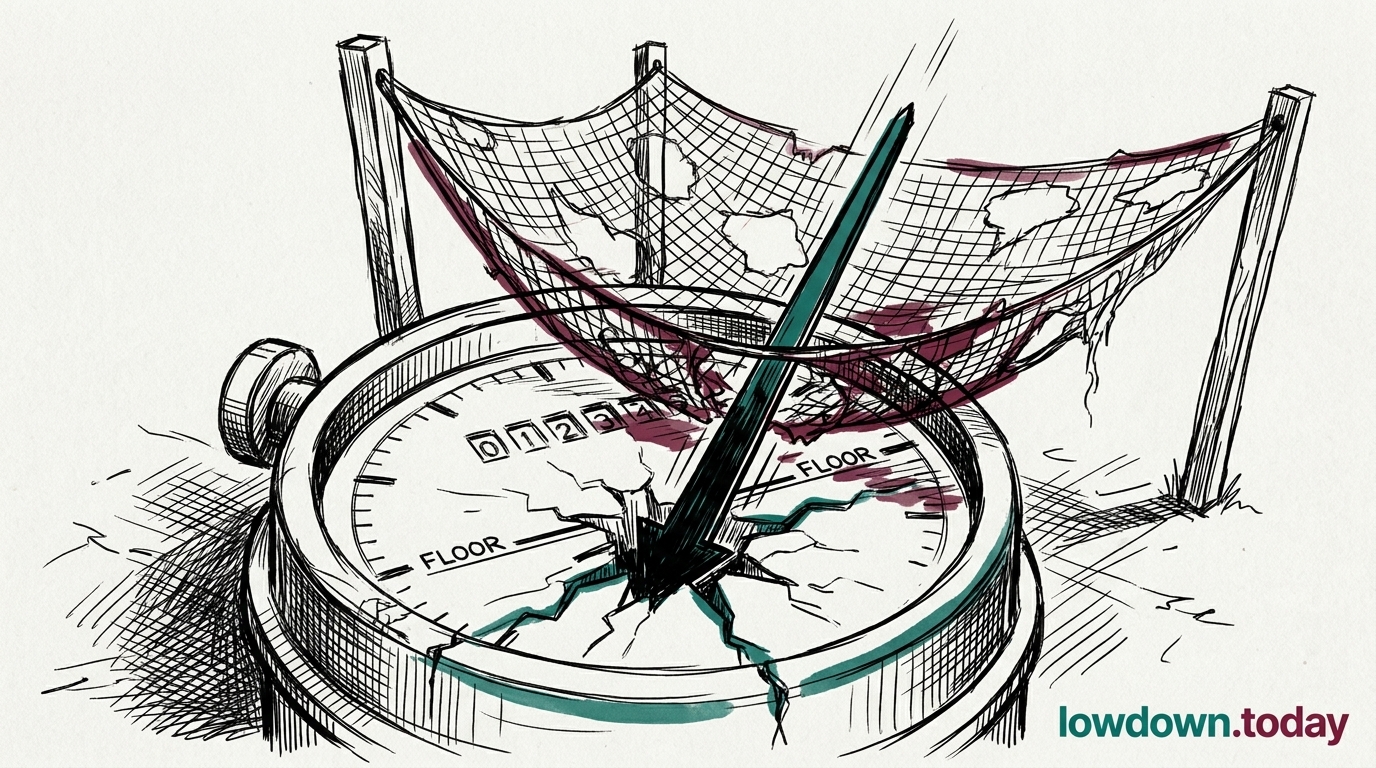
IAEA Director General Rafael Grossi said any agreement is an illusion without verification. Iran holds 440.9 kg of 60% uranium, with zero IAEA access since 28 February.

EconomicDeveloping
Key takeaway

No diplomatic framework can certify a stockpile the IAEA cannot inspect; the blackout is the binding clock.

IAEA Director General Rafael Grossi said "without verification, any agreement is not an agreement, but rather an illusion of agreement, or a promise that you don't know whether it will be kept" 1. Iran holds 440.9 kg of 60%-enriched uranium as of approximately 23 April, enough fissile material for approximately ten weapons if further enriched. The International Atomic Energy Agency (IAEA) is the UN body responsible for nuclear safeguards under the Non-Proliferation Treaty.

The inspection blackout predates the three-phase Pakistan text. Iran terminated all IAEA cooperation following the Majlis 221-0 vote on 11 April ; access was withdrawn on 28 February. The agency has had zero inspector visits to declared facilities for fifty-eight days as a result. Grossi's intervention places the verification problem ahead of any negotiated framework: even if Phase 3 of the Iranian text were lifted to the front of the queue, the agency cannot certify a freeze it cannot inspect.

The stockpile figure compounds the problem. 440.9 kg of 60% material is the threshold quantity for several weapons under standard IAEA significant-quantity definitions; the same uranium absent inspection becomes a Schrödinger's stockpile in any negotiated text. Washington's demand that Iran surrender the stockpile prior to negotiations is, in inspection terms, the only resolution that bypasses the IAEA. Iran's proposal to defer Phase 3 is, in those same terms, the only one that bypasses Washington. Grossi's third position holds that neither side's preferred sequencing fixes the verification gap.


Deep Analysis

In plain English

The IAEA is the international body responsible for checking whether countries are using nuclear material for peaceful purposes only. Its inspectors had been visiting Iran's nuclear sites regularly before the war started in February. Since then, Iran has refused all access. The last verified measurement showed Iran holding 440.9 kg of uranium enriched to 60%. Weapons-grade uranium requires enrichment to 90%. Per Harvard Belfer Center analysis, surviving Iranian centrifuge cascades could close that gap in two to four weeks. IAEA Director General Rafael Grossi's comment that 'without verification, any agreement is an illusion' is therefore the practical obstacle sitting behind Iran's three-phase proposal: even if the two sides agree on sequencing, the IAEA cannot verify compliance with any nuclear terms unless Iran allows inspectors back in.

Deep Analysis
Root Causes

The IAEA access blackout has two compounding causes. The Majlis 221-0 vote on 11 April suspended agency cooperation as a legislative act, not an executive decision, which means any restoration requires parliamentary reversal rather than a presidential directive. Iran's IRGC-dominated government after the February strikes is less likely to reverse a parliamentary consensus than the pre-war civilian government would have been.

The February strikes themselves also destroyed at least partial inspection infrastructure: IAEA cameras and monitoring equipment at declared enrichment sites were damaged by proximity to strike targets, creating a dual verification gap of institutional access and physical monitoring capacity.

What could happen next?
  • Risk

    Each week of IAEA blackout increases the uncertainty range around Iran's actual uranium stockpile, making the 440.9 kg US demand figure progressively less accurate as a negotiating baseline.

    Immediate · 0.9
  • Consequence

    Any Phase 3 nuclear agreement reached without restored IAEA access will be unverifiable and therefore domestically unsellable in both the US Senate and Iran's parliament, structurally dooming Phase 3 before it begins.

    Medium term · 0.82
  • Precedent

    Iran's 221-0 parliamentary vote suspending IAEA access is the first complete legislative termination of agency cooperation by an NPT member, setting a precedent that could be cited by other states facing military pressure.

    Long term · 0.78
First Reported In

Update #81 · Iran writes Phase 3; Trump posts Phase 1

GlobalSecurity / RFE/RL· 27 Apr 2026
Read original
Different Perspectives
Spain's LNG terminal operators
Spain's 9,145 GWh terminal inventory is the largest single stock in the EU LNG network, an option value that can reroute cargoes wherever the winter strip pays best rather than a cavern gas obligation tied to a fixed date. That flexibility matters more as Germany's cavern shortfall pushes more of the winter security question onto import infrastructure.
European Commission
European Commission
Brussels holds the bloc to 90% on a flexible window while Germany, holding roughly a quarter of EU storage capacity, tracks toward missing its own lower 80% figure by 21 points. A national shortfall this size in the anchor market matters more to bloc security than the flexible timetable alone can absorb.
French power exporters and CRE
French day-ahead rose in step with Germany but by less, reopening a EUR 7-17 premium that makes northward export flows commercially attractive again after the EUR 43.09 discount evaporated in days. CRE separately authorised RTE and Enedis to buy flexibility locally, betting the coming winter's binding constraint is grid congestion rather than a shortage of firm capacity.
TTF trading desk
TTF trading desk
A visible national shortfall like Germany's 21-point gap is a directional signal, not noise, for a desk holding the summer-winter spread. TTF's flat EUR 58-60 range through this week's German price swings says the market has not yet chosen to reprice refill risk into the front of the curve.
German cavern and CCGT operators
German caverns kept buying prompt gas at TTF near EUR 58-60 through the inversion; the wind collapse to 2.4 GW then flipped the spark spread to plus EUR 29 and put turbines back in the same queue. Every day turbines win that bid, injection at a third of the 877 GWh/day pace needed falls further behind.
Slovakia
Slovakia
Slovakia says it dropped its hold-out on the 21st sanctions package only after Ursula von der Leyen personally signed written gas-price and supply guarantees. The Council of the European Union's own 17,238-character release on the package names neither Slovakia nor any guarantee, leaving Bratislava's account unconfirmed by the institutional record.



