Skip to content
You can now search across every topic, entity and event.What's new
European Energy Markets
15JUN

FDD: oil licence has no enforcement

3 min read
12:23UTC

The Foundation for Defense of Democracies found that General License X carries no escrow, no value cap, no buyer list and no reporting, functioning as a 60-day safe harbour for Chinese refiners.

EconomicDeveloping
Key takeaway

General License X has no escrow, cap or reporting, mostly legalising the Chinese purchases already under way.

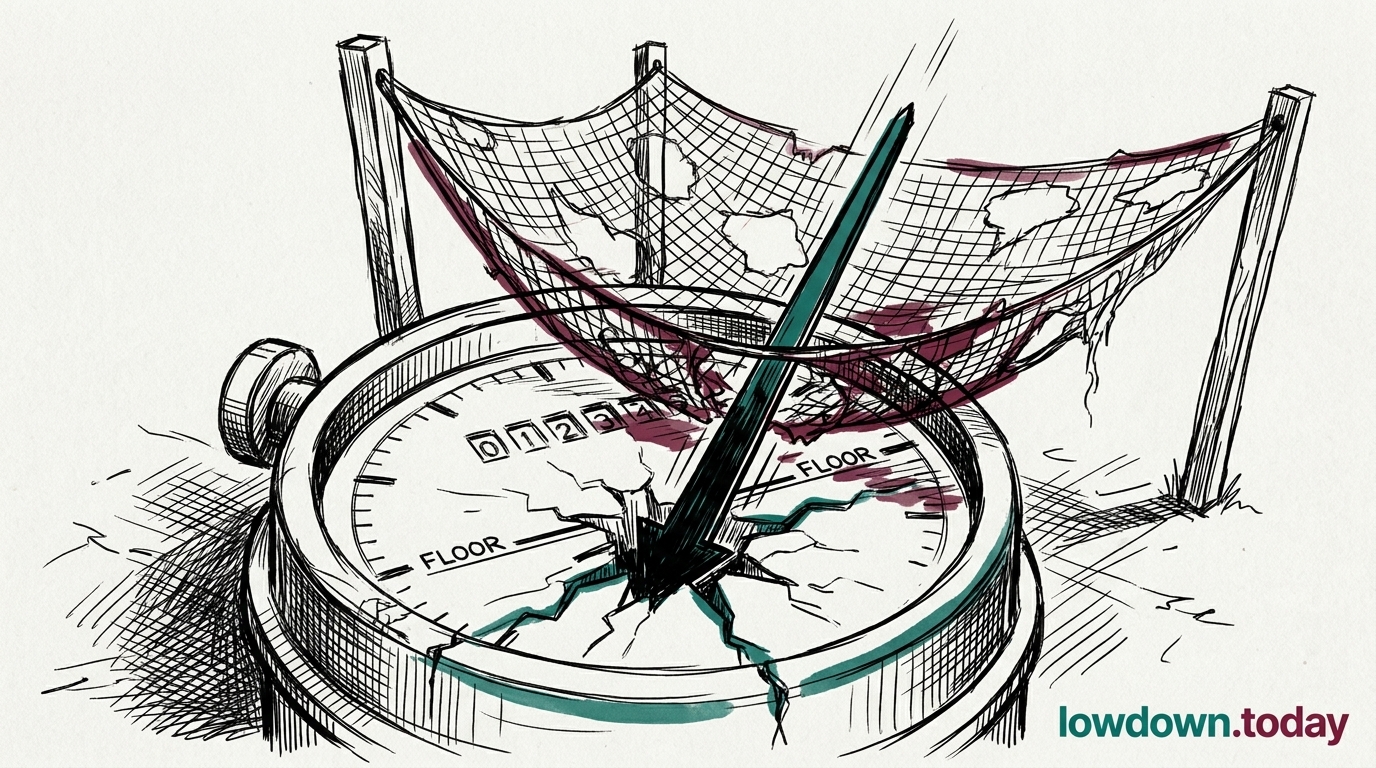
The Foundation for Defense of Democracies (FDD), a Washington think tank focused on Iran sanctions, found that General License X carries no escrow mechanism, no value cap, no approved-buyer list and no transaction reporting requirement 1. The licence is the OFAC instrument Treasury Secretary Bessent signed on 22 June , the first oil-relief paper of the war after 116 days of sanctions.

That absence of architecture changes what the licence does. Rather than relief for Iran, the FDD reads it as a 60-day safe harbour for the Chinese refiners and banks already buying Iranian crude through workarounds: it legalises the trade that was happening anyway, without recording who buys, how much, or at what price.

The revenue at stake makes the gap consequential. The FDD estimated roughly one-third of Iran's annual oil income, about $12.4 billion, flows to the IRGC and the armed forces, the same actors holding the nuclear file shut. No bank or trader had publicly disclosed a transaction under the licence as of 23-24 June. The signed paper exists; the enforcement that would make it accountable does not.


Deep Analysis

In plain English

On 22 June, the US Treasury issued a document called General License X, which allowed Iranian oil to be sold legally on international markets for 60 days. The Foundation for Defense of Democracies; a Washington think tank that monitors Iran sanctions; examined the document and found it had no safeguards: no limit on how much oil could be sold, no list of approved buyers, no requirement to report transactions, and no account held in escrow to ensure the money goes where it should. In practice, this means China; the main buyer of Iranian oil; can continue buying it through the same workaround channels it has used for years, now with a legal cover rather than sanctions risk. Roughly one-third of Iran's oil income, about $12.4 billion per year, goes to the IRGC (the country's powerful ideological military force). The licence does not prevent that from continuing.

Deep Analysis
Root Causes

GL X's lack of enforcement architecture reflects a tension inside the US sanctions regime that has existed since 2019: the secondary-sanctions threat against Chinese crude buyers was never enforced because designating Chinese state-owned refiners would trigger a full economic confrontation the Trump administration chose to avoid.

The FDD finding that roughly one-third of Iran's oil revenues (~$12.4bn) flows to the IRGC and armed forces was known at the time of GL X's drafting. The licence provides a market-price signalling benefit (Brent falling toward $76) without requiring the political cost of secondary sanctions to enforce Iranian compliance.

First Reported In

Update #137 · Iran and Oman claim the strait; US says no

Foundation for Defense of Democracies· 24 Jun 2026
Read original
Different Perspectives
Spain's LNG terminal operators
Spain's 9,145 GWh terminal inventory is the largest single stock in the EU LNG network, an option value that can reroute cargoes wherever the winter strip pays best rather than a cavern gas obligation tied to a fixed date. That flexibility matters more as Germany's cavern shortfall pushes more of the winter security question onto import infrastructure.
European Commission
European Commission
Brussels holds the bloc to 90% on a flexible window while Germany, holding roughly a quarter of EU storage capacity, tracks toward missing its own lower 80% figure by 21 points. A national shortfall this size in the anchor market matters more to bloc security than the flexible timetable alone can absorb.
French power exporters and CRE
French day-ahead rose in step with Germany but by less, reopening a EUR 7-17 premium that makes northward export flows commercially attractive again after the EUR 43.09 discount evaporated in days. CRE separately authorised RTE and Enedis to buy flexibility locally, betting the coming winter's binding constraint is grid congestion rather than a shortage of firm capacity.
TTF trading desk
TTF trading desk
A visible national shortfall like Germany's 21-point gap is a directional signal, not noise, for a desk holding the summer-winter spread. TTF's flat EUR 58-60 range through this week's German price swings says the market has not yet chosen to reprice refill risk into the front of the curve.
German cavern and CCGT operators
German caverns kept buying prompt gas at TTF near EUR 58-60 through the inversion; the wind collapse to 2.4 GW then flipped the spark spread to plus EUR 29 and put turbines back in the same queue. Every day turbines win that bid, injection at a third of the 877 GWh/day pace needed falls further behind.
Slovakia
Slovakia
Slovakia says it dropped its hold-out on the 21st sanctions package only after Ursula von der Leyen personally signed written gas-price and supply guarantees. The Council of the European Union's own 17,238-character release on the package names neither Slovakia nor any guarantee, leaving Bratislava's account unconfirmed by the institutional record.



