Skip to content
You can now search across every topic, entity and event.What's new
European Energy Markets
15JUN

CENTCOM redirections rise to 52, pace slows

4 min read
12:23UTC

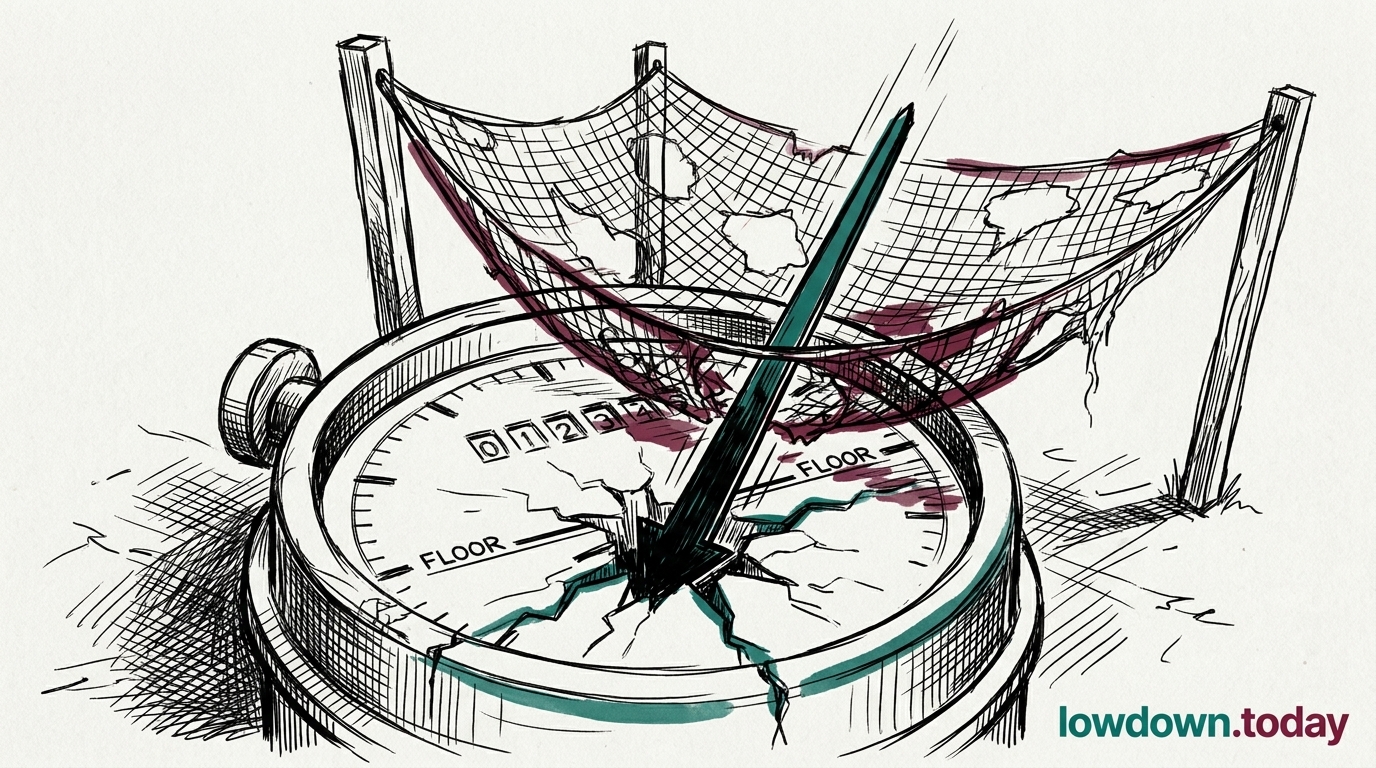
CENTCOM's Hormuz vessel-redirection count rose from 44 on 1 May to 52 by 7 May; the daily pace has slowed materially while Brent's rebound priced the missiles, not the steadier blockade.

EconomicDeveloping
Key takeaway

Eight more redirections in a week, but Brent moved on one night of missiles, not on the trend line.

CENTCOM's vessel-redirection count rose from 44 on 1 May to 52 by 7 May, an increase of eight redirections across the week . The pace has slowed materially. Earlier in the campaign, between roughly Days 60 and 62, CENTCOM was logging five redirections every two days. The 1-7 May window worked out to roughly two redirections every three days. CENTCOM is still tagging vessels in the strait, but the surge phase that ran into Day 62 has passed.

CENTCOM uses the redirection count as the cleanest single quantitative metric of operational tempo. Every redirection is a vessel ordered to change course, hold position outside the strait, or accept a CENTCOM escort. The figure compresses cumulative friction into a number that tracks weekly. The slowing pace, in isolation, would suggest a normalising chokepoint: traffic adapts, owners accept the delay, the system reaches a steady state.

Brent Crude did not read it that way. Brent's 8 May rebound followed the night of kinetic exchange in Hormuz, not the redirection count. Three days of price losses going into 7 May had reflected the MOU's progress through Pakistan; one night of kinetic action reversed all of it. The market is pricing the spikes, not the floor.

CENTCOM's redirection trend pointed one way; the Brent reversal pointed the other. Continuous infrastructure does not move oil prices once it is priced in. Kinetic events do, especially when they involve named US Navy assets in the strait that gives the benchmark its name. The blockade has settled into the background; the IRGC strike on the destroyers has not.

For producers and refiners in the United Kingdom, the practical reading is that pump prices will track the next missile, not the next redirection. Brent has now sat above the $100 mark long enough to feed through to forecourt repricing on its normal lag, and a sustained triple-digit Brent environment translates to roughly 10-12p per litre over the pre-war baseline. The next downward break in Brent will require either a signed instrument, rather than a paper one before Tehran's 9 May expiry, or a clean week without further exchanges of fire in the strait.


Deep Analysis

In plain English

The US military has been tracking how many ships it has turned away from the Strait of Hormuz since it started blocking vessels bound for Iran. That count reached 52 by 7 May, up from 44 a week earlier. But the rate at which ships are being turned away has slowed down noticeably compared to the opening weeks. The reason: most ships that were going to change course already have; the ones still trying to pass through either have Iranian permission or are willing to pay the toll. Meanwhile, oil prices react more sharply to the headline news of missiles being fired than to the slower-moving redirection count.

What could happen next?
  • Consequence

    The deceleration from five per 48 hours to two per 72 hours signals CENTCOM has shifted to a maintenance-rate interdiction posture that is sustainable for months without additional fleet deployment, removing the time-pressure that might have accelerated Iranian compliance.

  • Risk

    If oil markets continue pricing kinetic spikes rather than the redirection baseline, the next exchange of fire in the strait will produce another $1-3 Brent spike regardless of the underlying redirection trend, amplifying energy-price volatility for UK consumers and businesses.

First Reported In

Update #91 · MOU in Tehran, missiles in the strait

CENTCOM· 8 May 2026
Read original
Different Perspectives
Spain's LNG terminal operators
Spain's 9,145 GWh terminal inventory is the largest single stock in the EU LNG network, an option value that can reroute cargoes wherever the winter strip pays best rather than a cavern gas obligation tied to a fixed date. That flexibility matters more as Germany's cavern shortfall pushes more of the winter security question onto import infrastructure.
European Commission
European Commission
Brussels holds the bloc to 90% on a flexible window while Germany, holding roughly a quarter of EU storage capacity, tracks toward missing its own lower 80% figure by 21 points. A national shortfall this size in the anchor market matters more to bloc security than the flexible timetable alone can absorb.
French power exporters and CRE
French day-ahead rose in step with Germany but by less, reopening a EUR 7-17 premium that makes northward export flows commercially attractive again after the EUR 43.09 discount evaporated in days. CRE separately authorised RTE and Enedis to buy flexibility locally, betting the coming winter's binding constraint is grid congestion rather than a shortage of firm capacity.
TTF trading desk
TTF trading desk
A visible national shortfall like Germany's 21-point gap is a directional signal, not noise, for a desk holding the summer-winter spread. TTF's flat EUR 58-60 range through this week's German price swings says the market has not yet chosen to reprice refill risk into the front of the curve.
German cavern and CCGT operators
German caverns kept buying prompt gas at TTF near EUR 58-60 through the inversion; the wind collapse to 2.4 GW then flipped the spark spread to plus EUR 29 and put turbines back in the same queue. Every day turbines win that bid, injection at a third of the 877 GWh/day pace needed falls further behind.
Slovakia
Slovakia
Slovakia says it dropped its hold-out on the 21st sanctions package only after Ursula von der Leyen personally signed written gas-price and supply guarantees. The Council of the European Union's own 17,238-character release on the package names neither Slovakia nor any guarantee, leaving Bratislava's account unconfirmed by the institutional record.



