Skip to content
You can now search across every topic, entity and event.What's new
European Energy Markets
15JUN

Brent's worst month since the Covid crash

3 min read
12:23UTC

Brent Crude settled at $92.05 on Friday 29 May, down more than 19% across the month, its steepest monthly fall since the March 2020 Covid crash, on deal optimism alone.

EconomicDeveloping
Key takeaway

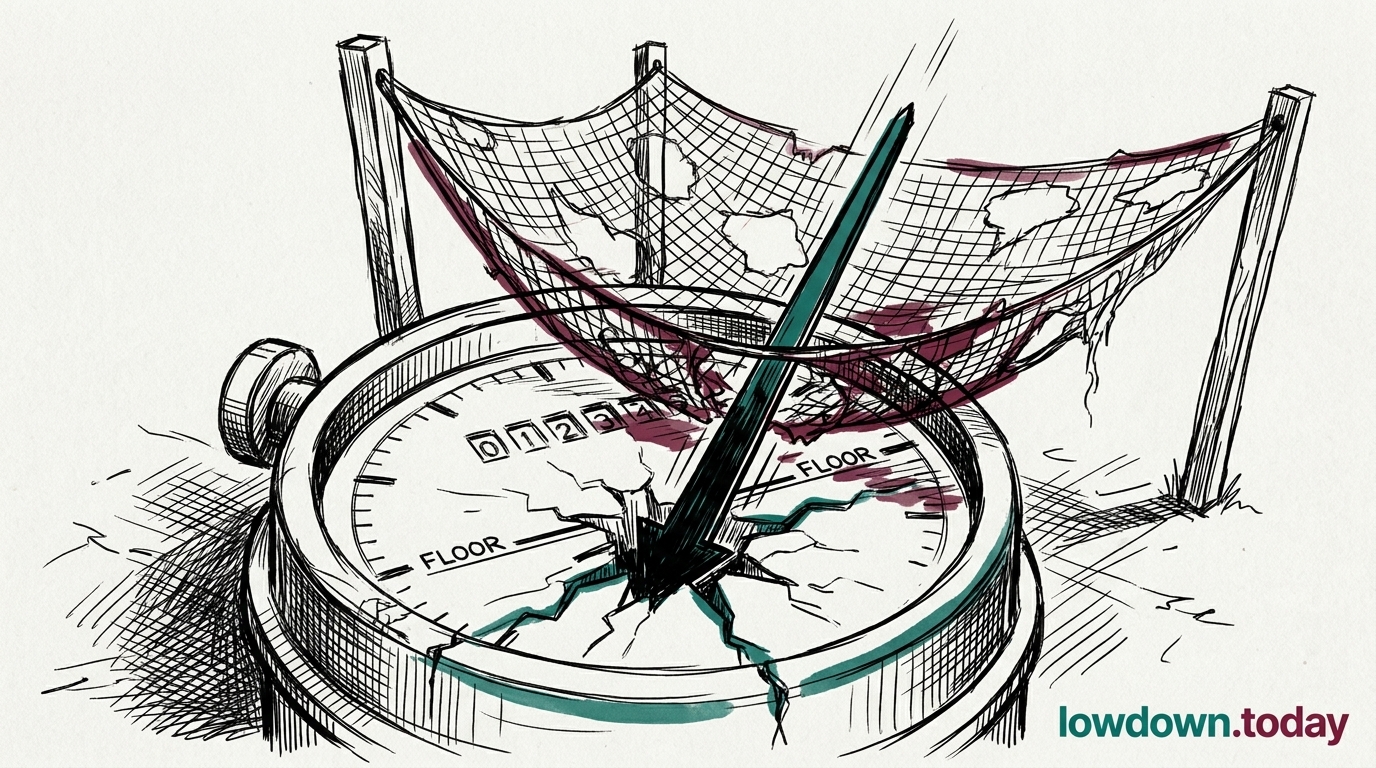
Futures and war-risk insurers read the same war apart: oil down nearly a fifth, yet Lloyd's unchanged.

Brent Crude settled at $92.05 per barrel on Friday 29 May, down more than 19% across May, its steepest monthly fall since the March 2020 Covid crash 1. That is roughly $20 below the $112.10 peak of Monday 18 May, a drop booked in 11 trading sessions, the fastest repricing of the conflict. WTI (West Texas Intermediate), the US oil benchmark, closed near $87.86.

The fall came on diplomatic optimism alone, with no instrument signed. Brent is the global price benchmark for two-thirds of traded crude, so the relief at the pump rests on a deal that could still collapse.

Two markets are reading the same war and pricing it apart. Futures price the probability of a signed page, and traders have bet heavily on one arriving. War-risk underwriters require the page itself. Lloyd's of London has still not de-listed Hormuz from its war-risk register, holding the divergence it opened when Brent first broke $100 .

When Iranian state television aired draft terms on Wednesday 27 May, Brent briefly touched a sub-$95 low before a White House denial reversed it . Friday's settle went lower and stayed there. The deal-optimism premium is unhedged against an unsigned outcome, so a collapse would reverse the move faster than the original war spike built it.


Deep Analysis

In plain English

Brent crude is the main global oil price benchmark, used to set the cost of petrol, diesel, and heating oil worldwide. In May 2026 it fell more than 19%, its steepest monthly drop since March 2020 when Covid stopped most economic activity. Traders became optimistic about a deal to reopen the Strait of Hormuz, pushing prices down. Trump walked out of his Situation Room meeting without signing it. Lloyd's of London, which insures ships sailing through the strait, kept its 'war-risk' designation in place: that designation requires shipping companies to pay tens of millions of dollars in extra insurance per voyage. Lloyd's changes that designation only when a government certifies the area is safe, not when traders feel optimistic. The result is a $20 gap between what futures markets think and what shipping insurers think.

Deep Analysis
Root Causes

Brent's 19% monthly fall reflects a single pricing event: the market's belief, from 27 May, that a Hormuz reopening was days away. Oil futures markets reprice on probability estimates, not on signed documents. The $20 fall in 11 sessions is the market assigning roughly 70-80% probability to a near-term deal, based on the volume of diplomatic signals and the public statements from both sides.

Lloyd's and the futures market diverge because they face different update mechanisms. A futures desk resets its position in milliseconds on a headline. A Lloyd's Joint Hull Committee changes its war-risk designation on a quarterly review cycle, requiring physical evidence of changed security conditions, not optimistic commentary. The two institutions are pricing the same strait but on entirely different information-update schedules.

What could happen next?
  • Risk

    A deal collapse reprices Brent from $92 toward $110-$115 with no hedging floor in place, as the entire $20 fall was deal-optimism premium rather than supply recovery.

  • Consequence

    European hauliers and airline fuel desks that locked forward contracts during the $92-$95 window face margin exposure if the kinetic track resumes.

First Reported In

Update #113 · Trump signs nothing as a Hellfire hits a hull

CNBC· 31 May 2026
Read original
Different Perspectives
Spain's LNG terminal operators
Spain's 9,145 GWh terminal inventory is the largest single stock in the EU LNG network, an option value that can reroute cargoes wherever the winter strip pays best rather than a cavern gas obligation tied to a fixed date. That flexibility matters more as Germany's cavern shortfall pushes more of the winter security question onto import infrastructure.
European Commission
European Commission
Brussels holds the bloc to 90% on a flexible window while Germany, holding roughly a quarter of EU storage capacity, tracks toward missing its own lower 80% figure by 21 points. A national shortfall this size in the anchor market matters more to bloc security than the flexible timetable alone can absorb.
French power exporters and CRE
French day-ahead rose in step with Germany but by less, reopening a EUR 7-17 premium that makes northward export flows commercially attractive again after the EUR 43.09 discount evaporated in days. CRE separately authorised RTE and Enedis to buy flexibility locally, betting the coming winter's binding constraint is grid congestion rather than a shortage of firm capacity.
TTF trading desk
TTF trading desk
A visible national shortfall like Germany's 21-point gap is a directional signal, not noise, for a desk holding the summer-winter spread. TTF's flat EUR 58-60 range through this week's German price swings says the market has not yet chosen to reprice refill risk into the front of the curve.
German cavern and CCGT operators
German caverns kept buying prompt gas at TTF near EUR 58-60 through the inversion; the wind collapse to 2.4 GW then flipped the spark spread to plus EUR 29 and put turbines back in the same queue. Every day turbines win that bid, injection at a third of the 877 GWh/day pace needed falls further behind.
Slovakia
Slovakia
Slovakia says it dropped its hold-out on the 21st sanctions package only after Ursula von der Leyen personally signed written gas-price and supply guarantees. The Council of the European Union's own 17,238-character release on the package names neither Slovakia nor any guarantee, leaving Bratislava's account unconfirmed by the institutional record.



