Skip to content
Briefings are running a touch slower this week while we rebuild the foundations.See roadmap
European Energy Markets
18MAY

GB exports gas; Hungary clears EUR 123

3 min read
11:11UTC

National Gas flagged GB summer exports to the continent in its 2026 Summer Outlook; Hungary cleared EUR 123.23/MWh day-ahead on Tuesday 12 May, EUR 54 above Spain's same-day print and the series' widest single-market premium.

EconomicDeveloping
Key takeaway

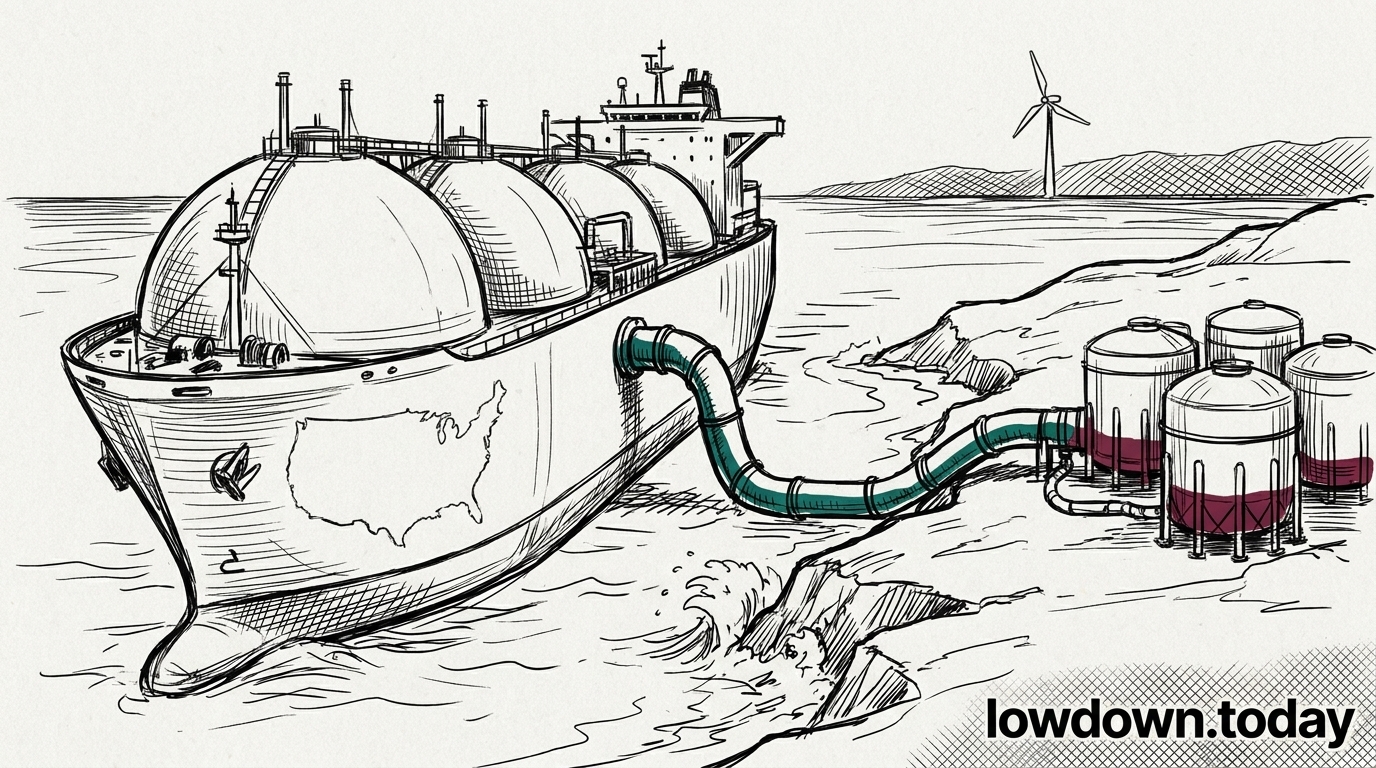
GB exports help the continent; Hungary's EUR 123 print exposes central Europe's structural disconnect from Atlantic LNG.

National Gas, the UK gas transmission system operator, published its 2026 Summer Outlook indicating GB will export gas to the continental European market this summer, with flows broadly in line with 2025. Centrica Rough's seasonal operating mandate expired on Thursday 30 April with no successor arrangement. The export signal sits against the BBL and IUK interconnector capacity reductions flagged earlier : GB exporting during peak EU injection season partially offsets the Norway and LNG deficit on continental markets.

Hungary cleared EUR 123.23/MWh day-ahead on Tuesday 12 May, EUR 54 above Spain's same-day print , the largest single-market premium recorded this series, marking central European price isolation from Atlantic LNG flows. ACER's Opinion 06/2026 recommends granting Hungary and Serbia a Kiskundorozsma-1 interconnector capacity-allocation derogation; the European Commission decision window closes 5 August 2026, with no Commission response in the 12-18 May window. The opinion sits inside the same Hungary regulatory dossier as the CJEU challenge filed 2 February , giving a concrete forward milestone for EU-Hungary gas infrastructure relations.

Deep Analysis

In plain English

Britain is set to export some of its gas to Europe this summer, which helps European storage fill faster. In a separate development, Hungary's electricity prices on 12 May were EUR 54 higher per megawatt-hour than Spain's on the same day. That gap shows how poorly connected Hungary is to the rest of Europe's electricity grid: when it needs power, it can't easily import it from neighbours, so prices spike.

Deep Analysis
Root Causes

Hungary-Austria cross-border electricity interconnection operates below the thermal capacity of the physical line because Mavir and APG have not exhausted available Coordinated Capacity Calculation (CCC) coordination under CACM, meaning administrative and regulatory constraints reduce available capacity below physical limits.

Hungary's gas-fired generation fleet runs on spot gas rather than contracted pipeline gas in the summer period, directly exposing the day-ahead power clearing price to TTF spot moves; at EUR 50/MWh TTF, gas-fired CCGT marginal cost in Hungary sits above EUR 90/MWh at current thermal efficiency.

What could happen next?
  • Meaning

    ACER's Kiskundorozsma-1 capacity allocation derogation recommendation (Opinion 06/2026) addresses the Hungary-Serbia interconnection gap; if the Commission approves it before 5 August, it modestly increases Hungary's interconnection options from the south.

    Short term · Assessed
  • Meaning

    The EUR 54 Hungary-Spain spread will appear in the next ACER monitoring report on market integration; sustained cross-border price differentials above EUR 20/MWh for more than 10% of trading hours trigger a formal ACER market integration review under the Electricity Regulation.

    Short term · Assessed
  • Meaning

    GB summer gas exports via the Interconnector reduce the net LNG import requirement for Continental storage, marginally improving the injection-pace arithmetic at the European aggregate level without affecting the headline AGSI+ daily storage figures directly.

    Short term · Assessed
First Reported In

Update #10 · TTF breaks EUR 50; US LNG hits 58% of imports

ACER· 18 May 2026
Read original
Different Perspectives
US LNG exporter (Sabine Pass / Corpus Christi)
The 58% EU import share confirmed by ACER, heading toward 65% in 2026, represents a structural long-term offtake position that European terminal operators are now willing to underwrite against the German 2031 gas-demand floor. Ribera's warning lands inside a commercial relationship that is expanding, not contracting.
Teresa Ribera, European Commission EVP
Ribera warned Europe should 'avoid replacing one energy dependency with another', framing the ACER 58% US LNG figure as a supply-security risk in the same week TTF broke EUR 50. Her institution has spent EUR 117 billion on US LNG since 2022.
Yara International (ammonia producer)
Front-month TTF at EUR 50+ touches the demand-destruction threshold at which ammonia output curtailments have historically been triggered. Yara faces the same lock-or-ride binary as financial desks, but the downside is production loss rather than mark-to-market exposure.
Katherina Reiche, German Economy Minister
Reiche confirmed the 12 GW hydrogen-ready gas tender is formally agreed with the EU Commission, with first auctions in 2026 and all units operational by 2031. The confirmation closes three years of SPD environment-ministry obstruction and anchors German gas demand through the early 2030s.
European gas trader (Amsterdam desk)
The EUR 50 break is a watershed signal, not a squeeze: the forward curve at EUR 55.21 twelve months out implies the market has repriced structural winter risk, not a positioning overshoot. The lock-or-ride decision on winter hedges closes in June when injection-pace data for May lands.
Hungarian and Slovak gas buyers and regulators
Hungary cleared EUR 123.23/MWh on 12 May, EUR 54 above Spain's same-day clearing and the largest single-market premium of the briefing series, as ACER named it among seven NRAs in TurkStream derogation opinions with the 5 August EC ruling pending. A denial of derogation removes the only available pipeline substitute for Russian LNG banned since 25 April.

