Skip to content
Briefings are running a touch slower this week while we rebuild the foundations.See roadmap
European Energy Markets
18MAY

Bruegel puts refill bill at EUR 35bn

3 min read
11:11UTC

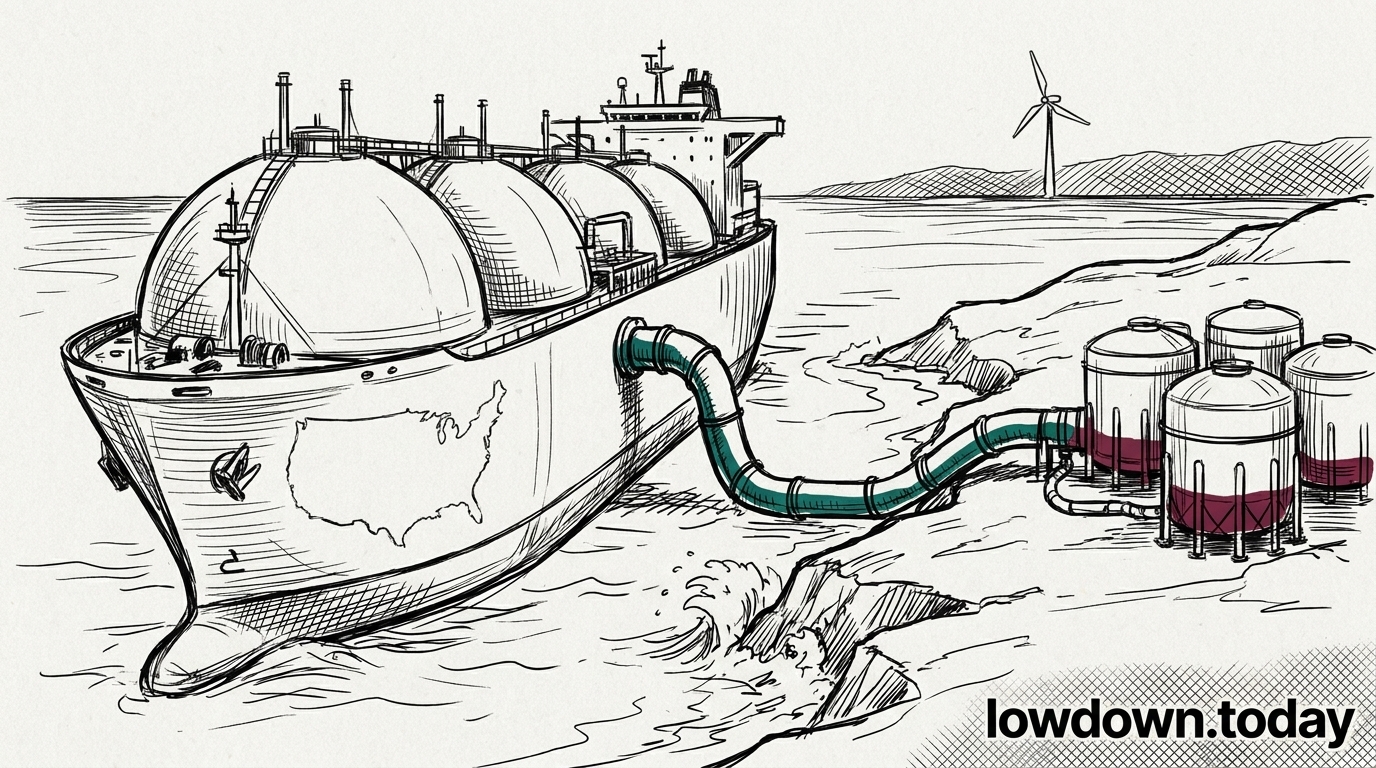
The Brussels think tank's estimate is the most precise public figure for the 2026 injection campaign: 55% above 2025, requiring 180 extra LNG cargoes.

EconomicDeveloping
Key takeaway

Reaching 80% storage requires 180 extra LNG cargoes at an estimated EUR 35 billion, 55% above 2025.

Bruegel, the Brussels-based economic think tank, estimated the cost of refilling EU gas storage to the revised target at EUR 35 billion at EUR 60/MWh, 55% above last year's equivalent costs. Europe needs approximately 180 additional LNG cargoes compared to last summer to reach the revised target by November. A gas price doubling from pre-crisis levels would add EUR 100 billion to the EU's annual import bill, which was EUR 117 billion last year.

Bruegel's policy recommendation includes an untested lever: a buyer coalition with Japan and South Korea, which together with the EU represents 60% of global LNG demand. Coordinated purchasing could counteract the cargo-by-cargo bidding war that currently favours sellers. No such coalition has been attempted at this scale, and the coordination challenges between three blocs with different regulatory frameworks and procurement cycles are substantial.


Deep Analysis

In plain English

A Brussels-based economic research organisation called Bruegel has calculated what it will cost Europe to refill its gas storage this summer. The answer is approximately EUR 35 billion, using current gas prices, and that is just to reach the newly lowered 80% target. Bruegel has also suggested that Europe should try to negotiate as a block with Japan and South Korea, the other major gas importers, to avoid all three bidding against each other for the same limited supply. If they compete separately, prices go up for everyone.

Deep Analysis
Root Causes

The EUR 35 billion refill cost reflects a structural illiquidity in the global LNG spot market. Unlike oil, where OPEC can release swing production within weeks, LNG supply is constrained by liquefaction train capacity that was committed 5-7 years earlier.

The US LNG expansion projects approved in 2019-21 (Sabine Pass Train 6, Calcasieu Pass, Plaquemines LNG) are coming online in 2025-26, but their output is 70-80% pre-committed under long-term contracts. The true spot market available to the EU is therefore a fraction of total Atlantic LNG output.

What could happen next?
  • Opportunity

    A coordinated EU-Japan-South Korea LNG buyer coalition could reduce spot cargo costs by 5-10% through demand aggregation, saving up to EUR 2-3.5 billion on the 180 additional cargo requirement.

  • Risk

    If all 180 additional cargoes must be sourced as spot, uncoordinated member state purchasing will replicate the 2022 competitive premium, pushing actual refill costs above Bruegel's EUR 35bn central estimate.

First Reported In

Update #1 · Europe's thinnest gas cushion since 2018

Bruegel· 13 Apr 2026
Read original
Different Perspectives
US LNG exporter (Sabine Pass / Corpus Christi)
The 58% EU import share confirmed by ACER, heading toward 65% in 2026, represents a structural long-term offtake position that European terminal operators are now willing to underwrite against the German 2031 gas-demand floor. Ribera's warning lands inside a commercial relationship that is expanding, not contracting.
Teresa Ribera, European Commission EVP
Ribera warned Europe should 'avoid replacing one energy dependency with another', framing the ACER 58% US LNG figure as a supply-security risk in the same week TTF broke EUR 50. Her institution has spent EUR 117 billion on US LNG since 2022.
Yara International (ammonia producer)
Front-month TTF at EUR 50+ touches the demand-destruction threshold at which ammonia output curtailments have historically been triggered. Yara faces the same lock-or-ride binary as financial desks, but the downside is production loss rather than mark-to-market exposure.
Katherina Reiche, German Economy Minister
Reiche confirmed the 12 GW hydrogen-ready gas tender is formally agreed with the EU Commission, with first auctions in 2026 and all units operational by 2031. The confirmation closes three years of SPD environment-ministry obstruction and anchors German gas demand through the early 2030s.
European gas trader (Amsterdam desk)
The EUR 50 break is a watershed signal, not a squeeze: the forward curve at EUR 55.21 twelve months out implies the market has repriced structural winter risk, not a positioning overshoot. The lock-or-ride decision on winter hedges closes in June when injection-pace data for May lands.
Hungarian and Slovak gas buyers and regulators
Hungary cleared EUR 123.23/MWh on 12 May, EUR 54 above Spain's same-day clearing and the largest single-market premium of the briefing series, as ACER named it among seven NRAs in TurkStream derogation opinions with the 5 August EC ruling pending. A denial of derogation removes the only available pipeline substitute for Russian LNG banned since 25 April.
