Skip to content
Briefings are running a touch slower this week while we rebuild the foundations.See roadmap
Drones: Industry & Defence
7JUN

Germany names Russia its immediate threat

3 min read
11:27UTC

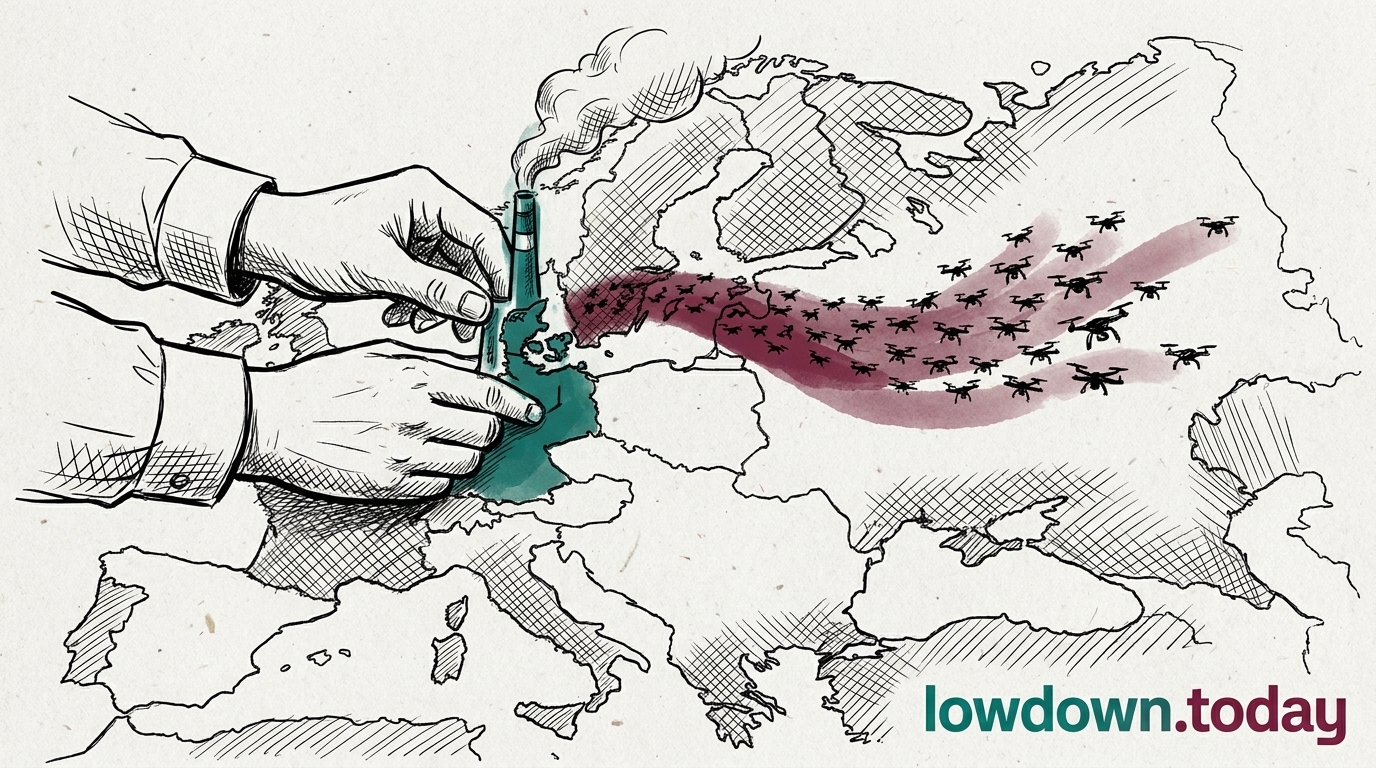
Germany published its first-ever standalone military strategy on 22 April, naming Russia the "biggest and most immediate threat" and setting a 2029 readiness deadline. Active Bundeswehr strength is planned to grow from 185,420 to 260,000.

TechnologyAssessed
Key takeaway

Berlin wrote a Russia-facing doctrine with a 2029 readiness deadline and a 260,000-active-troop ceiling.

German Defence Minister Boris Pistorius published Germany's first-ever standalone military strategy on Wednesday 22 April, naming Russia the "biggest and most immediate threat" and setting a 2029 readiness deadline for large-scale conflict 1. Active Bundeswehr strength is planned to rise from 185,420 to 260,000 by the mid-2030s, with reserves growing from 60,000 to 200,000. Conscription remains a fallback if volunteer recruitment falls short. Pistorius has held the Defence portfolio since January 2023.

The strategy publication lands on the operational baseline set by the Germany-Ukraine €4 billion defence package signed in Berlin on 14 April . That agreement funded a Raytheon direct commercial sale for several hundred GEM-T Patriot interceptors, 36 IRIS-T launchers and €300 million for Ukrainian long-range strike, with a new production line in Schrobenhausen. Berlin had locked in procurement before Pistorius wrote the doctrine. What he published on 22 April is the doctrinal frame around a force-generation timeline the January 2026 constitutional debt-brake removal had already funded.

Berlin's 22 April publication measures the NATO posture gap on a single-day comparison with Whitehall's Hormuz-facing planning at Northwood. Pistorius has named Russia, set a deadline and committed the Bundeswehr to fielding Europe's largest conventional army by 2039; the UK's War Book revival on the same Wednesday sits against a £28 billion procurement funding gap. Two allies, one day, and the difference between a doctrine document and a civil-mobilisation binder reopened on top of an underfunded force.

Deep Analysis

In plain English

Germany, for the first time in its post-war history, published a dedicated military strategy document on 22 April that names Russia as its 'biggest and most immediate threat'. Previously German defence planning was embedded in NATO documents that avoided naming specific countries so directly. Defence Minister Boris Pistorius set a deadline of 2029 for the Bundeswehr (Germany's military) to be ready for large-scale conflict, and announced plans to grow it from roughly 185,000 to 260,000 active personnel and expand the reserves from 60,000 to 200,000. This is the most explicit German security posture shift since reunification in 1990.

First Reported In

Update #14 · Kyiv's Druzhba gambit unlocks €90bn loan

Defense News· 24 Apr 2026
Read original
Causes and effects
This Event
Germany names Russia its immediate threat
Berlin's first standalone military strategy sets a 2029 Bundeswehr readiness deadline for large-scale conflict and puts a doctrinal Russia-facing frame around a force expansion already funded.
Different Perspectives
Denmark (host nation)
Denmark accepted Fire Point's Skrydstrup plant after committing to bilateral defence co-production at the B9 Nordic summit in May; the facility sits beside a Danish F-35 base, sharing security perimeters. NATO has published no legal guidance on whether hosting Ukrainian weapons production converts Denmark into a co-belligerent, leaving the host-state obligation unresolved.
Russian Ministry of Defence
Russia's 117% YoY drone-output rise in April, accelerating from a 68% full-year 2025 baseline, validates the FPV mass-production doctrine and hands Moscow a cleaner targeting argument for the Skrydstrup plant than any hidden production line offered; a Ukrainian weapons facility on NATO sovereign territory is a legitimate military target under the laws of armed conflict.
Baltic NATO states (Latvia, Estonia, Lithuania)
Latvia deployed mobile drone-intercept teams on 29 May using domestic Origin Robotics and Eraser interceptors, the first kinetic Baltic border response to Russia's 117% output surge. The Baltic states are the primary target market for Ukraine's ten EU export offices, giving them direct commercial access to combat-tested interceptors their own manufacturers have not yet matched.
Pentagon / Joint Interagency Task Force 401
Two Ukrainian entrants in Drone Dominance Phase 2 and Red Cat's SEC-filed STE partnership bring combat-iterated Ukrainian designs into US procurement without triggering Foreign Military Sale approvals; the programme's performance-scoring methodology does not require US-origin hardware. Northrop holding the Common UAS Payload standard means a heritage prime captures interface revenue regardless of which startup airframe wins.
Ukrainian defence industry (Fire Point / Spetstechnoexport)
Fire Point's Skrydstrup construction start and Spetstechnoexport's Red Cat partnership execute Zelensky's 13 May Bucharest proposal: converting wartime production surplus into a state export apparatus, independent of US approval chains. For Ukraine, embedded manufacturing on NATO soil protects propellant supply from Russian strikes while generating hard currency the war effort needs.
Chinese drone manufacturers (DJI, Autel)
Autel's Ralls Corp Fifth Amendment filing and DJI's Ninth Circuit quantification of USD 1.56 billion in 2026 losses are parallel constitutional attacks on a classified-evidence exclusion mechanism; neither company can contest the intelligence allegations directly, so both are betting on due-process doctrine to reopen the FCC authorisation route.
