Skip to content
Welcome, thoughtbot's Giant Robots listeners!Start here
Data Centres: Boom and Backlash
26NOV

Spain's draft lets grid cut data centres

3 min read
18:00UTC

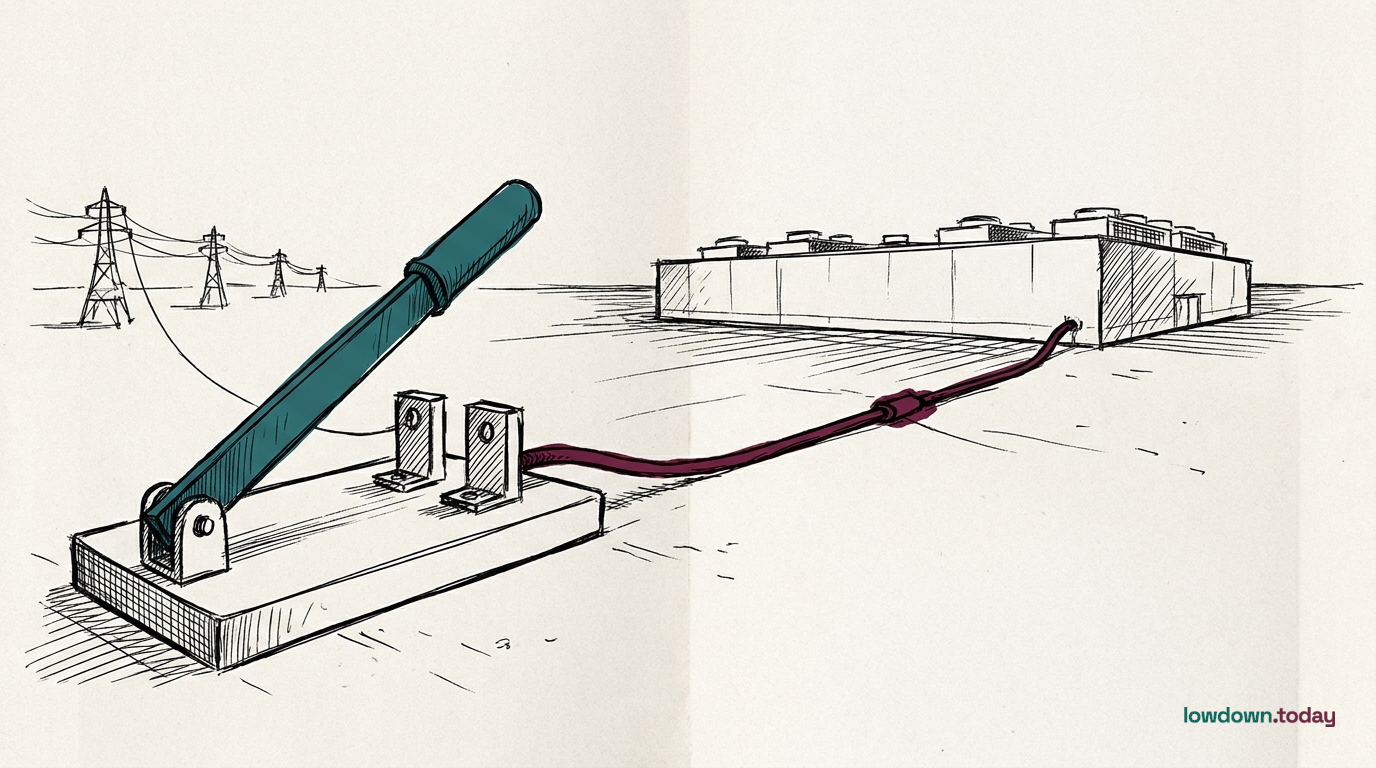
Spain's revised data-centre decree, now with the Council of State, gives operators until 2031 to match their power hour by hour with renewables. In return, Red Eléctrica could switch them off without paying them.

IndustryDeveloping
Key takeaway

Spain's draft would let Red Eléctrica disconnect data centres unpaid in exchange for a longer renewables deadline.

Spain's government sent its revised data-centre royal decree to the Spanish Council of State (Consejo de Estado), the government's highest advisory body, for an urgent opinion around 26 and 27 October, El País and La Vanguardia reported⁠1. The text is unpublished, so every detail below comes from ministry briefings to the press.

The decree now applies from 10 MW, up from 1 MW in the August draft. The rule that 80% of consumption be matched hour by hour with new renewables survives, in the decree Óscar López, the digital transformation minister, wants approved before the 29 November election. Batteries now count towards the match⁠2.

The softer timetable carries a price: a place at the front of the queue to be cut off. Under the terms Roams reported from government briefings, data centres that join the automatic load-reduction scheme (SRAP) run by Red Eléctrica de España, the national grid operator, would get until 2031 to reach the full match. In return, Red Eléctrica could disconnect them without compensation, while large industrial users are paid when it cuts them. "The first to be disconnected is not traditional industry," a government source told the press.

SpainDC, the operators' association, estimates that 80% to 90% of a planned €66.9bn of investment to 2030 could be lost if hourly matching stayed. It has won a hearing before the Council of State and threatens litigation⁠3.

Deep Analysis

In plain English

Spain is writing a law, a royal decree, setting rules for data centres, the large buildings full of computers that run online services and AI. The Council of State is a body of senior lawyers that advises the government before it approves major regulations. The main rule is that big data centres must get most of their electricity from new wind and solar farms, matched hour by hour, rather than on average over a year. Red Eléctrica runs Spain's national grid. The new draft offers a deal: data centres can have more time to meet the green-power rule if they agree that the grid can switch them off in an emergency without paying them. Factories that accept the same cuts are compensated.

Deep Analysis
Root Causes

Spain's grid swings between midday solar surpluses and evening hours run on gas. Annual renewable certificates let a data centre claim green power while drawing gas-fired electricity at night; hourly matching closes that gap, which is why the ministry kept it.

The 28 April 2025 blackout across Spain and Portugal left Red Eléctrica wanting fast tools to shed load. SRAP, its automatic power-reduction scheme, cuts demand within seconds, and enrolling large new users gives the operator more of that reserve at no cost to the system.

The August draft caught sites from 1 MW. Raising the threshold to 10 MW removes small enterprise and edge sites, so the rule now falls almost entirely on colocation and hyperscale campuses.

Escalation

Holding. The threshold rose and batteries now count, which eases the rule, while unpaid disconnection adds a new burden. The Council of State opinion and cabinet approval are the next steps.

What could happen next?
  • Precedent

    Spain would be the first EU state to make unpaid disconnection the condition for a longer renewables timetable.

    Short term · Suggested
  • Risk

    SpainDC's threatened litigation could delay the decree after approval.

    Medium term · Suggested
  • Opportunity

    Battery developers gain a new buyer if storage counts towards hourly matching.

    Medium term · Assessed
First Reported In

Update #18 · Norway shuts its grid queue to data centres

Roams· 15 Nov 2026
Read original →
Different Perspectives
MUFG
MUFG
Mitsubishi UFJ (MUFG) and Morgan Stanley are preparing to sell a loan of about $4.5bn secured on the GPUs CoreWeave runs for Meta in Dalton, Georgia, with price talk of 7% to 7.5%, Bloomberg reported. Meta's contract is expected to win the loan investment-grade ratings, though CoreWeave is rated below investment grade and the loan has not priced.
CX Tech
CX Tech
CX Tech's £16.5bn, 1,000 MW plan for the former Chapelcross nuclear site has drawn more than 10,000 representations, the most Dumfries and Galloway's planners have received, BBC News reported. The company says the scheme could support up to 750 construction jobs and about 540 permanent posts; comments close on 29 November.
Nate Glubish, Alberta's technology and innovation minister
Glubish tabled Bill 42 on 18 November to ban power plants and data centres on Class 1 and 2 farmland and within 600 m of homes, a day after the regulator approved a 1,494 MW plant that fails both tests. The bill exempts projects already approved or under review, so the Indus plant stands.
NEXTDC's chairman and chief executive
After a second pay strike and a defeated spill on 20 November, NEXTDC's leaders said they are exploring a joint venture for the S4 Sydney campus and do not expect to raise shareholder capital for contracted capacity. They raised FY27 underlying EBITDA guidance to A$260m-A$275m, still excluding about A$140m tied to Melbourne's stalled M3 site.
Friends of the Irish Environment, Friends of the Earth Ireland and ClientEarth
The three groups argued in the High Court on 18 November that the CRU's data-centre connection framework breaches the 2015 Climate Act by ignoring carbon budgets, which the CRU denies. Judge Micheal O'Connell reserved judgment with no date, so the framework stands meanwhile.
South Korean data-centre industry groups
Industry groups told Etnews on 13 November that tougher grid scoring for one sector alone is unfair, three days before the climate and energy ministry raised the capital-region pass mark to 75 from 70. Pending applications are judged on the new bar; the pilot assessed 28 capital-region projects worth 1.9 GW.

Written with AI from Lowdown's published reporting. Not individually reviewed by an editor. Editorial standards.
