Skip to content
Welcome, thoughtbot's Giant Robots listeners!Start here
Data Centres: Boom and Backlash
26NOV

Spain sets hourly test for data centres

4 min read
18:00UTC

Spain's cabinet approved a decree on 20 November making data centres of 10 MW or more match 80% of their power with renewables hour by hour. The Partido Popular has promised to repeal it.

IndustryAssessed
Key takeaway

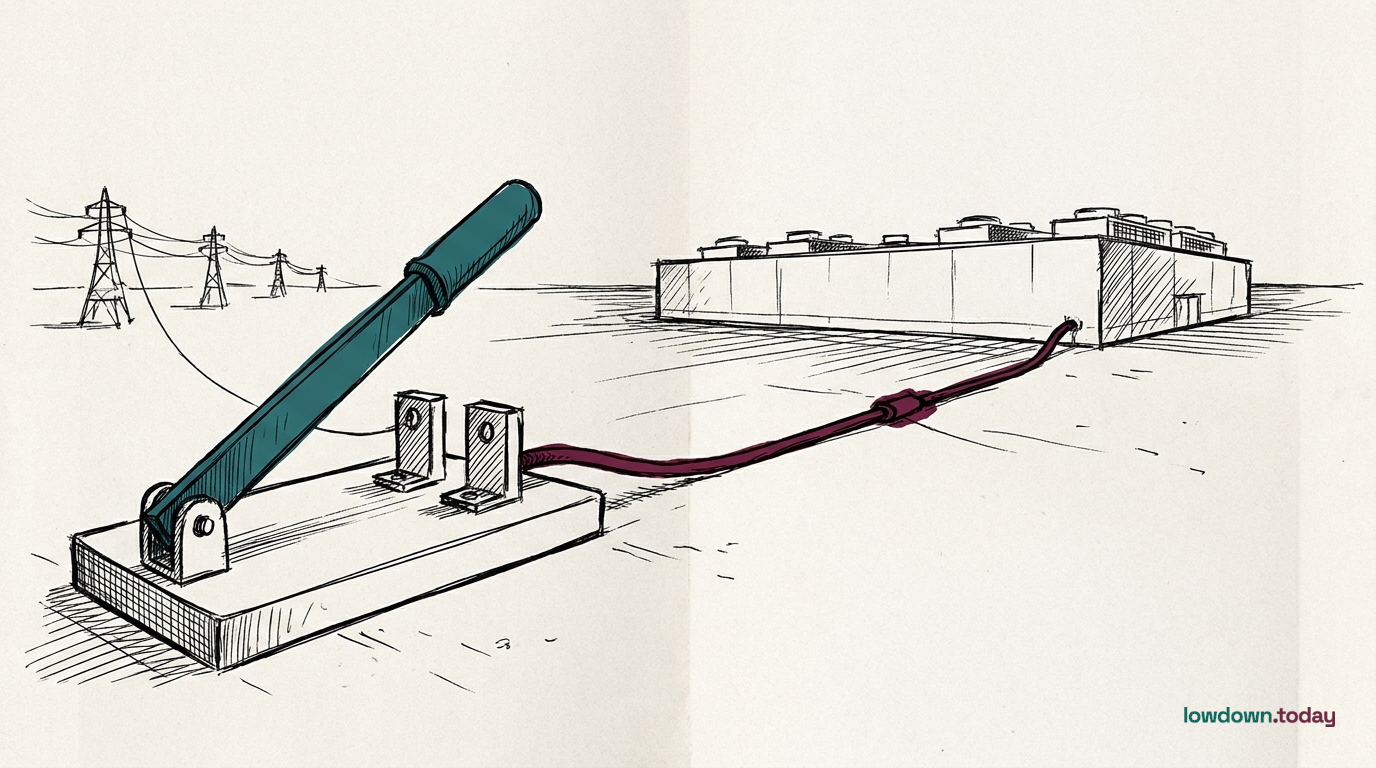
Spain's large data centres must match 80% of their power hourly with renewables, or accept being cut off.

Spain's cabinet, the Spanish Council of Ministers, approved the data-centre royal decree at an extraordinary session on Friday 20 November, nine days before the general election⁠1. The Boletín Oficial del Estado (BOE), Spain's official gazette, published it as Real Decreto 1032/2026 on Saturday 21 November, and it took effect on Sunday 22 November⁠2. It applies to data centres of 10 MW or more. A royal decree needs no vote in parliament, so a new government can replace it the same way.

According to elDiario.es, citing government sources, a site must match 80% of its consumption hour by hour with renewables from the start. Ireland's rule tests 80% over a whole year. The alternative is a looser temporary arrangement under which Red Eléctrica, Spain's national grid operator, can order the site to cut its load to zero when the grid is under stress. Government sources told elDiario.es there were no significant changes from the version sent to the Spanish Council of State in late October.

Vice-President Sara Aagesen said that without the decree consumers would pay about €5,000m a year more on their bills, in a "very conservative scenario": about €4,000m through higher gas prices in the wholesale market plus €1,000m in the capacity market. That figure comes from the government's own modelling, not an independent study. Óscar López, the digital transformation minister, had wanted the decree approved before polling day.

The same cabinet approved the 2030 electricity network plan: €17,142m of investment for 47.4 GW of new demand, 9.3 GW of it data centres on the transmission network. Spain has granted data centres 15 GW of grid access, 6 GW on transmission and 9 GW on local distribution networks that the plan's figure does not count, and about 3 GW of that access was granted in three months. Tech firms, builders and utilities say the decree contains "illegalities" and is "impossible to comply with". The Partido Popular (PP) has promised to repeal it and write its own rules.


Deep Analysis

In plain English

Data centres are buildings full of computers that run websites and AI (artificial intelligence) tools. They use as much power as a small town, all day and all night. Spain's new rule says a large new one must prove that at least 80% of the power it uses in every single hour comes from wind, solar or other renewable sources. Most green power deals today balance out over a whole year, so a site can use gas power at night and buy solar credits by day. Spain's rule stops that. A site that cannot meet the test can accept a looser deal: Red Eléctrica, which runs the national grid, can order it to cut its power use to zero when the grid is under strain.

Deep Analysis
Root Causes

The 28 April 2025 Iberian blackout turned grid stability into an electoral issue. A power for Red Eléctrica to drop a data centre's load to zero answers a question voters now ask: who loses power first.

Access permits have outrun the wires. Spain has granted data centres 15 GW of grid access, 3 GW of it in three months, and the new network plan is 146% larger than the current one's €6,964m. A connection granted before the network exists needs a rule for who gives way.

The Sánchez government governs without a stable majority in the Cortes, so it used a royal decree rather than a law. That choice bought speed and gave up durability.

Escalation

Pause until the vote. If the Partido Popular forms a government after 29 November, repeal by decree could come within weeks; if the current coalition survives, the first test is how many new connections choose hourly matching over the interruptible route.

What could happen next?
  • Risk

    A change of government could repeal the decree before any site has completed a year under the hourly test.

    Short term · Reported
  • Precedent

    The government says no other country has an hourly rule of this kind, which makes it a benchmark other EU states can copy or reject.

    Medium term · Assessed
  • Consequence

    Operators unable to contract night-time clean power will choose interruptible status, giving Red Eléctrica a large block of load it can drop.

    Medium term · Suggested
First Reported In

Update #19 · US grids set a price to cut off data centres

elDiario.es· 26 Nov 2026
Read original →
Different Perspectives
MUFG
MUFG
Mitsubishi UFJ (MUFG) and Morgan Stanley are preparing to sell a loan of about $4.5bn secured on the GPUs CoreWeave runs for Meta in Dalton, Georgia, with price talk of 7% to 7.5%, Bloomberg reported. Meta's contract is expected to win the loan investment-grade ratings, though CoreWeave is rated below investment grade and the loan has not priced.
CX Tech
CX Tech
CX Tech's £16.5bn, 1,000 MW plan for the former Chapelcross nuclear site has drawn more than 10,000 representations, the most Dumfries and Galloway's planners have received, BBC News reported. The company says the scheme could support up to 750 construction jobs and about 540 permanent posts; comments close on 29 November.
Nate Glubish, Alberta's technology and innovation minister
Glubish tabled Bill 42 on 18 November to ban power plants and data centres on Class 1 and 2 farmland and within 600 m of homes, a day after the regulator approved a 1,494 MW plant that fails both tests. The bill exempts projects already approved or under review, so the Indus plant stands.
NEXTDC's chairman and chief executive
After a second pay strike and a defeated spill on 20 November, NEXTDC's leaders said they are exploring a joint venture for the S4 Sydney campus and do not expect to raise shareholder capital for contracted capacity. They raised FY27 underlying EBITDA guidance to A$260m-A$275m, still excluding about A$140m tied to Melbourne's stalled M3 site.
Friends of the Irish Environment, Friends of the Earth Ireland and ClientEarth
The three groups argued in the High Court on 18 November that the CRU's data-centre connection framework breaches the 2015 Climate Act by ignoring carbon budgets, which the CRU denies. Judge Micheal O'Connell reserved judgment with no date, so the framework stands meanwhile.
South Korean data-centre industry groups
Industry groups told Etnews on 13 November that tougher grid scoring for one sector alone is unfair, three days before the climate and energy ministry raised the capital-region pass mark to 75 from 70. Pending applications are judged on the new bar; the pilot assessed 28 capital-region projects worth 1.9 GW.

Written with AI from Lowdown's published reporting. Not individually reviewed by an editor. Editorial standards.