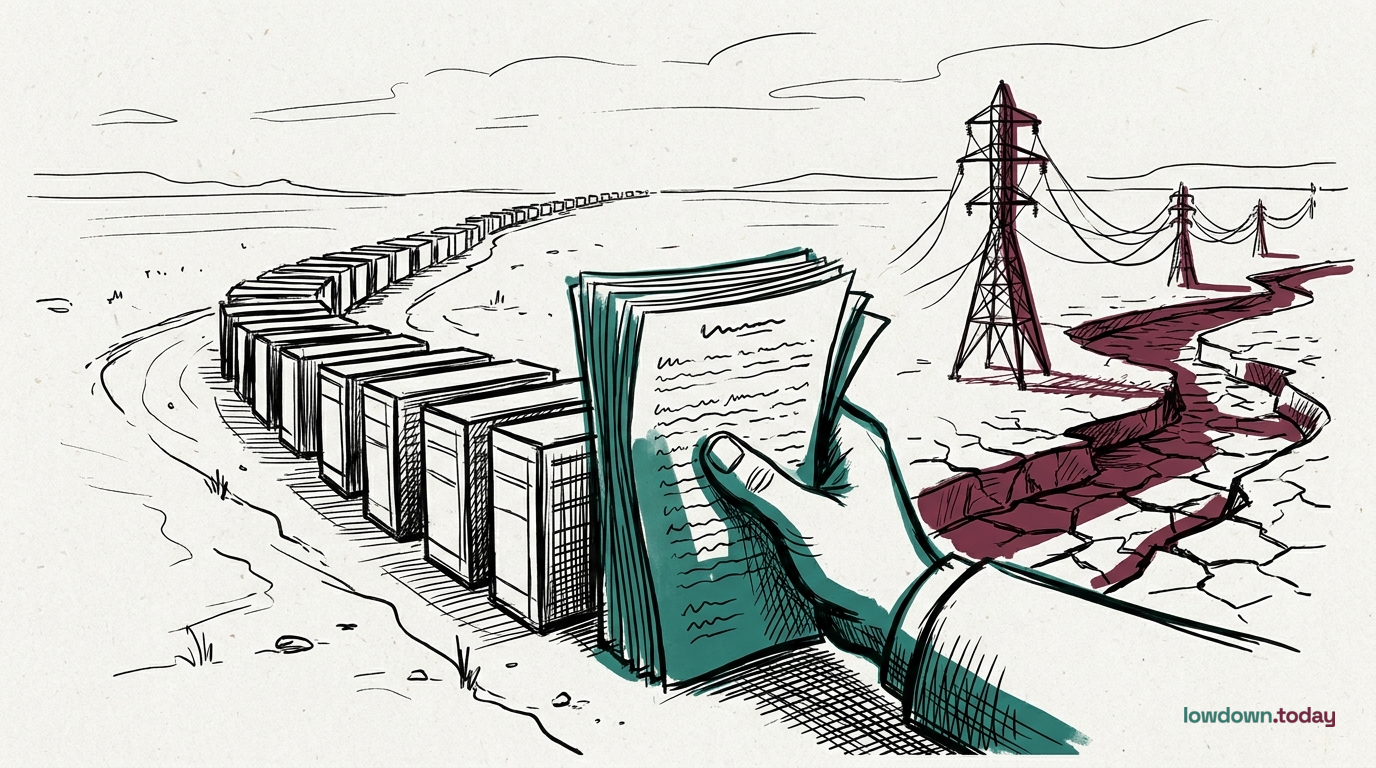
PJM Interconnection, the grid operator that runs wholesale power markets across 13 Mid-Atlantic and Midwest states, filed at the Federal Energy Regulatory Commission (FERC, which regulates interstate electricity transmission) on 31 July under docket ER26-3380-000. The filing bundles the Reliability Backstop Procurement we covered with an Interim Resource Adequacy Service (IRAS), which makes loads of 50 MW and above curtailable as a condition of connection from 1 June 2027 unless they bring their own capacity. The Federal Register notice opening comment published on 4 August, comments close at 5pm Eastern on 21 August, and PJM asks for an effective date of 29 September1.
PJM's capacity auction fell 6,623 MW short in July. That shortfall is the arithmetic sitting under both halves of the docket: one half procures backstop capacity, the other reduces the load the system has to guarantee.
Draw a line no source draws. IRAS writes curtailability into the terms of connection and stays there until FERC changes it, a market rule of indefinite duration. The Department of Energy's Section 202(c) grant to PJM, which let the operator cut backup-equipped data centres during a heat event, ran as an emergency order under statute, temporary and exceptional by design. Different instrument, different authority, different permanence.
For a developer, the practical consequence lands in the financing model rather than in the engineering. A load that accepts IRAS accepts curtailment as its ordinary condition of service, which changes the availability assumption a lender underwrites, and the escape route, bringing your own capacity, means generation on site or contracted firm supply. Comments close before the operator can know how many will take it.



