Skip to content
Briefings are running a touch slower this week while we rebuild the foundations.See roadmap
Cuba Dispatch
4JUN

CADECA reform fails as informal USD hits 530

4 min read
11:38UTC

Eighteen days after CADECA opened state-bank dollar acceptance, the informal USD/CUP rate had moved from 510 to 530 and the euro had broken 600 CUP.

PoliticsDeveloping
Key takeaway

CADECA's 18-day dollar test failed; the informal rate is up 20 pesos and the spread widened.

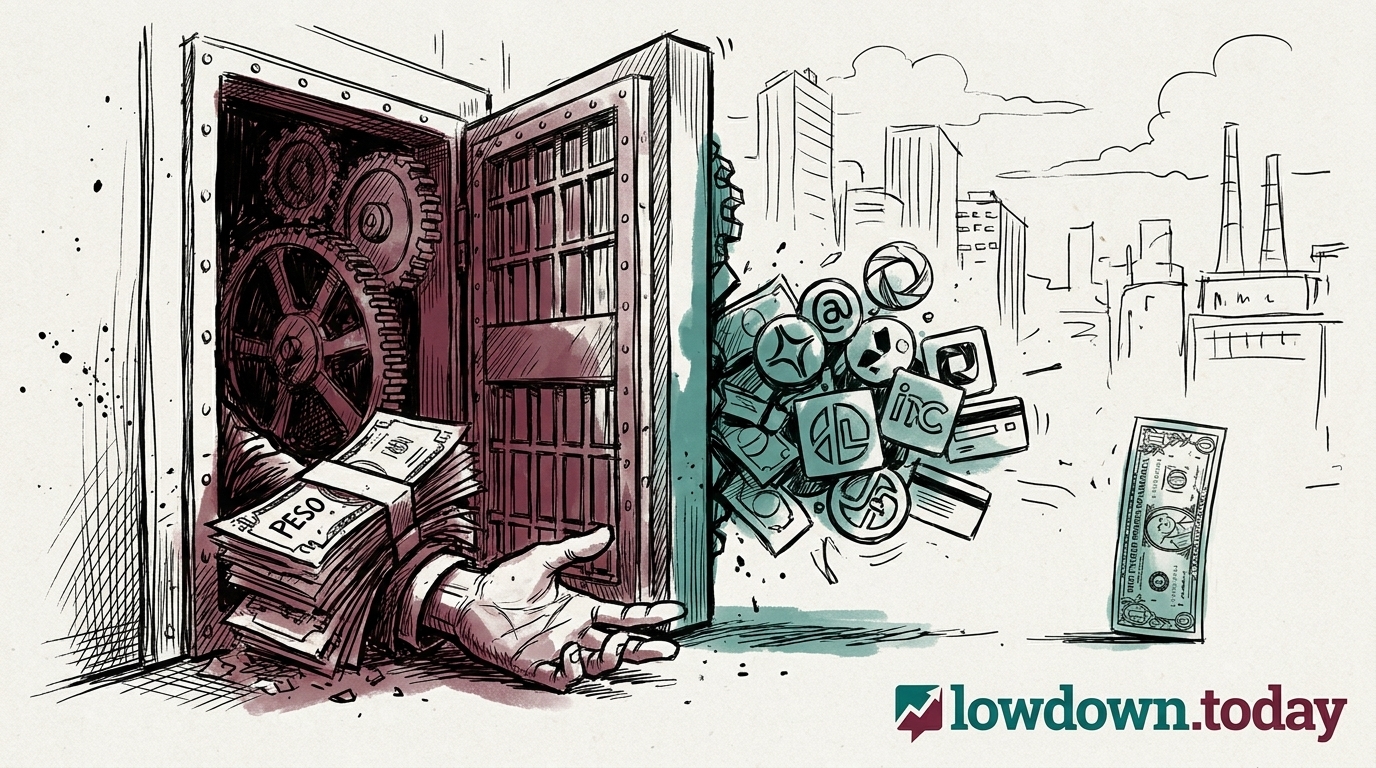
The informal USD/CUP exchange rate sat at 530 pesos per dollar from Wednesday 22 April through Friday 24 April 2026, up from approximately 510 on 7 April when CADECA, Cuba's state currency exchange, launched dollar-cash acceptance . The euro broke 600 CUP on the informal market on Sunday 19 April, the highest figure on record. The official Banco Central rate stood at 492 CUP, leaving a 38-peso gap between official and informal channels. El Toque, the diaspora outlet whose informal-rate index is the standard reference inside Cuba, tracked the figures across the test window.

CADECA opened state-bank acceptance on 7 April with the stated aim of recapturing flows that had migrated to the banquero (informal money-changer) network. Eighteen days into the test window the informal rate had moved from approximately 510 to 530 CUP, a roughly 8 per cent rise above the 7 April baseline. CADECA, Fincimex and the Havana Consulting Group have published no formal-channel volume data, leaving the test without measurable uptake on the formal side. The 38-peso gap is the implicit cost households pay for using state channels (documentation, queueing, and exposure to authorities), and households route around it.

Currency reforms aimed at recapturing informal flows tend to fail when the informal channel offers things the formal channel cannot match: no documentation, instant settlement, family-network trust. CADECA opened only one of those three. El Toque's index, maintained from outside the country, remains the price-discovery mechanism most Cuban households actually consult. The euro's move past 600 CUP from 19 April suggests the diaspora is hedging into European currency on the assumption that USD-CUP volatility will compress further if EU remittance rules tighten or if US-Cuba tensions reprice the dollar leg.

The banquero network has now absorbed the test without measurable volume loss, suggesting the informal channel has become structural rather than transitional. Pension-bound Cubans on a 2,000 CUP monthly state pension see their dollar-equivalent income at roughly $4 at informal rates, compressing further with each peso the informal market gains. Whether the Banco Central widens the official band to follow the informal rate, or holds at 492 CUP and watches the spread grow, will determine May's monetary path.


Deep Analysis

In plain English

Cuba has a state currency exchange called CADECA. On 7 April it started accepting US dollar bills, hoping that Cubans would use it instead of the street money-changers they have relied on for years. Eighteen days later the street rate had gone up, not down, and the gap between the official and street rates had widened. The reason the reform did not work is that the street money-changers offer three things the state cannot: no paperwork, instant payment, and people you know and trust. The state charges for all three of those missing features through documentation requirements and queues. The 38-peso gap between the official and street rates is the price people pay to avoid the state's friction.

Deep Analysis
Root Causes

Cuba's monetary system runs on three parallel instruments: the CUP peso for state wages and pensions, the MLC (Moneda Libremente Convertible, a digital hard-currency instrument limited to state retail channels) for dollar-denominated purchases, and physical dollars or euros that circulate outside both systems. CADECA's reform added a fourth formal layer but did not address the conversion friction between any of the existing three.

The 38-peso gap between the 492 CUP official rate and the 530 CUP informal rate is a market-discovered fee schedule for avoiding state-channel documentation. At 2,000 CUP per month, the state pension buys $3.77 at the informal rate or $4.07 at the official rate.

At either rate, the pension is below subsistence for a household without diaspora remittances, which means the formal-informal spread is a distributional problem for the approximately 3 million pensioners who do not have remittance access, regardless of which rate prevails.

What could happen next?
  • Consequence

    Eighteen days without formal-channel uptake confirms that the banquero network has become a structural fixture rather than a transitional phenomenon; closing the gap now requires either dollarisation or a rate unification that would wipe out peso-denominated obligations including pensions.

    Medium term · 0.8
  • Risk

    The euro breaking 600 CUP signals that European remittance senders are hedging into non-dollar instruments, which would reduce the effective USD hard-currency capture from the CADECA reform even if uptake later improved.

    Short term · 0.68
  • Consequence

    Without published volume data from CADECA or Fincimex, the Cuban government cannot demonstrate the reform is working, which reduces the credibility of any future monetary-stabilisation announcement.

    Short term · 0.75
First Reported In

Update #2 · Two Cuba policies, one fortnight

El Toque via CiberCuba· 27 Apr 2026
Read original
Different Perspectives
Spanish hotel operators
Meliá and Iberostar exited GAESA-linked Cuban hotels before 5 June to protect their broader Caribbean and global portfolios from secondary-sanctions exposure. Spain's commercial stake in Cuban tourism makes Madrid a structural veto risk if the EU advances Cuba-specific restrictive measures under Ollongren's mandate.
Cuban opposition / OCDH
After the US Senate killed a Cuba war-powers check 51-47 on 29 April, the Madrid-based OCDH formally demanded an EU reparations fund for political prisoners on 4 June, routing its pressure campaign to Brussels where the EU's existing restrictive-measures machinery, used previously against Venezuela and Belarus, does not require a Senate majority.
China
China
Beijing paired a birthday telegram to Castro with no operational commitment on fuel or credit, using the occasion to signal non-abandonment ahead of the G20 without incurring the cost of a replacement tanker. China has no military-logistics presence in the Caribbean comparable to Soviet-era capacity.
Russia
Russia
Moscow sent an official birthday message to the indicted Raúl Castro on 3 June, a deliberate legitimacy signal to Global South partners, while Sovcomflot has announced no replacement for the Universal's 270,000-barrel cargo that turned away on 26 May. The pattern mirrors Soviet public solidarity during the 1962 crisis while privately managing exposure.
Trump administration / OFAC
Washington let a calendar date do the work: no new designations were needed after 18 May, and the looming 5 June expiry, which strips foreign firms' legal-exit defence, drove the hotel exodus and card suspension without a second executive action. The administration has not publicly commented on the compound utility failures.
Cuban government and citizens
Havana's only countermeasure this week was a Granma editorial defending GAESA by name, conceding the designation is biting hard enough to require a public answer. Residents of Havana and Guanabacoa banged pots on the nights of 3-4 June, the first confirmed capital protests, after gas, water, and the state milk ration all failed.
